
Equestrian Vaulting is one of the most technically demanding equestrian disciplines, combining gymnastic skill with precise control of the horse’s movement. The equestrian vaulting whip is a key part of this system, helping the lunger maintain rhythm, regulate impulsion and keep the horse safely on the circle. Unlike whips used for ridden work, vaulting whips are designed purely for communication at a distance, supporting both the horse and the vaulters as they perform.
Vaulting whips are a specialist tool designed for a very specific discipline. Understanding the different types of horse whips helps explain how vaulting whips differ from riding and general groundwork options.
A vaulting whip is a long, lightweight whip with a very long shaft (often 180–290 cm) and a long, flexible lash. Its purpose is not to touch the horse but to act as an extension of the lunger’s body language, reinforcing voice aids and maintaining consistent impulsion as the horse works on the lunge.
Vaulting whips are often compared to lunge whips due to their length and use from the centre. Lunge Whips: Correct Use, Safety & Techniques explains key differences in handling, safety, and application.
This makes it different from both lunge whips and groundwork whips. While a lunge whip also has a long lash, a vaulting whip is generally longer, lighter and designed specifically for maintaining the larger 15–18 metre vaulting circle used in competition.
Although vaulting whips are used from the ground, many of the same design principles apply. Our complete overview of horse riding whips explains construction, balance, and correct use across disciplines.
Vaulting whips are part of a broader group of groundwork tools. Groundwork Whips: When to Use Them & How They Help explains how different groundwork whips support training from the ground.
Vaulting whips vary in length, but most fall within FEI guidelines:
The combination of a long shaft and long lash enables the lunger to influence the horse without stepping into the vaulting circle, which helps maintain safety and consistency for the vaulters.
Length is particularly important in vaulting, where reach and clarity matter. Horse Whip Sizes: What Length Whip Do I Need? explains how length affects control and safety from the ground.
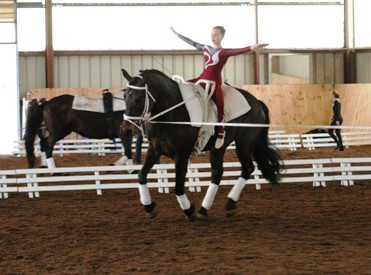
The vaulting whip helps the lunger regulate the horse’s rhythm, energy and straightness. It reinforces voice aids and encourages the horse to maintain forward movement without rushing.
A well-trained vaulting horse should respond to the whip’s presence, not its physical contact. The whip is an aid to communication, not a disciplinary tool.
Vaulting has clear welfare standards regarding whip use. Under FEI guidelines:
National organisations typically adopt similar rules. Consistency, respect for the horse and minimal physical influence are key principles across all vaulting bodies.
Although vaulting whips look similar to lunge whips, each type has a distinct purpose.
| Whip Type | Typical Length | Primary Use |
|---|---|---|
| Vaulting Whip | 180–290 cm shaft + long lash | Maintaining impulsion & circle size for vaulting horses |
| Lunge Whip | 160–250 cm shaft + long lash | General lunging & exercise |
| Groundwork / In-Hand Whip | 120–200 cm shaft + short lash | Close-range communication in schooling or in-hand dressage |
This comparison helps riders and lungers choose the correct whip for each discipline.
Because of its length, a vaulting whip requires good technique and awareness. Key safety principles include:
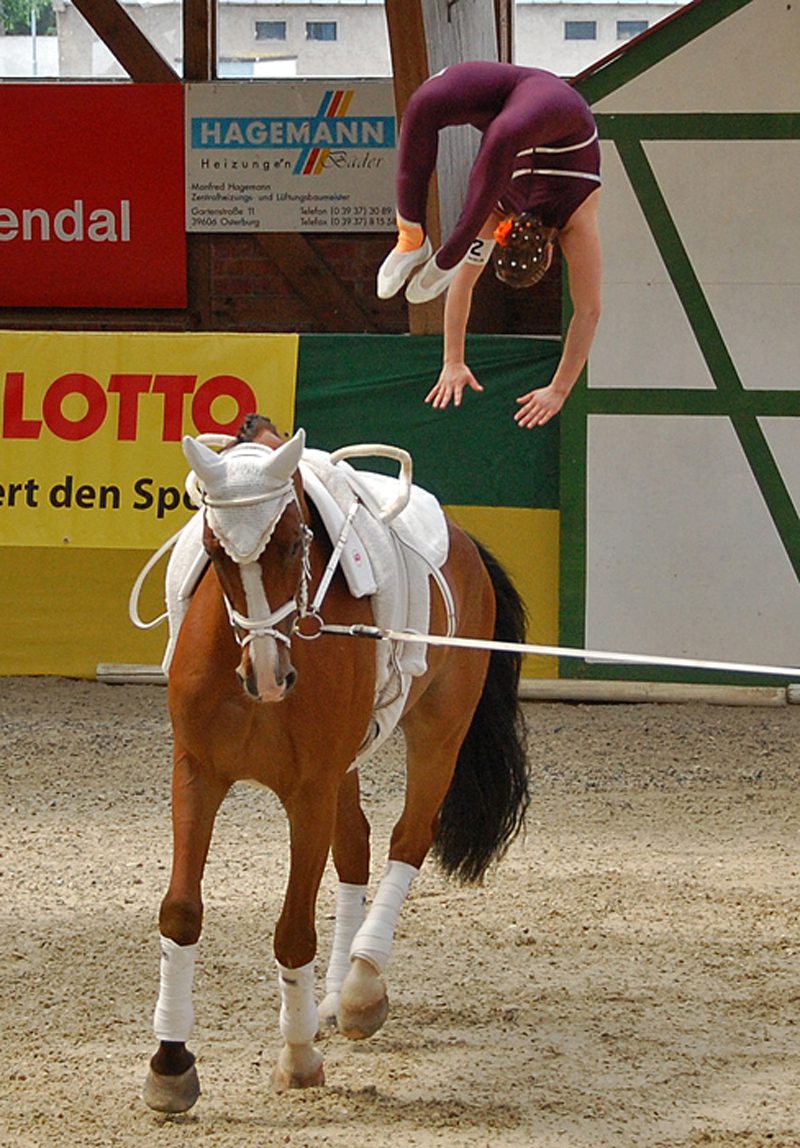
When selecting a vaulting whip, consider the following:
A well-balanced vaulting whip helps the lunger maintain rhythm and predictability, giving vaulters a safe, consistent surface to work from.
Vaulting whips rely on flexibility and balance to communicate effectively. Horse Whip Anatomy Explained breaks down how handle length, shaft flex, and lash design influence performance.
Vaulting whips play a vital role in maintaining rhythm, energy and safety within the vaulting circle. Designed for distance communication rather than direct contact, they help create a consistent, balanced working environment for both horse and vaulter. Understanding their purpose, correct use and key differences from lunge and groundwork whips ensures they remain a supportive, welfare-friendly aid in this unique equestrian sport.
If you’re selecting equipment specifically for vaulting, you can browse our range of vaulting whips, designed for clear, controlled communication from the ground.
