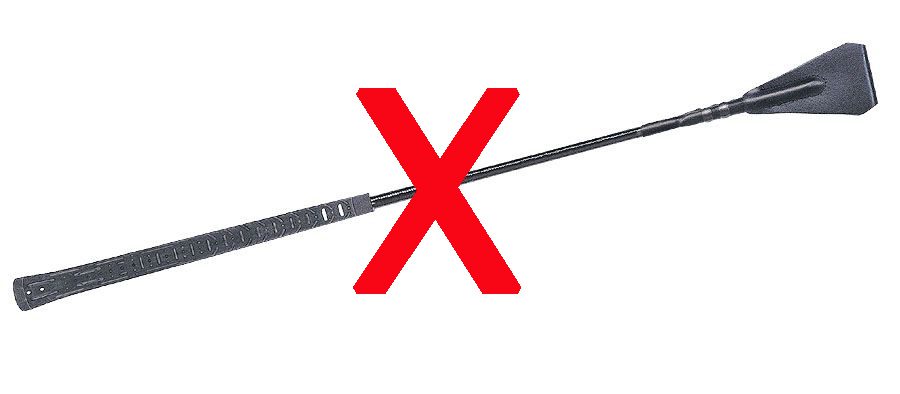
A riding whip is intended to be a subtle communication aid, not a tool of force. While much advice focuses on how to use a whip correctly, understanding when not to use a riding whip is just as important for your horse’s welfare, confidence, and long-term training. Our guide to horse riding whips explains the different types, purposes, and correct application, which helps put these boundaries into context.
Used at the wrong moment, a whip can confuse a horse, damage trust, or escalate a situation rather than resolve it. This guide explains the situations where a whip should not be used, and what to do instead.
Horses learn through clarity, timing, and consistency. A whip used without those elements quickly becomes noise rather than communication.
Inappropriate whip use can:
In many cases, not using the whip at all is the most effective and ethical choice.
Not all whips are intended for the same situations. Understanding the various types of horse whips and their uses helps prevent inappropriate or unnecessary whip use.
If a horse does not yet understand the question being asked, adding a whip will not create clarity. It often creates uncertainty.
This is especially relevant for:
In these situations, slow the exercise down, simplify the request, or return to groundwork rather than reaching for the whip.
A whip should never be used to push a horse beyond its physical capacity.
Do not use a whip if the horse may be:
If a horse cannot respond, increasing pressure will not solve the problem.
One of the clearest indicators of incorrect whip use is emotion.
A whip should never be used:
If you feel tense or irritated, it is always better to pause, reset, or finish the session calmly.
If a horse hesitates, spooks, or loses balance, the whip is not an appropriate response.
In these moments, the horse needs reassurance and stability, not added pressure. Using a whip here risks damaging confidence and increasing anxiety.
If a horse is going forward willingly and responding to leg aids, a whip is unnecessary.
Overuse in this situation can dull sensitivity and teach the horse to ignore lighter aids. A whip should reinforce communication, not replace it.
Signs that a whip should not be used include:
These signals indicate that the horse is struggling to cope. The correct response is to reduce pressure, not increase it.
Questions around fairness often come up when discussing whip use. Are Riding Whips Cruel? A Clear, Honest Explanation looks at welfare, intent, and correct application in a balanced way.
Whip misuse often occurs unintentionally, particularly in:
In many cases, fatigue, lack of understanding, or rider position are the real causes — not disobedience.
Repeated or poorly timed use can lead to resistance over time. Why Horses Become Whip Sour explains how overuse and confusion can create negative associations, and how to avoid it.
When a whip is not appropriate, consider:
Good training progresses through understanding, not pressure.
In some situations, stepping away from the whip altogether is the fairest option. How to Build Horse Confidence Without a Whip explores alternative ways to encourage responsiveness and trust.
Most governing bodies emphasise that a whip is a communication aid, not a disciplinary tool. Excessive or inappropriate use can result in penalties, elimination, or disciplinary action.
Beyond rules, responsible whip use reflects respect for the horse as a partner rather than a machine.
Knowing when not to use a riding whip is a key part of ethical, effective horsemanship.
If a horse is confused, uncomfortable, frightened, or already responsive, the whip has no role to play. The most skilled riders are those who recognise when restraint, patience, and clarity will achieve far more than added pressure. Choosing when to use a whip also depends on how reliably it responds when carried. Our Fleck Whip Buyer’s Guide explains why stable, well-balanced designs support quieter decision-making rather than overuse.
Used thoughtfully, or not at all when appropriate, a whip remains what it was always intended to be: a quiet aid, not a solution. Clear timing and restraint are essential when a whip is used at all. How to Use a Horse Whip Correctly explains how the whip should support the leg aid rather than replace it.
If you’re reassessing your approach or equipment, you can browse our range of horse whips designed for different disciplines and levels of sensitivity.
