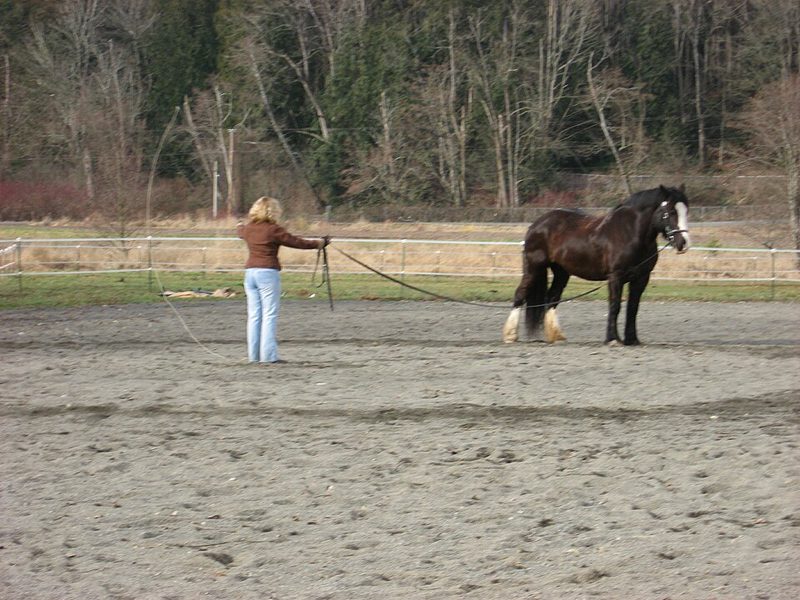
Lunging is one of the most valuable training tools in groundwork, helping riders develop their horses rhythm, suppleness, connection and obedience from the ground. A lunge whip plays an important role in this process, acting as an extension of your arm, not a device for punishment. Used correctly, it helps guide the horse’s energy, create clearer communication and reinforce voice and body aids.
Lunge whips are one of several tools designed for different training situations. Understanding the types of horse whips and how each is intended to be used helps clarify where lunge whips fit within groundwork training.
This guide explains how to choose, hold and use a lunge whip safely and effectively, with step-by-step methods based on classical lunging technique and modern welfare standards. Although lunge whips are used from the ground, many of the same principles apply across all whips. Our complete guide to horse riding whips explains design, balance, and correct use in more detail.
A lunge whip is a long training whip designed for working a horse on a circle from a distance. Unlike groundwork or touchier whips, a lunge whip has a long shaft (usually 180–250cm) and a long lash of similar length. This combination allows the whip to reach the horse’s hindquarters without pulling the circle smaller or causing the handler to step into the horse’s space.
The whip should be light in the hand, well balanced, and easy to flick or lift without strain. A good lunge whip allows you to give quiet, subtle cues, not loud, dramatic movements.
The correct size of lunge whip matters for both communication and safety.
If the whip is too short, you may step too close to the horse.
If it’s too long or heavy, it becomes tiring and encourages exaggerated movements.
Lunging requires awareness, timing and respect for space. These safety rules keep you and your horse protected:
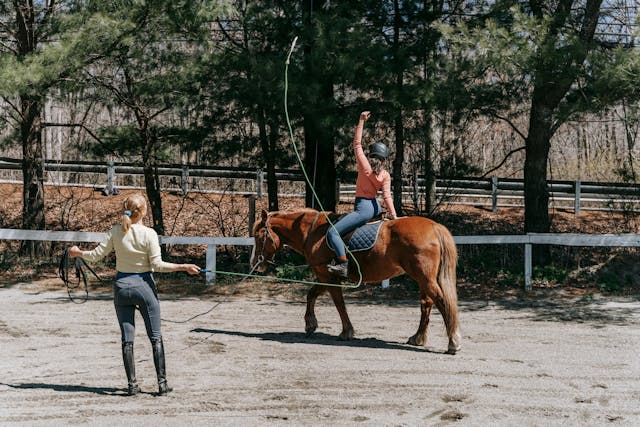
Correct grip creates subtle, accurate communication:
You should feel as if the whip is simply an extension of your arm, not something you need to swing or brandish.
Because lunge whips are longer and more flexible than riding whips, understanding their construction is important. Horse Whip Anatomy Explained breaks down how handle length, shaft flex, and lash design affect control.
Clear positioning of the whip helps the horse understand what you want:
A whip only works with correct timing and clear body cues. Riders often make these errors:
The goal is always soft, precise, minimal movement.
The whip can help improve transitions by directing energy, not by touching the horse:
Lunge whips are often introduced early in a horse’s training. Whips for Young Horses: How to Introduce Them outlines how to do this calmly and progressively to avoid fear or confusion.
Young or sharp horses often react strongly to whips. Introduce pressure slowly:
Patience is key. Rushing increases tension and creates long-term problems.
When buying a lunge whip, consider:
Lunge whips are one of the most common groundwork tools, but they’re not the only option. Groundwork Whips: When to Use Them & How They Help explains how different groundwork whips support training from the ground.
For closer, more precise work, a shorter in-hand whip may be more appropriate. In-Hand Schooling Whips: How to Choose and Use Them covers when a lunge whip may be too much and a subtler aid is needed.
A lunge whip is a valuable communication tool when used correctly, quietly, precisely and with good timing. The goal is never to chase or punish the horse, but to support the energy, direction and rhythm of lunging.
By understanding whip position, correct handling, body language and timing, you can create clear, consistent training sessions that build confidence, obedience and balance in your horse.
If you’re choosing equipment for lunging or groundwork, you can browse our range of lunge whips, designed for safe, clear communication from the ground.
