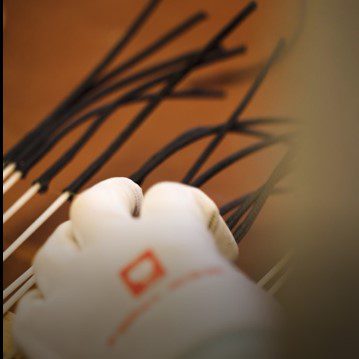
Knowing how to replace a horse whip lash can be useful for riders who use their whips regularly, particularly for groundwork, lunging, or in-hand training where the lash experiences the most wear.
That said, not all whips are designed to have a replaceable lash, and in some cases attempting a repair can compromise balance, safety, or competition legality. This guide explains when lash replacement is appropriate, how it is typically done, and when replacing the entire whip is the better option.
Replacing a whip lash is part of general whip care, but it helps to understand how different whips are designed and intended to work. Our complete overview of horse riding whips explains the main styles, construction, and correct use.
The lash is the flexible extension at the end of a whip shaft. Depending on the type of whip, it may be:
The lash provides reach, clarity of signal, and in some cases sound rather than contact. Because it is flexible and exposed, it is also the part most likely to fray, stretch, or wear over time.
No — and this is an important distinction.
Lash replacement is generally only suitable for:
Lash replacement is usually not recommended for:
Many riding and competition whips are engineered as a single balanced unit. Altering the lash can change weight distribution, flex, or legality, making the whip unsafe or non-compliant with competition rules.
Not all whips are constructed in the same way, and lash replacement isn’t suitable for every design. Understanding the various types of horse whips helps clarify when a repair is appropriate and when replacement is the better option.
Replacing a lash may be appropriate if:
If the shaft is cracked, the handle loose, or the whip feels unbalanced, replacing the entire whip is the safer and more effective option.
For whips designed with replaceable lashes, you will usually need:
Always choose a replacement lash that closely matches the original in weight and flexibility.
Before attempting a repair, it’s useful to understand how the whip is put together. Horse Whip Anatomy Explained breaks down the handle, shaft, and lash so you can see how each part connects.
Step 1: Remove the damaged lash
Carefully cut away the old lash at the attachment point. Avoid cutting into the shaft or binding beneath.
Step 2: Prepare the new lash
Trim the replacement lash to the correct length. For lunge whips, this often means measuring from the shaft tip to match the original length.
Step 3: Attach the new lash
Depending on the whip design, the lash may be:
The attachment must be tight, smooth, and secure, with no sharp edges or protrusions.
Step 4: Check balance and security
Before use, gently swing the whip to ensure the lash moves freely and the whip feels balanced.
After replacing a lash:
If a lash detaches during use, it can startle or injure a horse, particularly during groundwork or lunging.
For competition use, altered whips may not meet governing body rules regarding length, design, or construction.
As a general rule:
Replacing the whole whip is recommended if:
A well-balanced, purpose-built whip will always provide clearer, safer aids than a poorly repaired one.
Lash durability varies depending on the materials used. Horse Whip Materials Explained looks at common materials and how they affect flexibility, wear, and longevity.
While replacing a lash can extend the life of a whip, durability starts with good construction. How to Choose a Durable Riding Whip That Lasts explains what to look for if you’re deciding whether to repair or replace.
Replacing a horse whip lash can be practical for certain groundwork and lunge whips, provided it is done carefully and with the correct materials.
However, not all whips are suitable for repair, and rider safety, horse welfare, and competition compliance should always come first. When in doubt, replacing the whip entirely is often the wiser choice. When to Replace a Riding Whip outlines the key wear signs to look out for.
If repair isn’t practical or cost-effective, you can browse our range of horse whips suited to different disciplines and riding styles.
