
Choosing a riding whip isn’t really about choosing a “model” or a “range”. It’s about how the whip feels in your hand, how it balances when you ride, and how confidently you can use it without thinking about it.
Two riders can ride the same horse, in the same discipline, and still prefer completely different whips. One may want something light and responsive. Another may want a softer grip or a little more weight. Some riders care about how a whip looks in the ring, while others care only about balance and feedback.
Rather than listing Fleck whips by product name alone, we’ll explain the different design approaches Fleck uses across their whips, what problems each one solves, and who they tend to suit best. Once you understand those preferences, choosing the right Fleck whip becomes far more intuitive.
If you’re new to Fleck, this guide will help you make a confident first choice. If you already ride with Fleck, it will help explain why certain whips feel right, and why others might suit you better as your riding develops.
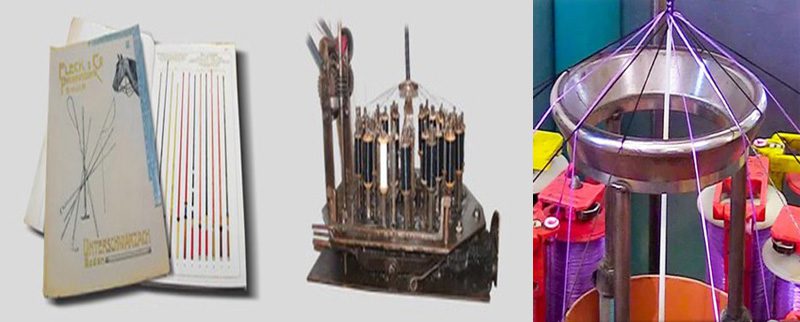
Fleck is not a modern brand built around marketing trends. It is a family-run German manufacturer with over 150 years of experience specialising in whip production.
Since the late 19th century, Fleck Germany Whips has focused almost exclusively on designing and manufacturing riding, schooling, lunging, and driving whips. This long, narrow focus is one of the reasons their products feel so consistent. Whip making isn’t a side category for Fleck. It is their craft.
Over generations, Fleck has refined how different materials behave, how balance changes with length, and how small variations in grip design affect rider comfort and control. Many of their designs have evolved slowly over decades rather than being reinvented every season.
Today, Fleck whips combine traditional manufacturing techniques with modern materials such as carbon fibre, composite shafts, and sustainable bamboo. Some ranges are still largely hand finished, while others are produced more efficiently to make Fleck quality accessible at lower price points.
This mix of heritage craftsmanship and modern engineering is why Fleck offers such a wide range of whips that all feel distinctly “Fleck”, yet suit very different riders.
Understanding that background helps explain why Fleck whips vary in price, weight, and finish, and why riders often stay loyal to the brand once they find the style that feels right.
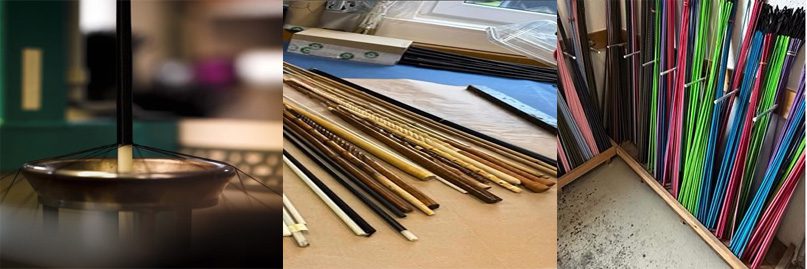
Fleck whips are designed from the rider’s perspective, not from a catalogue specification. While length and appearance are easy to compare, the way a whip balances, handles, flexes, and responds in use is what determines whether it feels right once you start riding.
Three elements sit at the heart of Fleck’s design process: balance, flex, and material choice.
Balance refers to how the weight of the whip is distributed along its length. A well-balanced whip feels stable in the hand and predictable in use. You should be able to apply an aid without the whip feeling tip-heavy, slow to recover, or distracting.
Fleck pays close attention to where the balance point sits, particularly in longer whips and lighter shafts. This is why two whips of the same length can feel completely different once you ride with them.
A heavier handle shifts the balance point back towards the hand, while a lighter handle allows it to sit further along the shaft. Some riders prefer the pivot point closer to the handle, while others feel more comfortable when it sits further away.
Whatever your preference, a well-balanced whip allows quieter hands and more consistent communication, which is especially important during schooling and precision work.
Flex is often misunderstood. A more flexible whip is not necessarily “softer”, and a firmer whip is not automatically harsher. Flex affects how quickly the whip responds and returns after an aid is applied.
Some riders prefer a whip with a quicker, firmer response that delivers a very clear signal. Others prefer a slightly more forgiving flex that smooths the aid and feels less abrupt, particularly on sensitive horses. Fleck designs different flex profiles to suit different riding styles, rather than treating stiffness as a one-size-fits-all feature.
Understanding flex helps explain why riders sometimes dislike a whip that looks ideal on paper but feels wrong in use.
Material choice plays a major role in both balance and flex. Fleck uses a wide range of shaft and handle materials, selected for how they feel and perform in use rather than how they look.
Shaft materials include lightweight carbon fibre composite for sensitivity and fast response, fibreglass for durability, and composite constructions that combine different fibres to achieve a balanced feel. Fleck also continues to use natural materials such as bamboo, which many riders prefer for its slightly softer, more forgiving feel.
Handle materials vary just as widely. Fleck offers natural leather, suede and nubuck finishes, as well as modern synthetic options such as rubber and soft, flexible PU grips. Traditional materials like wood and bamboo are also used in selected designs. Each material changes how the whip feels in the hand, from security and comfort to weight and balance.
Modern materials allow Fleck to produce very light whips with fast recovery, while composite and bamboo shafts offer a different, often more natural feel. In higher-end ranges, these materials are combined with additional hand finishing to fine-tune balance and response.
Handles and grips are designed as part of the overall system, not as decorative add-ons. Grip material, thickness and shape all influence how the whip sits in the hand and how secure it feels during use.
These design choices are the reason Fleck whips can feel so different from one another, even when they serve the same purpose. They also help explain why price differences exist across the range. You are not just paying for a name or appearance, but for specific design decisions and manufacturing processes that directly affect how the whip performs in use.
Once you understand how balance, flex, and materials influence feel, choosing the right Fleck whip becomes less about guessing and more about recognising what suits your riding.
Many riders begin their search for a whip by thinking about discipline first, and rightly so. You wouldn’t use a dressage whip for showjumping, just as a jumping bat would be unsuitable for dressage. Discipline rules and conventions determine the type of horse whip that is appropriate.
However, once those boundaries are set, there is still a wide range of choice within each discipline. Two riders competing in the same class may legally carry the same type of whip, yet prefer something very different in the hand.
One rider may favour a whip that feels light and quick, with minimal weight, while another may prefer something with more substance that feels anchored and stable. Neither preference is right or wrong. It simply reflects how each rider communicates with their horse and what feels most natural to them.
Starting with feel rather than discipline helps narrow choices more effectively. Consider how you like a whip to behave when you use it. Do you prefer a very responsive whip that recovers quickly, or one that feels slightly more forgiving? Do you like a soft grip that moulds to your hand, or a firmer grip that provides clear feedback? Small differences in balance, flex, and grip can have a much bigger impact on confidence than the discipline label attached to the whip.
Discipline rules mainly set boundaries around length and where a whip can be carried. Within those boundaries, there is often a wide range of suitable options. When riders focus solely on discipline, they sometimes end up with a whip that technically fits the rules but never quite feels comfortable to use.
By starting with feel, you can choose a Fleck whip that suits your riding style first, and then refine that choice within the requirements of your discipline. This approach leads to quieter aids, more consistent use, and a whip that feels like a natural extension of your hand rather than something you have to consciously manage.
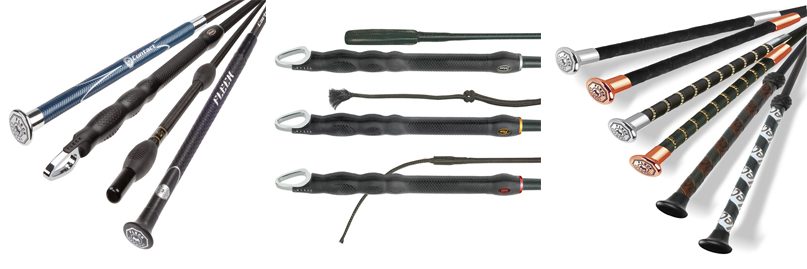
Handle choice is one of the most personal aspects of selecting a whip. Two riders can ride with the same whip but have very different preferences based on how the handle feels. Grip comfort, security, texture, and even appearance all influence confidence and consistency in use.
There is no universally “best” handle. What matters is what feels right to you.
Soft-touch and PU grips are popular because they offer a secure, forgiving feel without being bulky. They tend to suit riders who want confidence in the hand without feeling locked into one position. These grips are practical, comfortable over longer sessions, and work well in everyday riding and schooling.
Many riders who are new to Fleck start with this type of handle because it feels familiar and easy to use, particularly in changing weather conditions or when riding multiple horses and can be a good entry level design.
Ergonomic grips are designed to guide the hand into a natural position. Rather than simply adding grip, they help stabilise the hand and reduce unnecessary movement. Some riders find this especially helpful if they struggle with hand fatigue or want clearer feedback from the whip.
These handles tend to appeal to riders who value precision and consistency, as well as those who prefer a more structured feel rather than complete freedom of movement.
Suede and nubuck handles offer a softer, more tactile feel. They mould gently to the hand and are often chosen by riders who prefer a refined grip rather than a firm one. These materials feel warm and comfortable and are often associated with whips designed for subtle communication.
Riders who like these handles often value feel and finesse over maximum grip, and may choose them for schooling, dressage, or refined flatwork.
Leather-wrapped handles have a long tradition in whip making. They provide a natural feel with a little more substance in the hand and are often associated with classic styling and craftsmanship. Many riders appreciate the slight weight and solidity that leather brings, particularly if they like a whip that feels anchored and stable.
In addition to how they feel, leather handles also offer a refined, high-quality appearance. They tend to suit riders who value traditional materials, understated elegance, and a more tactile connection, rather than modern or highly technical textures.
For some riders, appearance matters. Decorative handles, including crystal or embellished finishes, allow riders to express personal style while still riding with a well-balanced, functional whip. In the show ring, these details are often noticed, and many riders enjoy choosing a whip that compliments their turnout.
While these handles add visual appeal, they are still designed to be functional. The difference in price usually reflects additional hand finishing, detailing, and material choice rather than decoration alone.
Some Fleck handles use traditional materials such as wood or bamboo. These offer a distinct feel and are often chosen by riders who appreciate natural textures or want a connection to more traditional whip designs. They can feel slightly warmer and more organic in the hand compared to synthetic materials.
The handle influences how relaxed your hand feels, how secure the whip is during use, and how confidently you apply aids. A handle that feels right allows you to focus on riding rather than adjusting your grip.
This is also one of the main reasons Fleck offers such a wide range of handle options. Riders value different things, and the right handle can make the same whip feel completely different from one person to the next.
Understanding your grip preference makes it much easier to narrow down suitable Fleck designs, which is why handle choice often becomes the deciding factor once length and discipline requirements are met.
Handle preference often becomes even clearer when riders compare how different whip formats feel in use. For example, grips that feel ideal on longer whips can behave very differently on shorter tools such as riding crops, where security and immediate response matter more than subtle balance cues.
Fleck’s range includes a wide variety of designs, not to overwhelm riders with choice, but to reflect how differently people ride and what they value in a whip. Each design exists to offer a particular feel, balance, or grip preference rather than to signal a “better” or “worse” option.
Understanding these differences makes it easier to recognise which designs are likely to suit you, even before thinking about discipline or length.
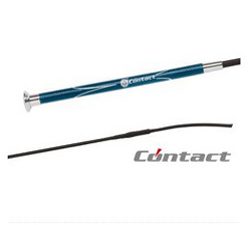
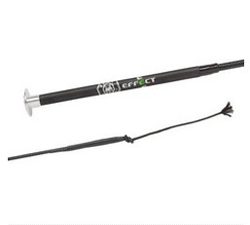
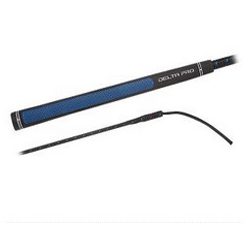
Contact, Effect and Delta Pro designs
These three designs tend to appeal to riders who want a dependable, intuitive feel in the hand. The grips are soft, but secure without being bulky, and the overall balance feels stable and predictable during use.
They are commonly chosen for general riding, lessons, and regular schooling, particularly by riders who value consistency and ease of use. Many riders appreciate that these designs feel natural straight away, without requiring adjustment or adaptation.
Effect sits in the same “everyday secure” camp, often chose by riders who want a straightforward no-fuss grip that feels confident in regular use. Delta Pro sits comfortably within this group, offering a straightforward, practical design that focuses on reliability and balance rather than embellishment.
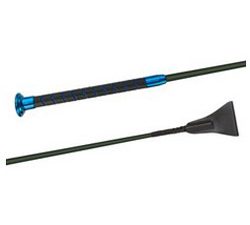
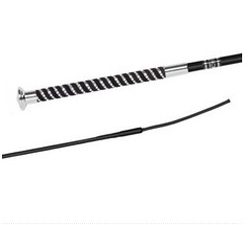
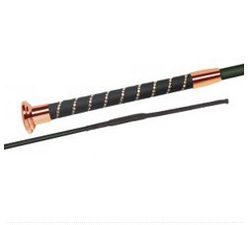
Silk Touch and Brilliance designs
Silk Touch whips are recognised for their suede-style handles, which provide a softer, more tactile feel. Riders who prefer subtle communication often gravitate towards these designs, particularly if they like a grip that feels forgiving and comfortable over longer sessions. Available in a range of set colours and the option for inlaid crystals in the handle, they make a great whip to start.
The Brilliance range builds on this concept with additional hand finishing, more customised choice in handle and shaft combinations, and refined crystal detailing. These designs often appeal to riders who enjoy combining feel with visual elegance, especially where presentation matters as much as performance.
Evo designs
The Evo range is designed for riders who prioritise lightness and responsiveness. High-tech carbon shafts reduce overall weight and allow for quick recovery, while the ergonomic rubberised Evo grip is shaped to sit naturally in the hand.
These whips often suit riders who prefer a very clean, precise feel, or who want a whip that feels unobtrusive during use. They are also popular with riders who find heavier whips tiring or distracting.
Feldmann and Triple Balance designs
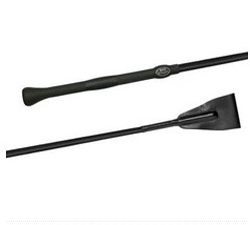
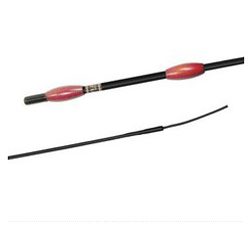
Feldmann designs are built around balance cues and consistent hand placement, encouraging stability and repeatable feel. They are known for being exceptionally light and well balanced, which many riders appreciate during schooling and precision work.
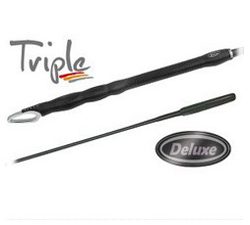
The Triple Balance range offers different balance and flex characteristics, allowing riders to choose a feel that suits their personal preference, whether that is firmer and more direct or slightly more flexible. With a lovely designed ergonomic handle, these designs tend to suit riders who are very aware of how a whip moves and responds in motion.
Leather Wrapped Designs
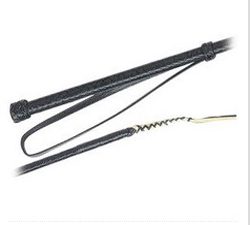
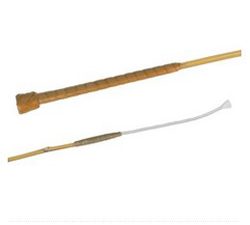
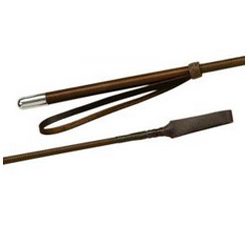
Leather-wrapped handles appeal to riders who value traditional materials and a classic feel. These whips often feel slightly more substantial in the hand and are chosen by riders who prefer a sense of solidity and presence rather than extreme lightness.
They are also appreciated for their refined appearance and understated elegance, reflecting the hand made craftsmanship involved in their construction.
Bamboo designs
Bamboo whips offer a distinct feel that some riders find more natural or forgiving. Whether it’s the shaft or the handle, bamboo behaves differently from synthetic materials, providing a response that can feel softer and more organic in use.
These designs are often chosen by riders who value natural materials or who prefer a slightly different balance and flex profile compared to modern composites.
These design choices explain why Fleck whips can feel very different from one another, even when they are intended for similar use. They also help explain why price differences exist across the range. You are not paying for appearance alone, but for specific material choices, balance characteristics, and manufacturing processes that influence how the whip performs.
Understanding this makes it easier to choose a whip that feels right for you, rather than assuming one design is automatically better than another.
For many riders, the whip they use most often is not for competition, but for everyday riding and generally the whip that sees the hardest life. Schooling at home, lessons, hacking, or regular arena work expose whips to more wear, knocks and occasional breakage that competition or specialist disciplines.
Fleck recognises this reality, which is why the ranges include designs intended specifically for regular, practical use. These whips focus on consistency, balance, and durability rather than extensive hand finishing or decorative detail. The aim is to provide a reliable feel in the hand while remaining practical for frequent riding.
Many riders choose to keep one or more of these everyday whips as part of their regular kit, knowing they can be used without concern if conditions are poor or sessions are more relaxed. At the same time, Fleck’s design principles remain consistent across the range. Even in more accessible designs, attention is paid to balance, grip comfort, and predictable response.
This approach allows riders to build a small, more cost effective collection of whips suited to different situations. A dependable whip for daily riding can sit alongside more refined or handcrafted designs that are reserved for competition, clinics, or special use. Rather than compromising on feel, this reflects an understanding that different riding contexts call for different tools.
For riders new to Fleck, everyday riding is often where preferences begin to form. Regular use highlights what feels comfortable, how much weight is preferred in the hand, and how different grips behave over time. This experience naturally influences future choices, whether that means staying with familiar designs or exploring more specialised options within the range.
Horses that are reactive, inconsistent, or easily unsettled, including those that have become whip-sour, often respond less to the presence of a whip and more to how predictably it behaves in use.
This is where Fleck’s design philosophy becomes particularly relevant. Balance point, flex, recovery speed, and grip security all influence whether a whip delivers a quiet, deliberate aid or creates unintended movement. A whip that rebounds too quickly, feels uneven in the hand, or moves independently of the rider’s intention can result in accidental contact, even when the rider is trying to remain calm and consistent.
Fleck addresses this through careful control of balance and materials rather than relying on stiffness or weight alone. Designs such as the Fleck Feldmann range illustrate this approach well. These whips are very light, thin through the shaft, and deliberately firm, reducing unwanted movement or “waving” during use. Positioning features built into the handle help encourage consistent hand placement, which many riders find particularly helpful when precision and quietness matter.
Similarly, Fleck’s ultralight carbon composite whips demonstrate how modern materials can support refined aids. Very light in the hand, yet remaining stable in the hand, these designs allow the rider to give light, deliberate signals without the whip feeling intrusive or unstable. The handle shape is designed to suit a wide range of hand sizes, helping reduce grip tension and improve control.
Grip design plays an equally important role. Secure, well-shaped handles help minimise unnecessary hand movement, lowering the risk of unintentional contact. For riders working with sensitive horses, this can make the difference between a whip that supports communication and one that becomes a distraction.
Rather than offering a single solution for sensitive horses, Fleck provides multiple design options that allow riders to choose a feel that aligns with their own hands and timing. This reflects an understanding that sensitivity is not just about the horse, but about how horse and rider interact together.
In these situations, refined design choices matter more than length or appearance. A well-balanced, predictable whip allows the rider to stay quiet, measured, and consistent, supporting clearer communication and a calmer response from the horse.
It’s also worth recognising that there are moments when restraint matters as much as technique. Understanding when not to use a whip is part of developing quieter, more consistent communication, particularly with sensitive horses.
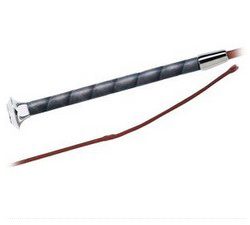
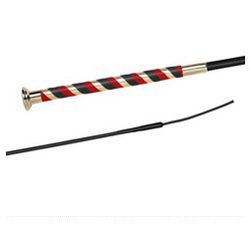
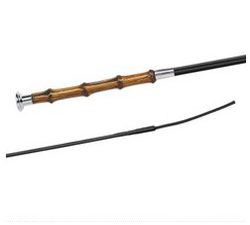
In dressage, the whip plays a different role than it does in many other disciplines. It is not primarily about correction, but about education, clarity, and consistency during training. Even when it is not actively applied, the presence of a whip can influence how a horse responds to the rider’s leg and seat aids. Length still plays a role in dressage, but it works best when considered alongside balance and feel rather than in isolation. Our guide to dressage whip length looks at how these factors interact in more detail.
Many dressage riders also value the visual presence of the whip as much as its physical use. A whip that is clearly visible to the horse can reinforce understanding and attentiveness, helping maintain responsiveness without repeated contact. This is one reason dressage whips remain an essential schooling tool, even though they are not permitted in the competition arena.
Because whips cannot be carried in tests, dressage riders rely heavily on their use during training at home. Fleck designs its dressage whips with this purpose in mind. They are light yet robust, carefully balanced, and flexible enough to allow precise, controlled aids while remaining predictable and calm in the hand.
Within the Fleck range, dressage whips naturally fall into different roles rather than levels of quality. For everyday schooling, designs such as the Silk Touch range are commonly chosen. These whips offer a comfortable, tactile grip and a familiar feel, making them well suited to regular use where consistency and ease matter most.
For riders who spend a great deal of time schooling or working on refinement, Fleck’s Contact and Triple Balance dressage whips are often preferred. These designs place greater emphasis on balance, grip security, and controlled response, supporting precise aids during more technical sessions.
At the premium end of the range, designs such as Brilliance, and leather-wrapped dressage whips combine highly refined balance with additional hand finishing and material choice. These whips are often selected by riders who value subtlety, consistency, and presentation, particularly where the whip is part of the overall visual impression as well as a training aid.
Professional and amateur dressage riders around the world choose Fleck because these design principles remain consistent across the range. Regardless of whether a whip is used for everyday schooling or reserved for more specialised work, the focus remains on balance, flexibility, and predictable behaviour in use.
For dressage riders, the right whip supports training quietly and effectively, helping develop clarity and responsiveness that carries through into competition, even when the whip itself is no longer present.
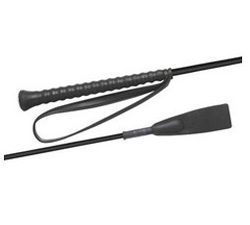
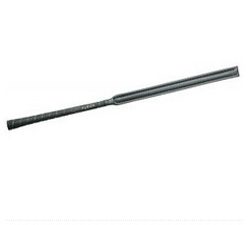
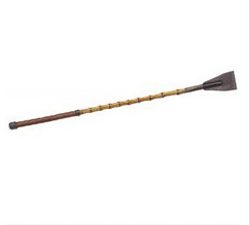
Jumping places very different demands on a whip than dressage or slow schooling work. Riding at speed, adjusting balance quickly, and reacting in the moment all change how a whip needs to behave in the rider’s hand.
In this context, jumping bats and riding crops are therefore designed to be short, robust, and easy to control. The emphasis shifts away from subtle balance cues and towards grip security, durability, and predictable response when used quickly. This is why jumping bats are built differently from longer schooling or dressage whips. If you’re deciding between different jumping formats, the difference between short vs long whips becomes especially relevant at speed.
Fleck’s jumping bats are designed to remain stable in the hand during faster work, with grips that resist slipping even when the rider’s hand position changes. Many designs feature cushioned or padded flaps at the end, allowing a light, controlled tap without sharpness or pain. This supports clearer communication without requiring force, particularly when a quick reminder is needed between fences.
Some Fleck design philosophies naturally translate well into jumping bats, while others do not. Softer grip styles, such as those found in the Silk Touch range, appeal to riders who want comfort and reassurance during regular jumping sessions. More robust designs with firmer grips, such as Contact or Effect style bats, are often chosen for their secure feel and durability in everyday use.
At the more refined end, Brilliance and leather-wrapped jumping bats offer the same attention to materials and finishing seen elsewhere in the Fleck range. These designs are often selected by riders who value presentation as well as function, particularly where the whip is visible in the ring.
Notably, designs such as Feldmann and Triple Balance do not exist in jumping bat form, and for good reason. Their defining features focus on balance cues, hand positioning, and controlled flex, all of which are less relevant in a short bat used at speed. Applying those design concepts to jumping bats would offer little benefit and could even work against the rider’s needs.
This distinction reflects Fleck’s broader approach to design. Rather than forcing the same concepts across every discipline, each whip is developed to suit how it will actually be used. In jumping, that means prioritising grip, robustness, and clarity of response over fine balance cues.
For riders, this clarity makes choosing easier. A jumping bat should feel secure, predictable, and easy to handle at pace. Fleck’s jumping designs are built with those priorities firmly in mind.
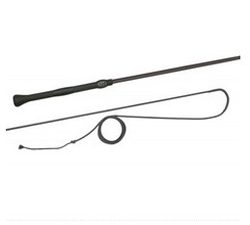
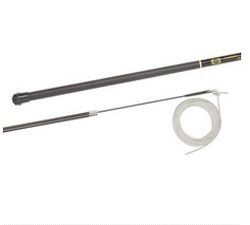
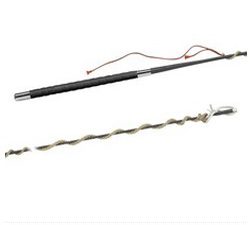
Specialist whips are where Fleck’s design philosophy becomes very practical. These aren’t discipline-adjacent tools that borrow from riding whips. They are built around reach, balance, durability, and control first, with feel and grip playing a supporting role rather than leading the design.
With lunging whips, Fleck prioritises lightness, reach, and shaft behaviour over handle shape. When you are working on the ground with a whip that may be well over a metre long, even small increases in weight or poor balance quickly become fatiguing.
Economy lunging whips are typically made from carbon composite to keep the overall weight down while maintaining strength. Many are available as either one-piece designs or two-piece screw-together versions, which makes transport far easier without compromising stability in use. Handles in this range often use the Evo or Ergo grip, paired with a small leather thong and a long lash. The lash is doing most of the communicative work here, whether that’s creating sound or maintaining the horse’s focus at distance.
In the Professional lunging range, adjustability becomes the defining feature. Fleck offers telescopic and multi-adjustable whips that allow the rider or trainer to fine-tune length depending on arena size, horse sensitivity, and personal control. At this level, handle style becomes secondary to shaft quality. These whips are more touch-sensitive, designed to respond with minimal effort rather than force.
Within this category, Fleck also offers more specialised tools. The Triple Balance lunging whip uses a medium-flex shaft and is available in lengths typically between 140 and 180 cm, allowing handlers to choose something they can comfortably manage without losing precision. There are also bamboo touchier whips for those who prefer a more traditional material and feel, and a specialist piaffe whip with a woven synthetic wrapped grip, offered in a range of handle and shaft colour combinations. These are designed for subtle, close-in communication rather than reach.
Vaulting whips sit firmly in the specialist category due to their extreme length, often reaching up to three metres. To make this workable, Fleck uses carbon composite construction throughout the range to ensure strength without excessive weight.
All vaulting whips are telescopic, allowing them to collapse down for storage and transport while remaining rigid when extended. Grip choices tend to favour golf-style or super-soft grips, reflecting the need for comfort and security during prolonged sessions rather than tactile feedback.
Driving whips place very different demands on materials and balance. Control is often maintained over long periods, and the whip must remain stable without becoming tiring.
In the Economy range, Fleck uses woven nylon handles to keep costs down while maintaining durability. These are practical, workmanlike whips designed for regular use.
The Professional driving range expands significantly in both material and feel. Options include contact whips, leather-wrapped handles with a very sticky feel, traditional bamboo shafts, and elegant willow designs. These whips are chosen as much for balance and responsiveness as for personal handling preference.
At the top end, Premium driving whips are made from holly and finished with exquisite leather wrapping. These are fully functional tools, but they also carry a strong aesthetic presence. They are often chosen by drivers who value traditional craftsmanship alongside performance.
Fleck’s hunting whips remain firmly rooted in tradition. Typically made from cane and lacquered for durability, they are finished with real staghorn handles, nickel collars, and either plain cane or leather-wrapped shafts. Some versions feature braided leather detailing. These are classic, purposeful designs where appearance and heritage matter just as much as function.
Fleck offers two distinct show canes, both understated and traditional. One is made from Tonkin bamboo with a nickel cap and end. The other uses Pearl bamboo, finished with a nickel mushroom cap and nickel end cap, available in black or dark brown. These canes are about presentation and correctness rather than training use, designed to complement turnout without drawing attention to themselves.
When riders talk about a whip feeling “right” or “wrong,” they are usually responding to weight, flex, and balance rather than length or discipline. Fleck designs each whip by starting with how it should behave in the hand, then selecting materials and construction methods to achieve that feel.
Weight plays a very different role depending on the type of whip.
For dressage whips and everyday riding crops, Fleck aims for a light, neutral feel that doesn’t interfere with the rider’s rein contact. A whip that is too heavy becomes tiring and encourages riders to shorten their grip or alter their hand position. This is why many Fleck riding whips use slim shafts and carefully selected cores, keeping the overall weight low while maintaining stability.
With jumping bats, weight is less about overall lightness and more about control. A bat that is too light can feel vague or flicky, especially when riding at speed. Fleck balances this by adding structure through the padded flap or end, so the bat stays steady in the hand without feeling cumbersome.
In specialist whips, weight management becomes critical. Lunging and vaulting whips can be extremely long, so Fleck relies heavily on carbon composite construction to prevent fatigue. Driving whips, by contrast, may accept slightly more weight if it contributes to steadiness and long-term comfort.
Flex is often misunderstood. It’s not about softness but about how energy travels through the shaft.
In dressage whips, Fleck typically favours controlled, moderate flex. This allows the whip to move with the rider’s hand rather than against it, giving clear but subtle feedback. Too much flex can feel delayed, while too little can feel abrupt.
Jumping bats usually have minimal flex. They are designed for quick, precise cues, often delivered from a shorter movement. A stiff or near-stiff shaft ensures that the bat responds instantly, without bending or lag.
For lunging and specialist schooling whips, flex becomes a functional tool. Touchier whips and piaffe whips rely on carefully tuned flexibility to deliver light, precise signals. The Triple Balance lunging whip sits here, offering medium flex so the whip feels responsive without becoming unstable at length.
Balance is where Fleck’s design philosophy is most noticeable. A well-balanced whip feels lighter than it actually is, because the weight is distributed in a way that supports the rider’s natural hand position.
Across dressage whips, riding crops, and jumping bats, Fleck aims to keep the balance point close to the hand. This prevents the whip from tipping forward or dragging the wrist down, especially during prolonged schooling sessions.
In lunging and vaulting whips, balance shifts further along the shaft, but deliberately so. This allows the whip to extend smoothly into the lash without requiring constant correction from the handler. Telescopic designs are engineered so balance remains consistent even when length is adjusted.
For driving and hunting whips, balance supports stability over time. Traditional materials such as bamboo, willow, holly, or cane naturally influence how weight is distributed, which is why these whips feel very different from modern composite designs even at similar lengths.
Two riders can choose the same discipline whip and have completely different experiences if their strength, coordination, or sensitivity differs. This is why Fleck designs across categories are so varied and why understanding weight, flex, and balance often leads to a better choice than simply selecting “a dressage whip” or “a jumping bat.”
Once you understand how a whip behaves in your hand, discipline becomes a secondary consideration rather than the starting point.
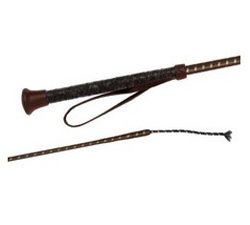
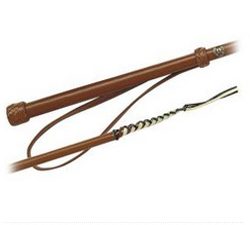
One of the things that’s easy to miss when browsing Fleck whips is that in-stock does not mean generic, and handcrafted does not mean experimental. Fleck manages both ends of this spectrum deliberately, using different production methods to balance consistency, cost, and customisation.
Fleck’s in-stock whips are produced in larger runs, but always within their own factory and always to Fleck’s specifications. Handles, shafts, and lashes are made in standardised formats so they can be assembled efficiently, which keeps costs down without diluting the core design principles.
These whips still reflect everything Fleck is known for: considered balance, predictable flex, and reliable feel. The difference is that materials, colours, and lengths are selected from a controlled set of options that Fleck knows work well for the majority of riders.
This is why the in-stock ranges feel so dependable. Riders know what they are getting, and Fleck can ensure that a dressage whip, riding crop, jumping bat, or lunging whip behaves consistently from one batch to the next.
As you move up through Fleck’s professional and premium ranges, the manufacturing process becomes more hands-on. This is partly about materials and partly about variation.
Natural materials such as bamboo, willow, holly, or cane cannot be treated in the same way as composite shafts. Each piece behaves slightly differently, so more time is spent selecting, shaping, and balancing individual components. Leather wrapping, grip finishes, and shaft tuning also become more refined at this level.
The result isn’t a dramatic change in performance, but a more nuanced feel. These whips tend to reward riders who are sensitive to balance and weight distribution, particularly in specialist disciplines such as driving, hunting, or advanced schooling.
At the top end are Fleck’s genuinely custom whips. These include combinations of shaft colours, handle colours, grip styles, and materials that simply can’t be held in stock. The number of possible variations becomes too large.
Rather than compromise by limiting choice, Fleck makes these whips to order. Each one is assembled and finished individually, which is why lead times are longer and prices higher. This isn’t a marketing decision, it’s a practical one. Keeping every colour and material combination on the shelf would be impossible.
If this feels familiar, it’s because the logic is the same as with high-end custom saddle pads or girths. Choice and craftsmanship replace immediacy.
Understanding how Fleck structures its ranges helps set expectations. An in-stock whip isn’t a lesser option, it’s a refined, repeatable design built for accessibility and reliability. A handcrafted or custom whip isn’t necessarily “better,” but it offers more individuality in materials, aesthetics, and feel.
Many riders first fall in love with Fleck because of the look or the custom options, then stay because they realise how much thought goes into balance, flex, and usability across all ranges. The design philosophy stays the same; only the level of variation changes.
Even experienced riders often make whip choices based on assumptions that feel logical, but don’t always hold up in practice. Because Fleck’s range is so broad, these assumptions can lead riders to a whip that is technically correct, but not actually right for them.
Many of these mistakes come from treating whips as simple accessories rather than tools with distinct purposes and behaviours. Once riders understand how different whip types are designed and used, these assumptions tend to disappear. If you’d like a broader, non brand-specific overview alongside this guide, our complete guide to horse riding whips covers whip types, uses, and considerations across disciplines in more general terms.
One of the most common mistakes is starting with the discipline label rather than the feel. A “dressage whip” covers a wide range of weights, flex profiles, grips, and balances. Two Fleck dressage whips of the same length can feel completely different in the hand.
The same applies to jumping bats and riding crops. Some riders want something very neutral and unobtrusive. Others want a bat that feels more present and deliberate. Discipline narrows the field, but it shouldn’t make the final decision for you.
Length is often treated as the most important specification, when in reality it’s only meaningful in context. A longer whip that is well balanced and light can feel easier to manage than a shorter whip with poor weight distribution.
Rider size can play a role, but not in a simple “taller or shorter” sense. Arm length, reach, and coordination matter far more than height alone. This is especially true with Fleck’s carbon composite shafts and balanced handle designs, where riders sometimes size down unnecessarily because they assume longer automatically means heavier or harder to control.
Grip comfort is about the rider, not the horse. A super-soft or cushioned grip can be ideal for long sessions or lunging, but some riders find they lose precision if the grip is too forgiving.
Sensitive horses are usually better served by a whip with predictable balance and controlled flex, rather than one chosen purely for handle softness.
Fleck’s premium and custom whips are undeniably beautiful, and there’s nothing wrong with caring about aesthetics. The mistake is choosing appearance before understanding how the whip behaves.
Materials like bamboo, holly, or cane don’t just look different, they handle differently. Even decorative handles may feel different in the hand. When riders choose these without considering weight and balance, the whip can feel wrong even though it looks perfect.
Another common trap is trying to find a single whip that works across schooling, competition, groundwork, and hacking. While Fleck designs many versatile options, specialist tools exist for a reason.
A whip that feels ideal for flatwork may feel intrusive when jumping. A lunging whip designed for reach will never feel subtle in the saddle. Accepting this early makes the buying process far clearer.
Before looking at discipline or length, ask a simple question:
Do you want the whip to feel almost invisible in your hand, or clearly present?
Riders who prefer a neutral feel tend to gravitate toward lighter, well-balanced shafts and slimmer grips.
Riders who like feedback often prefer a little more structure or presence, especially in jumping bats and schooling whips. This single preference already removes a large portion of the range.
Grip choice should reflect your hand size, strength, and how long you typically hold the whip. Evo, Ergo, golf, super-soft, leather wrap, or traditional materials all suit different riders.
If you’ve ever changed your grip mid-ride because your hand felt tired or cramped, that’s a clue worth listening to.
Now discipline comes back into play, but as a refinement rather than a starting point. Flatwork-focused riders often benefit from controlled flex and a balance point close to the hand. Jumping riders usually prefer a stable, low-flex bat that responds instantly.
Groundwork, lunging, and driving require balance and shaft behaviour that remain consistent over time and distance. This is where Fleck’s design differences really matter.
Finally, consider whether you’re looking for: A proven, in-stock design with predictable feel and quick availability, or a more individual whip where materials, colours, or finishes matter to you, and lead time is part of the process. Neither choice is better. They simply suit different priorities.
Once you’ve worked through feel, grip, balance, and use, the category pages on our website, grouped by how riders actually use their whips, should feel reassuring rather than overwhelming. You’re no longer browsing everything. You’re confirming a short list that already makes sense. At that point, the right Fleck whip tends to stand out very clearly.
Fleck’s range is deliberately wide because riders’ preferences are wide. No single rider needs every option, and no single retailer needs to stock every variation for this guide to be useful.
The purpose of this article isn’t to catalogue every Fleck whip ever made. It’s to help you understand how Fleck thinks about design, feel, balance, and use, so you can recognise which type of whip suits you. Once you’re clear on that, the exact model becomes far easier to identify.
On our site, whips are grouped by how riders actually use them: dressage whips, jumping bats, riding crops, lunging whips, driving whips, hunting whips, and show canes. Within each category, we focus on designs that represent the best balance of feel, performance, and availability. Rather than listing every variation Fleck produces, we stock the options we know work well in practice, based on how they handle, how consistently they perform, and how often riders return to them. The result is a curated selection that’s easier to navigate and easier to choose from.
If you’ve worked through this guide, those category pages should now feel like confirmation, not exploration. And if you ever find yourself looking for a specific Fleck whip that isn’t currently listed, it’s always worth asking us. Fleck’s strength lies in thoughtful design and craftsmanship, and our approach is to stock what genuinely serves riders well.
