British Eventing whip rules 2025 are far more detailed than many riders realise, and the consequences for getting them wrong can be serious. Eliminations often happen not because a rider acted deliberately, but because the whip was the wrong length, incorrectly constructed, or used at an inappropriate moment. BE has tightened its welfare and equipment standards in recent seasons, which means accuracy matters more than ever.
British Eventing whip rules sit within a wider framework of equipment guidance, welfare standards and discipline-specific use, all of which are covered in more detail in our guide to horse riding whips.
This guide breaks down the rules clearly, phase by phase, and includes the updated 2025 technical specifications for whip construction. Once you understand the logic behind each phase, the rules are straightforward and easy to follow.
Key 2025 update: For all jumping phases, BE now requires one whip only, measuring between 45cm and 75cm. The whip must not be weighted, and the contact area must be padded with a smooth, shock-absorbing material. Any protrusion, raised stitching, or rigid element is prohibited. Where a whip is allowed it must not be used more than twice for any incident.
Eventing tests balance, accuracy, and a high degree of horsemanship across dressage, showjumping and cross-country. Each phase demands something different from the horse, so BE’s whip rules reflect those changing welfare priorities.
The rules exist to:
Because each phase has its own demands, the rules change to match, no whip in dressage, controlled use in showjumping, and the strictest welfare rules in cross-country.
Here is a quick high-level summary of the 2025 BE whip rules before we move into the detailed breakdown of each phase.
| Phase / Area | Whip Allowed? | Key Rules |
|---|---|---|
| Dressage Phase | ❌ No | No whip permitted in any BE test. |
| Showjumping Phase | ✔ Yes | One whip 45–75cm; padded end; max 2 strikes for any incident; no weighting. |
| Cross-Country Phase | ✔ Yes | One whip 45–75cm; padded end; max 2 strikes for any one incident; strict welfare limits. |
| Warm-Up Areas | ✔ Yes | Whip must meet BE 2025 construction rules; monitored closely. |
| Ponies & Youth Classes | ✔ Yes (phase-dependent) | Same rules as seniors unless schedule specifies otherwise. |
It’s also important to understand that British Eventing rules apply differently depending on the types of horse whips used, with clear distinctions between riding whips, jumping bats and longer schooling or training whips. Here is the simplest way to understand BE whip rules across the three phases.
| Phase | Whip Allowed? | Length Rule | Key Restrictions |
|---|---|---|---|
| Dressage | ❌ No | N/A | Immediate elimination if carried in the arena. |
| Showjumping | ✔ Yes | 45–75cm | Max 2 strikes; padded end; no use on head/neck; no use after a refusal. |
| Cross-Country | ✔ Yes | 45–75cm | Max 2 strikes per incident; welfare-first rules; no use when horse is tired. |
| Warm-Up | ✔ Yes | 45–75cm | Must meet BE construction rules; monitored closely by stewards. |
British Eventing has specific technical requirements for the whips used in jumping phases. These are the most precise rules in the sport, and all must be met:
Stewards regularly check whips in warm-up areas and will measure or compress the pad if needed.
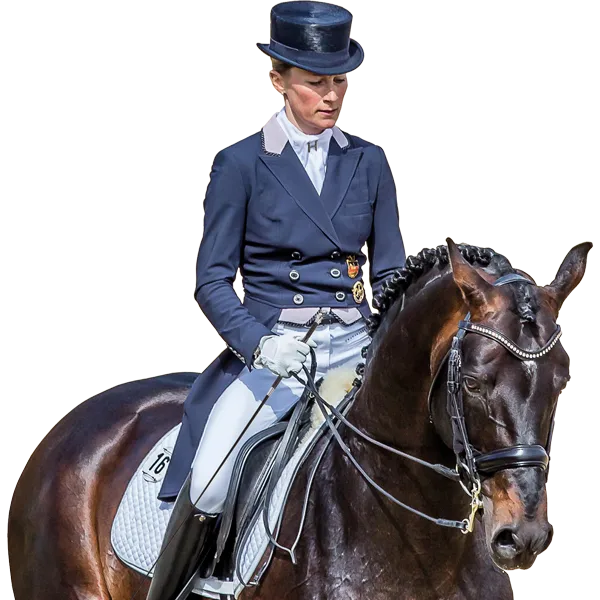
Dressage Phase — No whip is permitted in any BE test. This applies to BE80, BE90, BE100, Novice, Intermediate and Advanced. Carrying a whip inside the arena results in immediate Technical Elimination (TE).
Warm-up for Dressage:
Unlike the jumping phases, dressage operates under separate equipment regulations, and riders should be aware of the stricter Dressage Whip Rules, where carrying a whip in the test arena results in elimination.
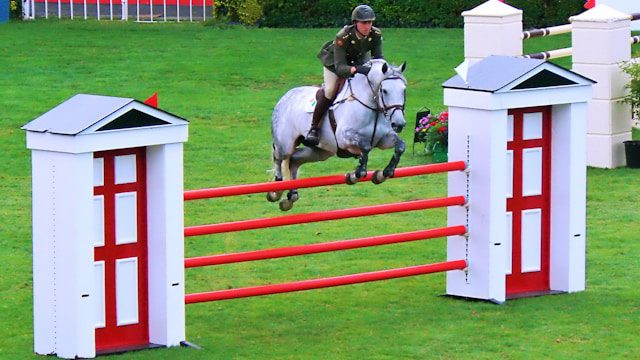
Showjumping Phase — Whip allowed, subject to strict BE rules: 45–75cm, padded end, and a maximum of two consecutive.
While British Eventing aligns closely with other governing bodies, the Showjumping Whip Rules 2025 introduce specific limits on length, design and number of strikes that riders must follow during both the round and warm-up.
Whips cannot be used:
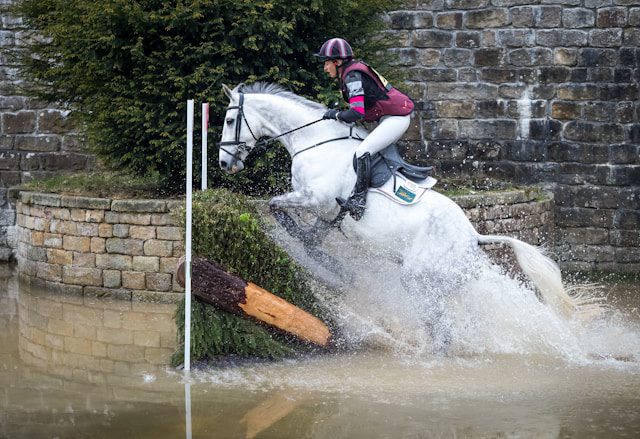
Cross-Country Phase — A whip may be carried, but BE applies the strictest welfare rules of any phase:
Steward powers: Excessive use may result in a warning, yellow card, elimination, suspension, or a full disciplinary review. XC judges monitor from a distance and will intervene immediately if the horse’s welfare is at risk.
If you’re unsure whether your whip complies, our guide on Horse Whip Sizes: What Length Whip Do I Need? explains how whip length is measured and how to choose the correct size for each phase.
Many rider penalties occur before the competition phase even begins, so it’s worth familiarising yourself with the specific Whip Rules in Warm-Up: What’s Allowed, as stewards actively monitor whip use in collecting rings.
Warm-up rules are consistent across phases:
Pony and youth riders follow the same whip rules as adults unless an event schedule specifically states otherwise. This includes:
Penalties range from verbal warnings to yellow cards, eliminations and disciplinary reviews. Most sanctions occur during the XC phase due to welfare-related decisions.
| Phase | Whip Allowed? | Max Length | Key Rules |
|---|---|---|---|
| Dressage | ❌ No | N/A | Elimination if carried in test. |
| Showjumping | ✔ Yes | 45–75cm | Padded end; max 2 strikes; no use after refusal. |
| Cross-Country | ✔ Yes | 45–75cm | Max 2 strikes; welfare monitored strictly. |
| Warm-Up | ✔ Yes | 45–75cm | Must meet construction rules; monitored. |
Staying compliant protects your horse and avoids unnecessary eliminations. A few simple checks make a big difference:
British Eventing’s whip rules may seem complicated at first, but once broken down, they follow a clear pattern: no whip in dressage, tightly controlled use in showjumping and cross-country, and consistent welfare-first behaviour in warm-up.
Understanding these rules gives you confidence across all three phases and helps prevent the surprisingly common technical eliminations caused by whip errors. To avoid unnecessary penalties, always ensure you are using horse whips that meet British Eventing’s current length, design and welfare requirements.
