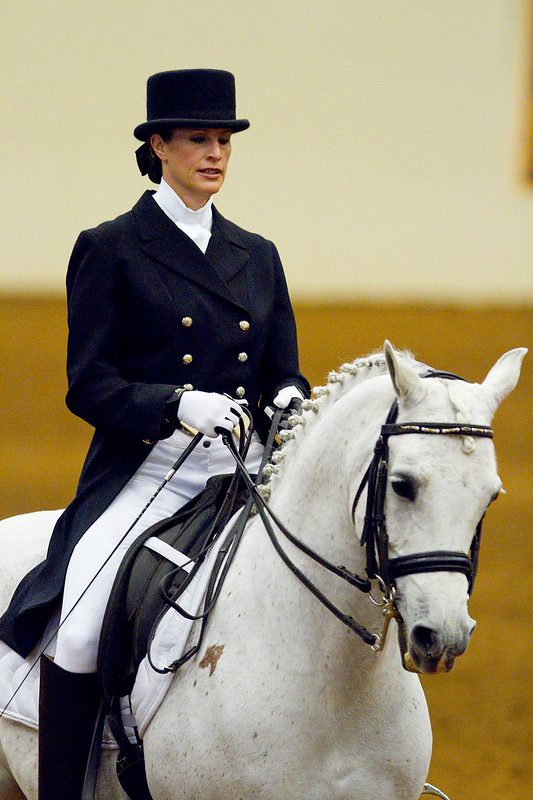
A horse riding whip is one of the most familiar tools in the equestrian world, but it’s also one of the most misunderstood. To many riders, it’s simply something you carry “just in case”, yet the purpose of a whip goes far beyond that. Used correctly, it’s a subtle aid that supports your leg and seat, helps refine communication and gives you a way to be more precise without applying force. It’s not about punishment; it’s about clarity.
There are several different types of equestrian riding whips, each designed for a specific job. Jumping bats, dressage whips, general horse riding whips, lunge whips and groundwork whips all vary in length, flexibility and feel. Choosing the right one depends on your discipline, your horse and the sort of work you’re doing.
This guide covers everything a rider needs to know, from the different types of whips and how to choose the right length, to materials, rules, handling and safety. It also links out to more detailed articles for riders who want to go deeper. By the end, you’ll have a clear understanding of how whips fit into modern riding and how to use them as an effective communication tool.
A riding whip is simply an extension of the rider’s aids. Its purpose isn’t to add force but to help you communicate more clearly when your leg or seat needs a little support. Horses respond to timing and precision, and a whip allows you to give a light, accurate cue that reinforces the aid you’re already using. In many cases, the mere presence of the whip is enough to improve a horse’s focus without ever making contact.
Used correctly, a whip provides clarity rather than pressure. It can help encourage forwardness, refine lateral work, or remind a horse to stay attentive. The goal is always to guide, not to punish. Good use of the whip is quiet, subtle and consistent with the rest of the rider’s body language.
There are also situations where a whip should not be used. If a horse is confused, frightened or overwhelmed, adding another aid will only create tension. Likewise, relying on the whip instead of developing balanced, effective leg aids can lead to poor communication over time.
Understanding the purpose of the whip makes it much easier to choose the right type and use it responsibly. The rest of this guide builds on that foundation.
Horse riding whips come in several forms, each designed for a specific discipline or type of training. Although they all serve the same basic purpose, reinforcing the rider’s aids, the differences in length, flexibility and balance make certain whips better suited to particular jobs. Understanding these variations makes it much easier to choose the right one for your horse and the work you’re doing.

A standard horse riding whip also known as a riding crop is the one most riders use for everyday hacking and flatwork. It’s usually between 70 and 90cm, with enough length to touch behind the rider’s leg without being unwieldy. This type is designed for versatility, offering a light, precise aid that supports forwardness and improves responsiveness. General riding crops are used for schooling at home and for riders who want one whip that “does everything”.
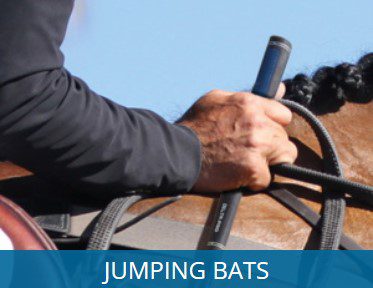
Jumping whips or jumping bats as they are more commonly referred to, are shorter and broader at the end, with a padded keeper designed to give a quick, clear aid without creating sting. They’re typically 40–70cm, making them easy to carry when riding with short reins. Show jumping rules limit their length and construction, so a compliant jumping bat is essential for competitions. Their compact size makes them perfect for fast, forward work, where precision and safe handling matter.
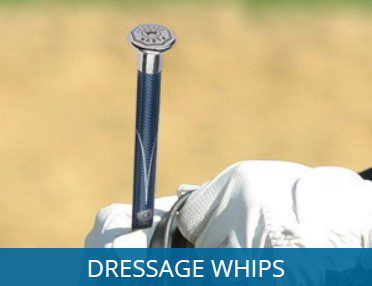
Dressage whip lengths are much longer, usually 90–140cm, allowing the rider to lightly touch behind the leg without altering their rein contact. The extra length helps refine lateral work, encourage engagement and improve straightness. A dressage whip should feel balanced and flexible enough to give a subtle aid, not a sharp tap. Many riders also use them for in-hand work and schooling at home.
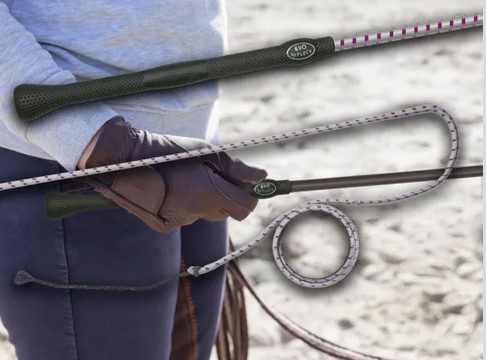
A lunge whip is designed for working a horse from the ground, not under saddle. It has a long normally between 180 – 250cm lightweight shaft with a lash of the same length that extends the rider’s reach so they can influence the horse’s rhythm and energy while staying safely at a distance. The whip’s purpose is not to hit the horse but to create direction and drive through body language and movement. It’s an essential tool for groundwork, young horses and fitness work.
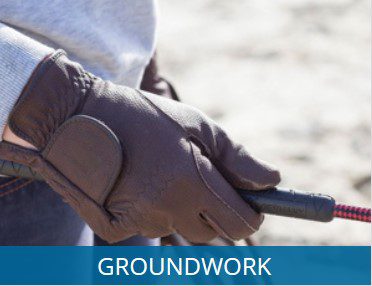
Sitting between a dressage whip and a lunge whip, 140 – 200cm, a groundwork or schooling whip is often used for liberty work, in-hand exercises and lunging in smaller circles. It allows subtle “point and guide” communication and is useful for improving balance, transitions and engagement without the rider being mounted. The flexibility and length vary, but most are designed for quiet handling and close-range cues.
Certain disciplines use more specialised whips.
These tools are purpose-built and often subject to discipline-specific rules.
Different types of horse riding whips work best for different situations, so the right choice depends largely on what you’re doing and how your horse responds to your aids. Picking the correct whip isn’t just about discipline rules; it’s about balance, feel and how naturally the whip supports your riding.
A standard riding whip is usually the most practical option. It’s long enough to give a clear aid behind the leg but short enough to handle comfortably on the road or in open spaces. For everyday schooling, it offers a good blend of precision and versatility.
A jumping bat is the safest and most effective choice. Its short length keeps it out of the way when riding with shorter reins, and the padded end gives a clear, quick aid without creating unnecessary sting. It also meets the competition rules for BS and FEI show jumping, so you can use the same whip for training and events.
A dressage whip gives the rider more finesse, allowing subtle touches behind the leg to encourage engagement, straightness and lateral work. The extra length helps refine your aids without disrupting rein contact. Many dressage riders also use these whips for in-hand work, where precision is essential.
In respect of Eventing, both Jumping Bats and Dressage whips are used depending on which part of the Event is being ridden. As a result competition rules are taken from both the British Dressage and British Showjumping (or FEI) Handbook.
A lunge whip is the correct tool here. The long shaft and lash help you influence the horse’s energy and direction from a safe distance, acting more like an extension of your arm. Horse lunge whips are not meant for striking the horse but for guiding rhythm and forwardness.
A schooling or groundwork whip sits between a dressage whip and a lunge whip in length. It allows close-up, controlled guidance, making it ideal for liberty work, in-hand transitions and early training. For young or green horses, it offers clarity without pressure.
Showing canes, hunting whips, carriage whips and vaulting whips are built for their specific jobs and should be chosen based on the discipline’s requirements and rules.
The length of a whip has a big influence on how it feels in the hand and how clearly you can give an aid. Different types of horse riding whips are designed with very specific length ranges, so choosing the right one is an important part of getting the best performance and balance.
Here is a clear guide based on the standard lengths used by Fleck, one of the most consistent and well-known whip manufacturers.
These are the “everyday” whips used for hacking and flatwork. They’re long enough to reach behind the rider’s leg without being awkward to handle. A 70–80cm whip suits most adults, while 90cm gives a little extra reach for taller riders.
Jumping whips are short, compact and easy to carry with shorter reins. Most BS and FEI competition-legal bats fall between 40 and 50cm, but training versions can be slightly longer. The shorter length makes them quick and safe to use during fast, forward riding.
Dressage whips are designed for precision rather than impact. Most riders use something between 100 and 120cm.
British Dressage Whip rules limit whip size to 120cm for horses and 100cm for ponies during competition.
Longer options up to 140cm are common for in-hand work or schooling at home, where extra reach can help refine lateral work and engagement.
These sit between a dressage whip and a lunge whip. They give the handler more presence without the size of a full lunge whip and are ideal for liberty work, in-hand exercises and controlled schooling. Most have a shorter lash to keep movements precise.
A lunge whip needs enough reach to influence the horse from a distance. Shafts range from 180 to 250cm. The lash is usually around the same length as the shaft, giving a total working length long enough to direct energy safely and effectively.
Fleck divides driving whips into four key categories:
Drop-lash whips (120–200cm) – with lash up to 100cm
Standard driving whips (120–200cm) – similar length to drop-lash
Hungarian-style whips – traditional long, flexible construction
Trotting whips (100–160cm) – shorter lash, suited to fast, forward work
These are built for very specific purposes, so the right choice depends on your vehicle, discipline and rein length.
If you would like a full overview of every whip category, see our guide to “All Types of horse whips”
Whip anatomy is crucial and the way a horse riding whip is built has a big effect on how it feels, how long it lasts and how easy it is to use. Different horse whip materials create different levels of flexibility, weight and balance, so understanding the basics helps you choose something that works comfortably in your hand and communicates clearly to your horse.
(Carbon Fibre, Fibreglass, Nylon Weave, Bamboo, Leather-Wrapped)
Carbon Fibre
Carbon fibre shafts are lightweight, strong and have a crisp, responsive feel. They give a clean, accurate aid without much wobble through the shaft, which is why they’re popular for dressage and higher-end jumping bats. They’re also very durable and maintain their straightness well over time.
Fibreglass
Fibreglass whips offer a softer, more flexible feel. They’re slightly heavier than carbon but very resilient, making them ideal for riders who prefer a whip with a bit more “give” in the shaft. Many everyday riding whips and mid-range models use fibreglass cores.
Nylon Weave
Nylon weave shafts are strong, weather-resistant and have a slightly textured feel. They’re used widely in schooling whips and general riding whips. The weave helps protect the shaft from scuffs and offers a comfortable level of flexibility.
Bamboo
A traditional material, bamboo provides natural spring and flexibility. It’s less common in modern designs but still used in some long and groundwork whips where a flowing, organic feel is preferred.
Leather-Wrapped Shafts
Some premium whips have shafts wrapped in leather. This doesn’t change the core material but offers a refined look and a grippy, comfortable surface.
There are a wide range of whip handle grips available
(UltraSoft, Rubber, Gel Grip, Leather, Crystal Accents)
UltraSoft Handles
A smooth, slightly cushioned handle often found on Fleck’s “Ultrasoft” range. Comfortable for longer rides, good grip without being sticky.
Rubber Handles
Durable and dependable. Rubber handles provide strong grip even in wet conditions and are common in general riding whips and schooling whips.
Gel Grip Handles
Gel handles mould slightly to the hand, offering exceptional comfort. They’re ideal for riders who prefer a soft, shock-absorbing feel or who do a lot of schooling.
Leather Handles
Smart, traditional and comfortable. Leather handles look refined and provide a solid, secure grip. Often found on high-end whips, dressage whips and showing canes.
Crystal Accents
Seen in Fleck’s more decorative ranges, crystal detailing is purely aesthetic but very popular with riders who want a more personalised look.
Leather Keeper / Popper
On riding whips and jumping bats, the small leather or synthetic end piece is called the keeper or popper. It delivers the aid and should create a soft, clear sound without sting. Jumping bats often have a broader, padded keeper.
Lash
Long whips like groundwork and lunge whips use a lash, which extends the rider’s reach.
Lunge whips: lash length is often equal to the shaft length.
Groundwork whips
Lash is shorter for precision. A good quality lash should be light, easy to swing and not heavy enough to create a whip-like crack unless used incorrectly.
Whip balance and flex are key to a great performing horse whip. A well-balanced whip sits comfortably in the hand without feeling top-heavy or overly flexible.
Dressage whips should feel light and responsive.
Jumping bats should feel compact and controlled.
Groundwork and lunge whips should feel balanced enough to move smoothly through the air without tiring the handler. Quality craftsmanship ensures the whip bends and returns cleanly without feeling floppy or stiff.
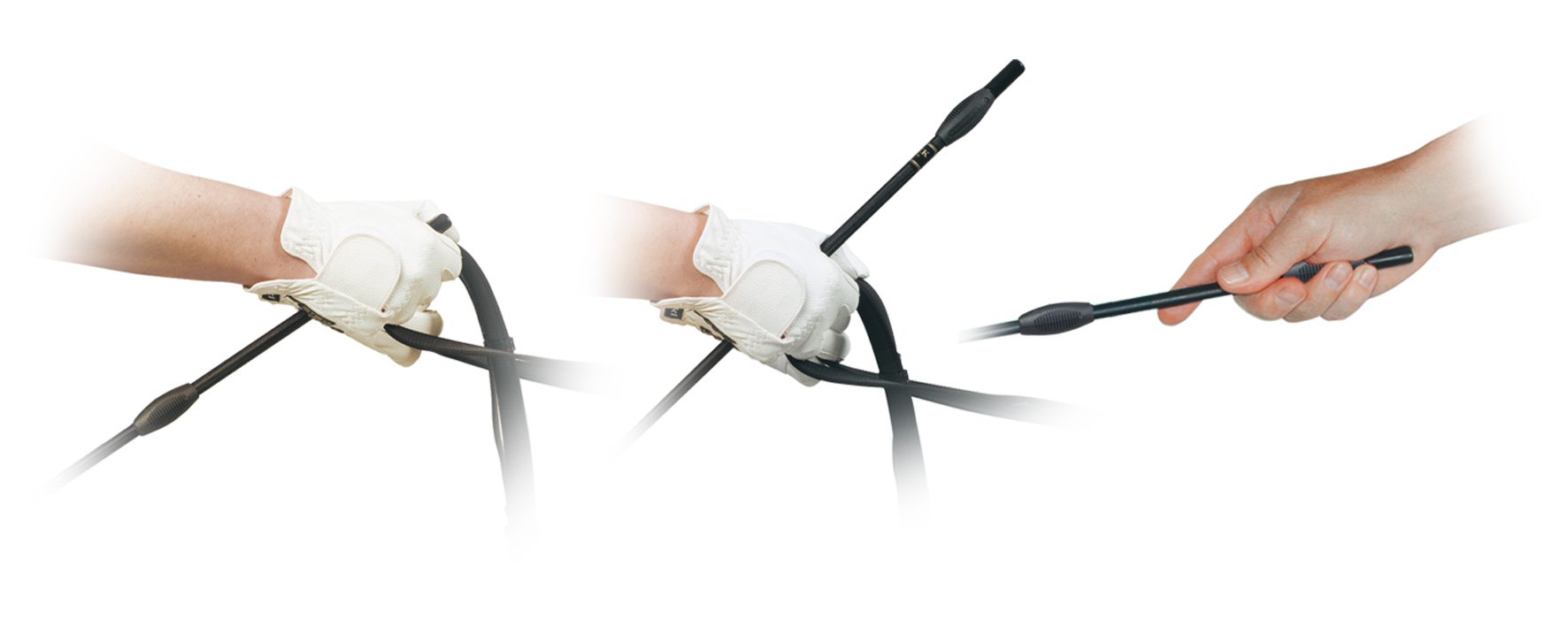
A whip should feel like a natural extension of your aids, not an extra object you’re wrestling with. Good technique is quiet, balanced and almost invisible to anyone watching. How you hold a horse whip and use a horse whip has as much impact on your horse’s understanding as the type of whip you choose.
Holding the Whip
A riding whip is held in the rein hand, sitting neatly against the inside of the palm with the handle pointing downwards. The thumb and fingers close around both the rein and the whip, keeping the wrist relaxed. The whip should lie flat against your thigh, not sticking out at an angle. If it feels heavy, awkward or pulls your hand forward, the balance isn’t right for you.
Dressage whips are handled slightly differently: the longer shaft runs behind the rider’s leg and is positioned so a gentle touch can be made without altering the rein contact. The grip stays soft, with the wrist straight to avoid wobbling the aid.
Giving an Aid
Horse whip aids should be light, quick and well-timed. It’s a tap, not a smack, and always follows a leg aid that hasn’t been fully understood. The idea is to reinforce your cue, never replace it.
The movement comes from a small flick of the wrist, not a swing of the arm. This keeps the aid precise and avoids startling the horse. The goal is to improve clarity, helping the horse stay in front of the leg, maintain bend or stay attentive to transitions.
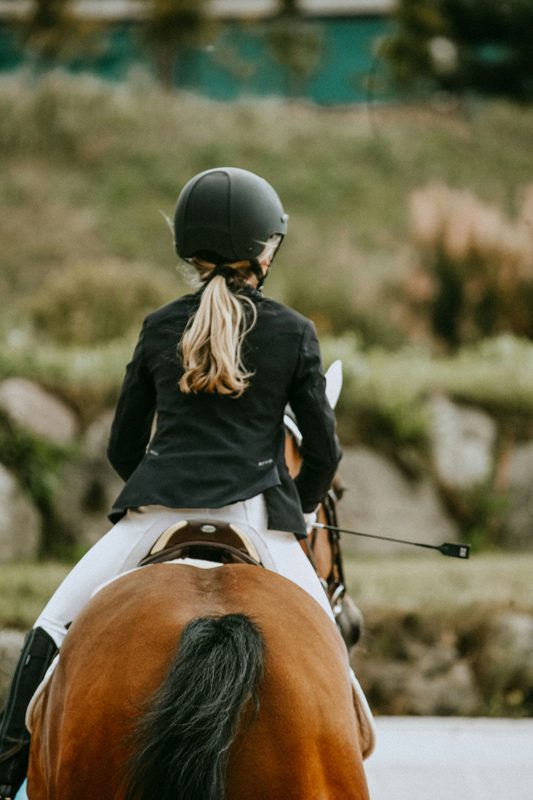
Most disciplines have clear rules about the type and length of whip you’re allowed to carry in competition. These rules are designed to protect the horse, keep judging consistent and ensure that whips are used as quiet aids rather than as a source of pressure. Knowing the limits helps riders choose the right equipment and stay compliant on show day.
British Dressage (BD)
Riders may carry a whip in warm-up only.
In a competition test, carrying a whip is not permitted, except in freestyle classes where it is allowed.
Maximum whip length in BD warm-up:
120cm for horses
100cm for ponies
Measurements include the lash.
If a rider enters the arena with a whip when it’s not allowed, they’re eliminated.
FEI Dressage
Whips are not allowed in FEI competition tests for horses.
They are permitted in warm-up.
Maximum length: 120cm, including lash.
Dressage rules are strict, so choosing a legal-length whip is essential if you train at home with the same one you use for warming up at competitions.
British Showjumping (BS)
The maximum length of a jumping whip/bat is 70cm.
The whip must have: A padded end, No rigid or sharp edges, A broad keeper (minimum width typically around 2–2.5cm depending on manufacturer standards). Excessive use of the whip can result in penalties or elimination.
FEI Showjumping
Maximum length: 50cm (FEI is stricter than BS).
Only one whip may be carried, Must have a padded keeper. Incorrect or excessive use results in sanctions.
It’s common for riders to own two whips: a BS-legal version for national shows and an FEI-legal version for international or FEI-sanctioned events.
British Eventing (BE) Whip rules depend on the phase:
Dressage phase: follows BD rules — whips not allowed during the test.
Showjumping phase: follows BS rules — whips allowed, max 70cm.
Cross-country: One whip allowed, Maximum length 70cm, Must have a padded end.
Overuse or striking the horse on the head/neck leads to penalties or disqualification.
FEI Eventing (for international levels) follows FEI whip rules for each phase.
Showing Whip Rules vary between organisations, but typically: Traditional show canes are permitted.
Whips may not exceed 75–80cm depending on the class.
Decorative canes must be used lightly and never for correction.
Always check the rules for your specific showing society, as they differ by class, breed and turnout style.
Even outside competition, there are universal expectations for whip use:
The whip must never be used out of frustration.
Riders should avoid repeated or forceful strikes.
Horses must never be hit around the head or ears.
A single, clear aid is encouraged over multiple light taps.
Trainers should ensure beginners understand proper technique.
Some outside the equestrian industry often ask the question are riding whips are cruel?. It is so important that at every opportunity, modern welfare standards frame the whip as a communication tool, not a means of discipline and that anyone breaking the rules and using the whip as a method of cruelty should be dealt with in to the full extent of the law and the regulations. There will be times to avoid using a whip. A good rider understands this and is able to combine clear aids, fair timing and an understanding of the horse’s behaviour.
A good whip should last for years if it’s looked after properly. Most wear and tear comes from poor storage or accidental damage rather than normal use, so a little care goes a long way. Proper maintenance also helps the whip stay balanced and comfortable in the hand, ensuring it performs the way it was designed to.
Keep Whips Straight and Supported
Whips should be stored flat or hanging, never bent or pushed into a tight corner. Leaving a whip leaning against a wall or stuffed into a tack box can cause the shaft to warp over time. Even strong materials like carbon fibre or fibreglass can develop a permanent curve if left under pressure.
Avoid Heat and Damp
Direct sunlight, radiators or damp tack rooms can all affect the materials in a whip. Excess heat may loosen glue in the handle or soften synthetic coverings. Damp conditions can damage leather and encourage mildew.
A cool, dry place, ideally on a hanging rack, keeps everything in good condition.
Look After Leather and Grip Materials
Cleaning a whip handle should be a priority every time is has been used. Sweat and dirt can build up quickly on a well used whip and grip can be compromised. Leather handles should be gently wiped and conditioned occasionally to keep them supple. Rubber and gel grips can simply be cleaned with a damp cloth to remove arena dust and sweat.
If the handle starts to twist or feel loose, it’s usually a sign the adhesive has softened. This can sometimes be repaired, but it’s better to address it early before the damage spreads.
Check the Keeper or Lash
On shorter whips, inspect the keeper (the little leather or synthetic end piece) for splitting, cracks or loose stitching. On lunge and groundwork whips, check that the lash is securely attached and hasn’t frayed. Replacing a lash is inexpensive and can extend the life of the whip significantly.
Transport With Care
Whips can get trapped under tack, squashed in car boots or bent when shoved behind seats.
If you travel with them: lay them flat, keep them away from sharp objects, avoid placing heavy items on top.
It’s time to consider a replacement if: the shaft has become noticeably curved, the handle is slipping or rotating, the keeper or lash is badly damaged, the whip feels unbalanced or too flexible, it no longer gives a clean, consistent aid.
Whips are simple tools, but keeping them in good shape helps maintain clear communication with your horse.
Even high-quality whips can develop issues over time, especially if they’re used frequently or stored in less-than-ideal conditions. Most problems are easy to spot and many can be remedied before the whip needs replacing. Knowing what to look for helps keep your equipment safe, balanced and effective.
Handle Slipping or Rotating
One of the most common issues is a handle that begins to twist when you hold the whip. This usually means the adhesive between the core and the handle covering has loosened. Light slipping can sometimes be fixed by carefully re-gluing.
If the handle moves excessively, especially on a long dressage whip, it’s safer to replace it, as a rotating handle affects balance and control.
Whip Becoming Too Flexible
Over time, some materials develop extra flex, especially if the whip has been bent during storage or pressed against heavy items. A whip that feels “whippy” or floppy won’t deliver a clean aid.
Check for any signs of bending or damage to the shaft. If the bend is permanent, replacement is usually the only reliable solution.
Cracked or Damaged Keeper
On riding whips and jumping bats, the keeper (or popper) takes most of the contact. Cracks, splits or fraying around the stitching can reduce its effectiveness and create a sharper sound than intended.
Minor wear is normal, but deep splits or loose stitching should be repaired or replaced to avoid rough edges.
Lash Fraying or Detaching
Lunge and groundwork whips rely heavily on a secure lash. If the lash begins to fray at the connection point or becomes uneven, it can affect timing and accuracy.
Replacing a lash is inexpensive and gives the whip a new lease of life. Always avoid knots or makeshift repairs, which can change the whip’s behaviour.
Bent or Warped Shaft
A curved whip—especially one that won’t straighten when held flat—has most likely been stored leaning against a wall or pressed under other tack. Warping is difficult to reverse once it sets in. A bent whip won’t deliver a precise aid and is best replaced.
Loss of Balance or Weight Shift
If a whip suddenly feels different in your hand, the internal core or handle may have loosened slightly.
This often shows as a faint rattle or a feeling that weight has shifted towards the handle or tip.
For schooling whips and lightweight dressage whips, a change in balance can make accurate aids harder, so replacement is often the most practical option.
Choosing the right whip is partly about discipline, but it’s also about your riding style, your experience and how your horse responds to your aids. The “best” whip is the one that feels balanced in your hand and helps you communicate clearly. Here’s a simple guide to what tends to work well for different riders and situations.
For Beginners
A general riding whip for beginners should be in the 70–80cm range and is often the easiest starting point. It’s long enough to reinforce a leg aid without being difficult to handle. Look for a comfortable grip, such as a rubber or Ultrasoft handle, so it doesn’t slip as the rider develops confidence and coordination.
For Nervous Horses
Sensitive horses usually respond well to whips with a lighter, quieter feel. A fibreglass or carbon fibre dressage whip in the 90–110cm range works well for flatwork, offering a subtle aid with minimal movement. For hacking, a straightforward riding whip with a soft keeper keeps the aid gentle and controlled.
For Young or Green Horses
Consistency matters with young horses, so a whip that delivers a clear aid without being sharp is ideal.
A schooling or groundwork whip between 140–180cm allows the handler to guide transitions and direction calmly, whether during in-hand work or early lunging. A lunge whip with a smooth, light lash is essential for early foundation training.
For Dressage Riders
Most dressage riders prefer a balanced, responsive whip between 100 and 120cm for home schooling.
A carbon fibre dressage whip is particularly good for riders who want a precise feel without too much flex. Leather or gel grip handles give extra stability during longer schooling sessions.
For Jumping Riders
A jumping bat between 40 and 60cm is the safest and most functional choice.
The shorter length keeps the whip out of the way during combinations and turns, and the padded keeper provides a clear aid without sting. Riders who also train at home sometimes prefer a slightly longer bat (up to 60–70cm) for practice.
For Hacking and General Riding
Riders who want one whip that does everything well will get the most versatility from a general riding whip around 80–90cm. It offers enough reach for flatwork but remains comfortable for roadwork and varied terrain.
For In-Hand Work & Advanced Groundwork
A groundwork whip in the 160–200cm range is ideal. The longer shaft and shorter lash allow for controlled, precise signals when working on engagement, suppleness, straightness or liberty work.
A whip is a helpful communication tool, but there are times when using it can create more confusion than clarity. Knowing when not to use a whip is just as important as learning how to use one correctly.
When the Horse Is Confused or Overwhelmed
If a horse doesn’t understand what you’re asking, adding another aid will usually make the situation worse. Confusion shows up as tension, hesitation, rushing or resistance. In these moments, the rider should simplify the question rather than escalate it.
When the Rider Is Frustrated
No aid should ever be given out of irritation. If a rider feels annoyed or impatient, it’s always better to take a breath, regroup and approach the exercise again with calm timing. Using the whip emotionally breaks trust and leads to long-term training problems.
When the Horse Is Scared or Spooking
A frightened horse is reacting instinctively, not disobeying instructions. Using a whip when a horse is spooking or panicking can increase fear and make the reaction more dramatic. Focus on settling the horse and creating confidence first.
When Pain or Discomfort Is Suspected
If a horse suddenly becomes reluctant to go forward or reacts sharply to a whip aid, it may be uncomfortable. Tack fit, sore muscles, teeth, feet or saddle issues should be ruled out before assuming behavioural resistance.
When It Replaces a Leg Aid
Over-reliance on the whip prevents riders from developing strong, effective leg and seat aids. The whip is there to reinforce, not replace, the primary aids. If the whip becomes the first “go forward” cue, training often loses balance and consistency.
Horse riding whips are simple tools, but choosing the right one and using it correctly makes a real difference to communication, precision and confidence between horse and rider. Each type of whip, whether it’s a jumping bat, dressage whip, general riding whip, lunge whip or groundwork whip, each whip has been designed for a specific discipline and purpose, and understanding those differences helps you get the best performance from your horse without ever applying unnecessary pressure.
Good handling, correct technique and an awareness of discipline rules all play a part in responsible use. A whip is never a substitute for balanced riding or clear leg and seat aids; instead, it’s a way to refine those aids so they make more sense to the horse. When used thoughtfully, it becomes a quiet extension of the rider’s body language rather than a source of force.
If you’d like to explore each type of whip in more detail, the linked guides throughout this article take you deeper into choosing the right equipment for your discipline, training goals and riding style.
For riders who want to see how these principles translate into real-world design choices, our Fleck Whip Buyer’s Guide looks in detail at how balance, flex, grip, and materials affect how a whip feels in use.
