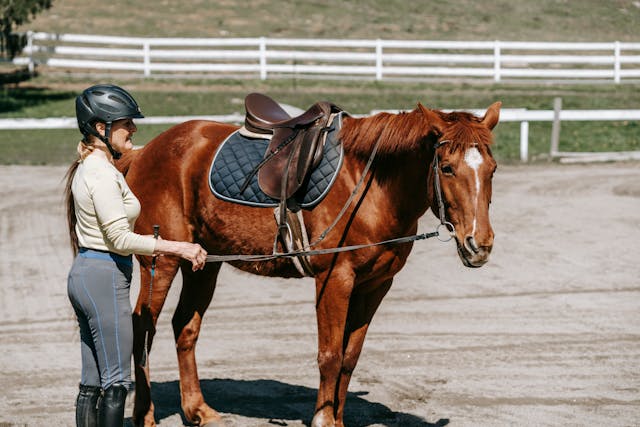
A groundwork whip is a useful training aid when used calmly and correctly. It improves communication, reinforces your body language, and helps shape better behaviour on the ground. Despite the name, a groundwork training whip is not for “whipping” the horse, it simply extends your reach so you can give clear, consistent signals without stepping into the horse’s space.
While groundwork whips are used from the ground rather than the saddle, it can still be helpful to understand whip design more broadly. A complete guide to horse riding whips explains construction, balance, and correct use principles that apply across disciplines.
Groundwork whips sit within a wider range of tools designed for different training situations. Understanding the various types of horse whips and their intended uses helps clarify where groundwork whips fit in and how they differ from riding whips.
This guide explains when to use a groundwork whip, how it helps, what length to choose, and the safest way to incorporate it into in-hand work, leading and basic schooling.
Groundwork related whips can be divided into three clear categories, and it’s useful to understand the difference before choosing one:
Lunge whips are one of the most common groundwork tools, but they need to be used with care. Lunge Whips: Correct Use, Safety & Techniques covers safe handling, positioning, and clear communication from the ground.
This article focuses on touchier-style groundwork whips used for everyday in-hand work, schooling, improving obedience and refining communication on the ground.
A groundwork whip is longer than a standard riding whip (also known as an in-hand whip) but shorter and more flexible than a lunge whip. Most range from 120–160cm and feature a soft lash of similar length. The idea is not to touch the horse but to guide them through:
The purpose is communication, not correction. Used well, the whip becomes an extension of your arm, allowing precise, quiet signals that the horse understands without stress.
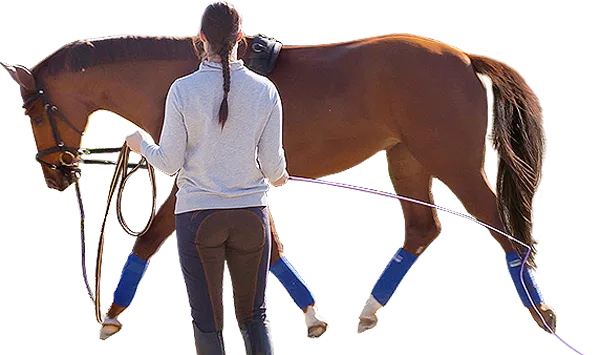
You can use a groundwork whip in almost any type of in-hand training, including:
Many professional trainers use groundwork whips daily because they create clearer lines of communication and allow the handler to remain at a safe distance.
Using a whip in groundwork reinforces your intent in three ways:
Your arm alone can only reach so far. A whip helps you direct energy towards the hindleg, shoulder or ribcage without stepping into the horse’s personal space.
Horses learn faster when your signals are consistent. A whip creates a predictable aid pattern:
The horse learns to respond to softer aids when the whip is used thoughtfully as a guide rather than a punishment.
The right length and balance matter. Here’s a simple guide:
| Horse Type | Recommended Length | Notes |
|---|---|---|
| Ponies | 120–140cm | Shorter length reduces tangling and keeps cues tidy. |
| Horses 15–16.2hh | 140–160cm | Ideal balance between reach and control. |
| Large horses | 160cm+ | Extra reach helps with hindquarter engagement. |
For close, precise groundwork, a shorter in-hand whip is often more appropriate. In-Hand Schooling Whips: How to Choose and Use Them explains how to select the right type and use it effectively.
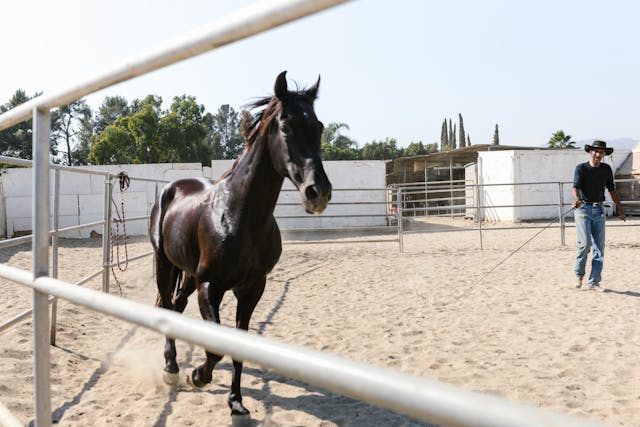
The whip should rest at a downward angle behind you — never pointing at the horse unless you’re giving a cue.
Start with intention and body language, then voice, then a rhythmic tap if needed. Sharp, fast movements create tension.
The aim is to influence the movement, not to intimidate. A good session looks calm, rhythmic and soft.
Most groundwork is safest at around 1.5–2 metres from the horse, depending on the exercise and your experience level.
Groundwork is often the safest place to introduce a whip for the first time. How to Introduce a Whip to a Young or Sensitive Horse outlines a calm, progressive approach that builds understanding without pressure.
Groundwork whips tend to be longer and more flexible than riding whips. Horse Whip Anatomy Explained breaks down how handle length, shaft flexibility, and lash design affect how a whip behaves from the ground.
A groundwork whip is a simple but powerful training tool when used with clarity and calm intent. It strengthens communication, improves safety and helps develop precise, responsive behaviour on the ground.
If you’re looking for tools designed specifically for groundwork, you can browse our range of speciality equestrian whips, including options for lunging and in-hand training.
