A horse girth gall or sore is a sign that something is causing damaging pressure or friction around the girth area. It may begin with something relatively minor, such as disturbed hair or a small rubbed patch, but if the underlying cause continues, the skin can become inflamed, sore or broken.
It is tempting to respond by buying a softer girth or adding a fleece cover. Sometimes changing the material may help, but a girth sore is not necessarily a material problem. The first question should be why is this particular area being rubbed or subjected to excessive pressure?
Girth fit, movement, positioning, sweat, dirt, the horse’s conformation and changes in the horse or its tack can all contribute. Where the damage appears can also provide useful clues.
The terms girth rub, girth sore and girth gall are often used interchangeably, but girth-related skin damage can vary considerably in severity.
At the mild end, you might notice hair being disturbed, broken or rubbed away. The skin may become warm, irritated or slightly swollen. If pressure and friction continue, the skin can become increasingly inflamed and eventually break down, producing an open sore or more significant gall.
Don’t assume that a small patch of missing hair is unimportant simply because the skin hasn’t broken. If the same area is being rubbed after every ride, it is worth investigating before it develops into something more painful.
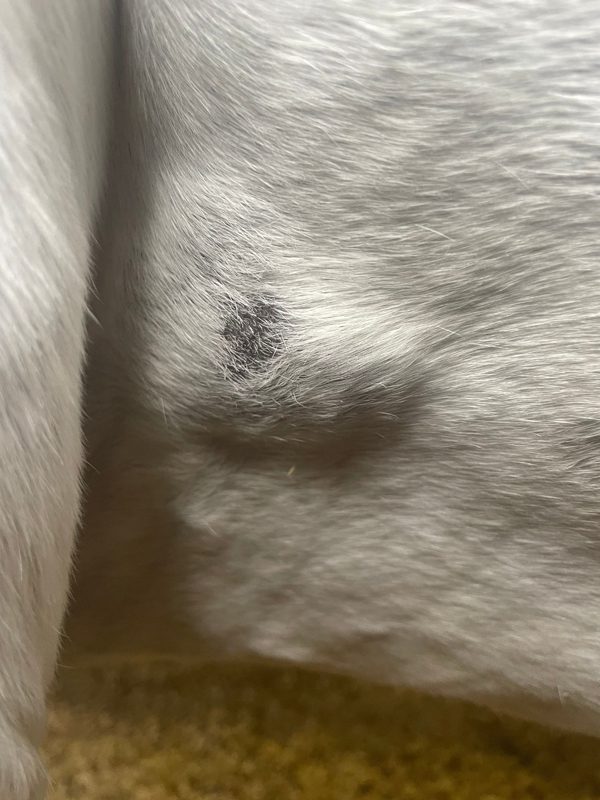
Caption: Girth problems do not always begin with an open sore. Repeated hair loss or irritation in the same place can be an early indication that something needs investigating.
At the simplest level, girth sores develop when the skin is subjected to damaging pressure, friction or a combination of the two. The more useful question is what is creating that pressure or movement.
Possible contributing factors include:
More than one factor can be involved. For example, a girth may move slightly because its shape does not correspond well with the horse’s natural girthing area. Add sweat and repeated movement over a longer ride and a problem that wasn’t apparent during a short session may become much more noticeable.
Yes. Where the damage appears can provide useful information about what to investigate.
A rub immediately behind the elbow raises different questions from a sore underneath the horse, damage near the edge of the girth or a problem that repeatedly occurs on only one side.
Rather than simply looking at the sore itself, look at where it sits in relation to the whole girth. Is it underneath an edge, seam or buckle? Is it where the elbow passes the girth? Does the girth appear to have moved towards the damaged area during exercise? Is the problem identical on both sides?
These observations don’t necessarily diagnose the cause, but they can help narrow down what needs to be investigated.
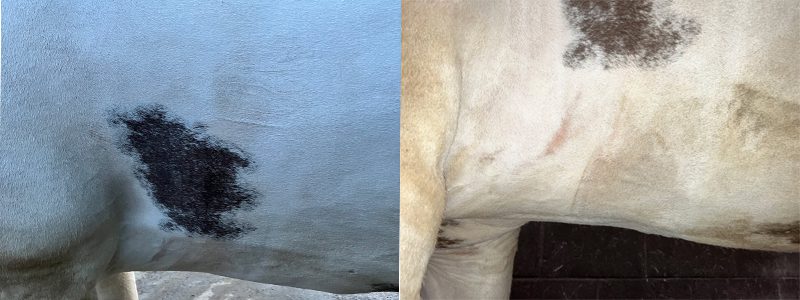
Caption: The position of a girth rub can provide useful clues. Look at where the damaged area sits in relation to the girth rather than treating every girth sore as the same problem.
Yes. But poor girth fit does not simply mean using the wrong length.
A girth can be the correct length and still be unsuitable for an individual horse. Its width, shape and construction also need to work with the horse’s ribcage, natural girth groove and available space behind the elbow.
This is particularly important because horses vary enormously in shape. A girth that fits one horse extremely well may create pressure or friction on another horse with quite different conformation.
The girth also has to work with a correctly fitted saddle and its girthing arrangement. If the saddle itself is moving or requires excessive girth tension to keep it stable, the saddle should be assessed by a suitably qualified saddle fitter rather than expecting a different girth to compensate for the problem.
Our guide to how a horse girth should fit explains the wider relationship between girth position, length, movement and the individual horse.
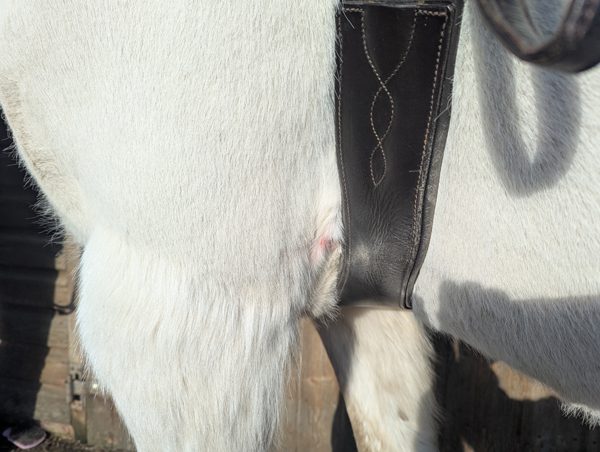
The position of a rub in relation to the edge of the girth is useful information. Rather than simply changing materials, consider why the girth is contacting or moving against that particular area.
Movement can contribute to friction. If the girth continually moves forwards or backwards while the horse is working, the skin and hair underneath may be subjected to repeated rubbing.
The answer is not necessarily to tighten the girth further.
If a girth repeatedly migrates to another position, it is worth asking why it wants to move there. The horse’s natural girth groove, ribcage shape, girth shape and relationship with the saddle may all be relevant.
Look at the girth before riding and again immediately afterwards, before loosening it. If its position has changed substantially, that is useful information when trying to establish why a particular area is being rubbed.
They can contribute.
Skin that remains damp with sweat can be more vulnerable to friction, particularly during longer periods of exercise. Dirt, loose hair, dried sweat and other debris trapped between the horse and girth can make matters worse.
This is why cleanliness matters on both sides of the equation. The horse’s girth area should be clean before tacking up, but the surface of the girth that sits against the horse also needs regular attention.
A girth that originally felt soft and flexible can become considerably less forgiving if sweat and dirt are repeatedly allowed to dry into it.
For horses that sweat heavily, it is particularly useful to check the girth area after exercise rather than waiting until the next time the horse is tacked up.
It can, but material should not be considered in isolation.
Leather, synthetic materials, neoprene, wool, sheepskin and other girth materials all have different characteristics. Individual horses may also tolerate particular materials better than others.
However, replacing a rubbing girth with something softer does not necessarily correct the reason the rubbing occurred. If the girth is the wrong shape, moving excessively or occupying space needed by the horse’s elbow, covering the same geometry with a softer material may not solve the underlying problem.
This is particularly relevant with sensitive horses, where it is very easy to concentrate entirely on softness. In our guide to the best girth for sensitive horses, we look more closely at why sensitivity should be treated as a symptom and why fit, shape and material all need to be considered together.
This is worth investigating even if you have used the same saddle and girth successfully for years.
Horses change.
Weight gain or loss can alter the shape of the ribcage and girthing area. Increased fitness can change musculature. A horse returning from time off may have a different body shape from the one it had when the tack was originally fitted. Seasonal coat changes can also affect how the skin and hair respond to friction.
The equipment itself changes too. Girths can become worn, stretched or less supple, while saddle fit can alter as the horse changes shape.
Workload is another consideration. A setup that causes no apparent problem during a short schooling session may behave differently during a long hack, endurance ride or extended period of exercise when there is more movement, heat and moisture.
So, “I’ve always used this girth and it has never rubbed before” is useful information, but it doesn’t rule out a current fitting problem.
Yes. If the horse’s elbow repeatedly contacts the girth as the foreleg travels backwards, the resulting pressure and friction can contribute to hair loss, rubbing and soreness.
However, there is no universal distance that every girth should sit behind the elbow. Some horses naturally have considerably more space than others, and horses with a very forward or narrow girthing area may carry the girth quite close to the elbow.
Our guide to horse girth and elbow clearance explains why we prefer to assess whether the elbow can move freely rather than relying on a fixed number of fingers or inches.
If your horse’s problem occurs specifically behind the elbow, there are additional questions about girth position, shape and the horse’s conformation that are worth considering. We cover those separately in Why Does My Horse’s Girth Rub Behind the Elbow?
If the girth will sit over or repeatedly contact damaged skin, continuing to ride risks applying further pressure and friction to an area that is already injured.
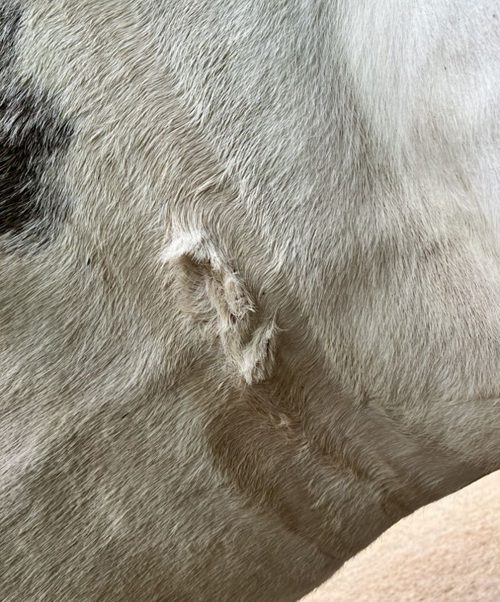
Once the skin has been damaged, continuing to apply pressure and friction over the same area can prevent it from healing. The cause should be investigated before returning to the same tack setup.
The sensible priority is to allow the damaged area to heal and, importantly, establish what caused it before returning to the same setup.
An open wound, significant swelling, heat, discharge, marked pain or a sore that is not healing should be discussed with your vet. Skin problems in the girth area are not always caused by tack, so persistent or unexplained lesions also warrant veterinary advice.
Treatment depends on the severity and nature of the injury, so this is an area where we would be cautious about following generic remedies from the internet.
The first principle is to remove the source of pressure and friction and give the damaged skin an opportunity to heal. The area should be kept appropriately clean and monitored for deterioration or signs of infection.
Minor superficial irritation may settle once the cause is removed, but broken skin, significant swelling, pain, discharge, suspected infection or a lesion that persists should be assessed by a vet. Your vet can advise on appropriate wound care and when it is safe for the area to be subjected to tack again.
Changing the girth before identifying why the original problem occurred may simply move the same problem to a different product.
Prevention starts with paying attention before the horse develops an open sore.
Check that the saddle fits correctly and that the girth is appropriate for the horse’s conformation and natural girthing position. Make sure the horse and girth are clean before riding, and check that the girth is not unnecessarily tight.
After exercise, look at both sides of the horse before untacking completely. Notice where the girth has finished, whether it has moved and whether the hair underneath has been disturbed.
Things worth watching for include:
Finding the reason at this stage is considerably better than waiting until the skin has broken.
Before loosening the girth, look at where it is sitting. Has it remained in approximately the same position or moved noticeably forwards or backwards?
Once the girth is removed, check the whole girth area rather than only looking behind the elbows. Compare both sides and look underneath the horse as well.
Run your hand gently over the area and look at the direction of the hair. Repeatedly disturbed hair can show where movement has been occurring even before obvious skin damage develops.
Also inspect the girth itself. Check for accumulated sweat and dirt, damaged seams, rough areas, hardened material or anything else that could create additional friction.
It depends on what you find.
If there is broken skin, significant pain, swelling, discharge, suspected infection or a persistent skin problem, speak to your vet.
If the saddle is moving, appears unstable or there is any doubt about its fit, have it assessed by a suitably qualified saddle fitter.
If the saddle fits correctly but you are unsure whether the girth is the right size, shape or position for your horse, we can help through our free girth consultation. Photographs allow us to look at the horse’s conformation, natural girthing position and the relationship between the horse, girth and correctly fitted saddle.
If you prefer to speak to someone, feel free to call us on 01386 833050 or message us on WhatsApp. We’re happy to talk it through. 📲 Message us on WhatsApp
There is no standard healing time. A minor superficial rub is very different from broken or infected skin, and healing will depend on the extent of the damage and the individual horse. The important point is not to continue applying pressure and friction to the affected area. More significant or persistent sores should be assessed by a vet.
If the girth will contact the damaged area, continuing to ride can subject already injured skin to further pressure and friction. Allow the area to heal and investigate why the gall occurred before returning to the same tack setup.
Recurring girth sores suggest that the underlying cause has not been resolved. Girth fit, movement, positioning, pressure, sweat, cleanliness, material and changes in the horse or tack should all be considered. The location of the recurring sore can provide useful clues about where to start looking.
Sweat can contribute because prolonged moisture can make the skin more vulnerable to friction. Sweat combined with movement, pressure or dirt is more likely to cause problems than sweat alone.
A softer surface may help some horses, but it is not a guaranteed solution. If rubbing is being caused by poor fit, inappropriate girth shape or repeated movement, changing the material without correcting the underlying cause may not solve the problem.
Even if the same girth has been comfortable previously, the horse or equipment may have changed. Weight, fitness, musculature, coat, workload, saddle fit and the condition of the girth can all change over time. A new rub is therefore worth investigating rather than assuming the existing setup must still be suitable.
