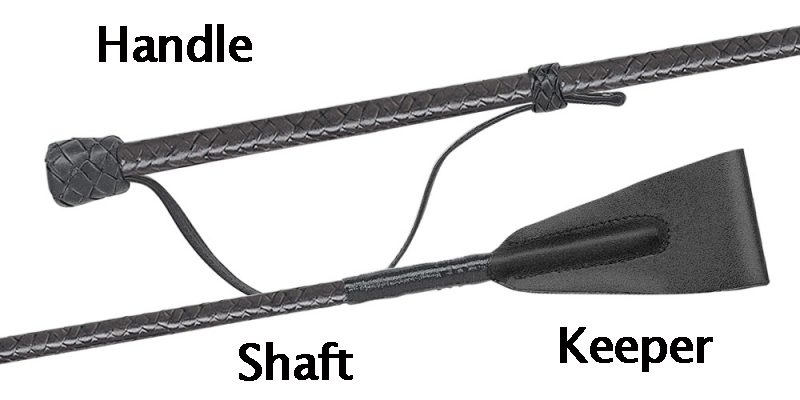
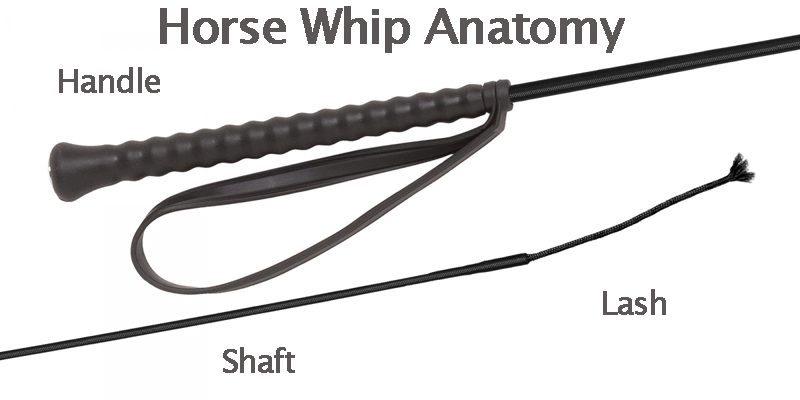
Horse Whip Anatomy Explained: Every whip is made up of several parts that work together to create its feel, balance and performance. Whether you use a dressage whip, jumping bat, show cane or lunge whip, understanding the anatomy of a whip helps you choose the right design and use it correctly.
Understanding whip anatomy is much easier when it’s seen as part of the bigger picture. Our overview of horse riding whips explains how different designs, styles, and uses come together, helping put each component into context.
Common types of horse whips use the same core components in slightly different ways, which is why anatomy can vary depending on length, discipline, and intended use.
This guide explains the main components you’ll find on modern whips — including the handle, shaft, keeper, lash or popper, and how each part influences comfort, precision and effectiveness.
The handle is the part you hold and has the biggest impact on comfort and stability. Handles come in many styles, including rubber, leather, wooden balance handles, faux leather, contoured synthetic grips and decorative crystal options.
Handle design plays a big role in grip and control. Whip Handle Types Compared breaks down the differences between common handle styles and materials.
Good handles:
Handle weight also affects balance, heavier handles can make the whip steadier, while lightweight handles feel quicker and more responsive.
The shaft (also called the stick) is the long central section of the whip. It determines most of the whip’s flex, balance and weight. Common materials include carbon fibre, fibreglass, leather-covered cores, braided synthetics and old fawshio.
Stiff shafts (carbon fibre): precise, crisp, fast response.
Medium-flex shafts (fibreglass): balanced feel suited to most riders.
Softer shafts (nylon or braided designs): forgiving, ideal for sensitive horses or groundwork.
The shaft length varies by discipline, short for jumping bats, medium for general riding and longer for dressage and groundwork.
Each part of a whip behaves differently depending on the materials used. Horse Whip Materials Explained looks more closely at how cores, coverings, and finishes affect strength and flexibility.
The keeper (also called the flap) is the soft, broad end-piece found on jumping bats and some general-purpose riding whips. Its purpose is to deliver a clear, safe aid without causing discomfort.
Key features:
The keeper spreads pressure across a wider area, which is why competition rules insist on padded, smooth keepers with no stitching or raised surfaces.
The lash is a length of narrow cord or braid that extends from the tip of a dressage whip, groundwork whip or lunge whip. It adds extra reach and allows for a lighter, more refined aid.
Short lashes (dressage whips):
Medium lashes (groundwork whips):
Long lashes (lunge whips):
Competition measuring rules always include the lash length for dressage whips.
The lash is often the first part to show wear. How to Replace a Horse Whip Lash explains when replacement is possible and how to do it safely.
The popper, sometimes called a slapper or cracker, is the small leather or string flap fixed to the very end of the lash. Its purpose is to add a clear sound cue when needed, producing a sharp “pop” without causing pain, and to soften the contact so the horse’s skin isn’t marked by a firmer lash.
Functions of the popper:
A controlled popper sound can be an effective training aid, but excessive noise or snapping should be avoided around sensitive horses or in busy warm-up arenas.
How these components work together directly affects how a whip feels in use. Horse Whip Balance, Flex & Weight Explained explores how anatomy influences balance, flexibility, and overall handling.
Although every whip is built from the same core elements, a handle, a shaft and an end piece, the way each component is designed has a noticeable effect on how the whip feels and performs.
Handle material and shape influence grip comfort and how steady the whip feels in the rider’s hand.
Shaft length, thickness and flexibility determine the whip’s balance, speed of action and how easily it follows your wrist movement.
The end piece (lash, keeper or popper) controls the type of aid the whip gives: a precise tap, a soft flick, or a light sound cue.
It’s the combination of these variations that creates the difference between a schooling whip, a dressage whip, a jumping bat or a groundwork whip. A well-matched handle, shaft and end piece results in a whip that is comfortable to carry, balanced in motion and capable of giving clear, subtle aids with very little effort.
Understanding the anatomy of a whip helps you choose a design that offers the right balance, feel and function for your discipline. Whether you need a precise dressage whip, a competition-legal jumping bat or a long-reach lunge whip, knowing how the handle, shaft, keeper, lash and popper work together will make your aids clearer and your riding more effective.
If you’re comparing components with a purchase in mind, you can browse our range of horse whips, designed for different disciplines and riding preferences.
