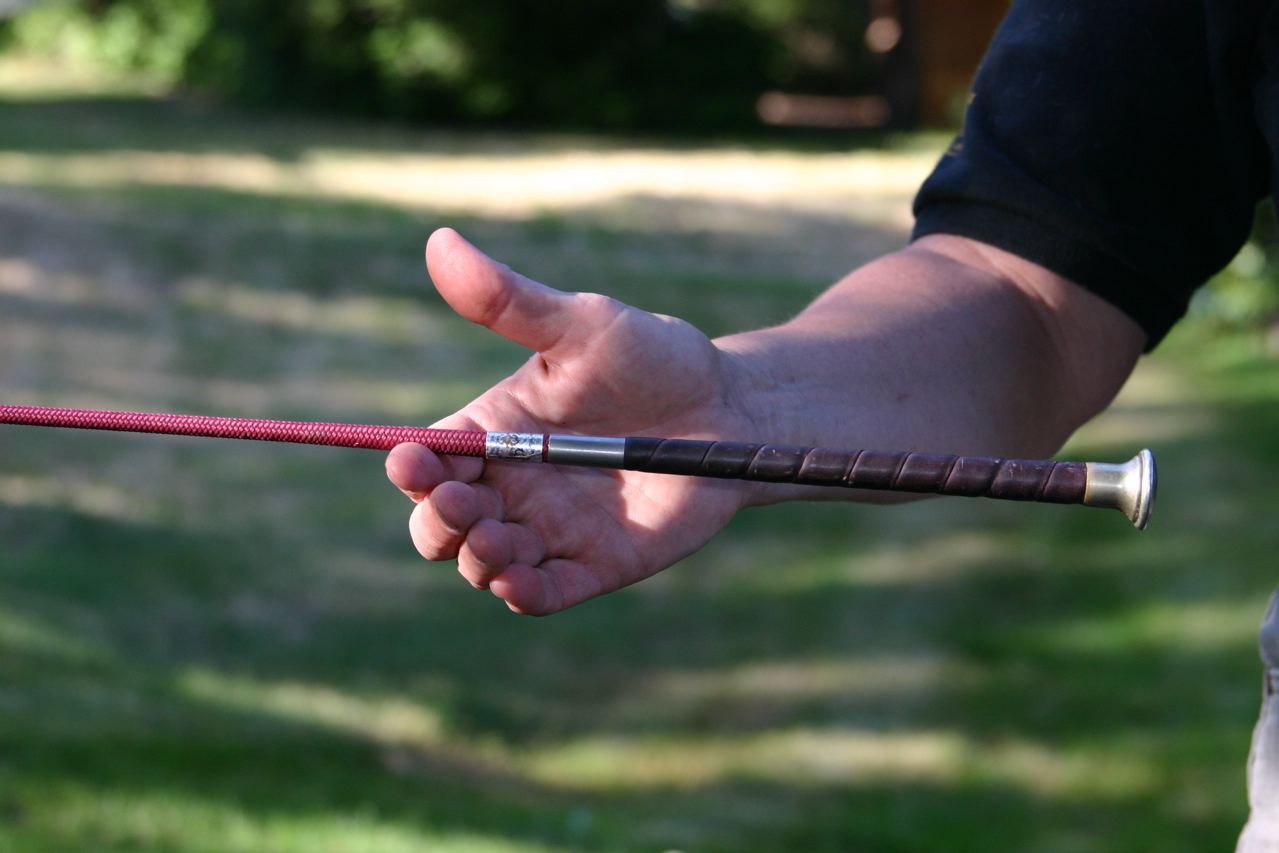
The way a whip feels in your hand depends on more than just its length or material. The balance, flex and weight of the whip all play a major role in how precisely you can use it, how comfortable it feels during a long ride and how clearly your aids are communicated to the horse. Our guide to horse riding whips explains how different designs, materials, and uses influence how a whip performs in practice.
Understanding these three factors helps you choose a whip that supports your riding style rather than working against it. This guide breaks down the differences between stiff and flexible whips, lightweight and weighted shafts, and what “good balance” really means in practice.
The main types of horse whips are built with different balance points and levels of flexibility, depending on their intended discipline and use.
Every whip has a natural feel determined by how the shaft, handle and keeper interact. The materials used in a whip have a direct impact on how it balances and flexes. Horse Whip Materials Explained looks at common cores and coverings and how they influence feel in the hand. Small differences in weight distribution or stiffness can change:
When a whip feels “right”, you barely notice you’re carrying it. When a whip feels wrong, everything becomes harder—from transitions to steering to maintaining a soft contact.
Flex refers to how much the shaft bends when pressure is applied. Different materials create different levels of flexibility:
Highly flexible whips (common in nylon and some fibreglass designs):
Stiff whips (carbon fibre or reinforced shafts):
Which is better? Neither — flex should match your discipline and your horse.
Balance refers to how the weight is distributed along the whip, especially between the handle and the shaft. Good balance makes the whip feel almost weightless, even if it isn’t particularly light.
Handle weight and grip also affect balance and control. Whip Handle Types Compared explains how different handle designs influence comfort and handling.
A well-balanced whip has:
Poor balance creates problems such as:
Riders don’t always notice poor balance consciously—but they feel it. A badly balanced whip often leads to riders overusing their hand, gripping tighter or adjusting their reins unnecessarily.
Length also plays a key role in how a whip feels and responds. Horse Whip Sizes: What Length Whip Do I Need? explains how length affects balance, reach, and ease of use.
Whip weight varies depending on material, length and construction. Lighter is not always better. The ideal weight depends on your riding discipline and strength.
A whip should feel light enough not to interfere with rein contact but heavy enough to feel anchored and steady. Most riders find medium-weight whips easiest to control.
| Feature | Low | Medium | High |
|---|---|---|---|
| Flex | Stiff, precise | Balanced, all-round | Soft, forgiving |
| Balance | Handle-heavy or tip-heavy | Even distribution | Highly stable, premium feel |
| Weight | Light (nimble) | Medium (stable) | Heavy (traditional) |
You can check whip balance easily before buying:
If the whip feels instantly natural, it is probably the right balance and weight for you.
A well-balanced whip not only feels better to use but often lasts longer. How to Choose a Durable Riding Whip That Lasts explains how construction quality and balance contribute to longevity.
Whip flex, balance and weight have a huge influence on how a whip behaves, how comfortable it feels and how effectively you can use it. Whether you prefer a stiff, precise whip or a softer, more forgiving feel, choosing the right combination will make your aids clearer and your riding more effective.
If you’re comparing balance and feel before buying, you can browse our range of horse whips, with options designed for different disciplines and preferences.
