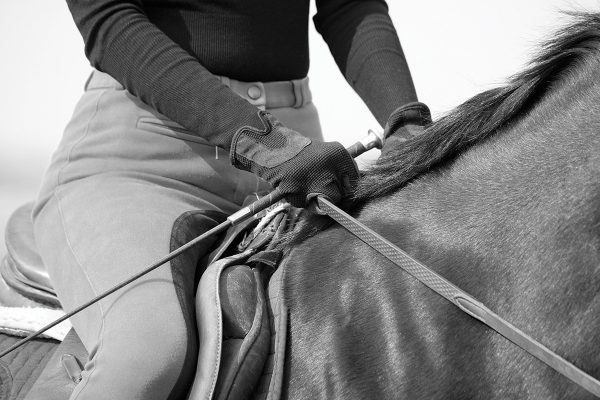
Holding a riding whip correctly is one of those small skills that makes a huge difference to your riding. A correctly held whip is quiet, balanced, and ready when you need it. An incorrectly held whip is distracting for both you and the horse and often leads to accidental tapping, crooked hands, or unclear aids.
Holding a whip correctly is only one part of effective and responsible riding. Grip, position, timing, and intention all work together, and they should always support correct leg aids rather than replace them. If you’d like a broader overview that ties technique, rules, and equipment choice together, our guide to horse riding whips covers everything in one place.
This guide shows you, step-by-step, how to hold a horse whip properly for dressage, flatwork, hacking and jumping. Once you understand the basic principles, the technique becomes second nature.
A riding whip is not about hitting. It is an extension of your leg or seat aid. When held correctly, it improves communication and reinforces light aids. When held incorrectly, it can cause confusion or even tension in the horse.
The way a whip is held can also vary slightly depending on its design and purpose. Understanding the various types of horse whips available helps explain why riding whips, schooling whips, and crops are handled differently in practice.
Correct whip position helps with:
With the right grip, the whip becomes a natural extension of your riding posture rather than something you constantly think about.
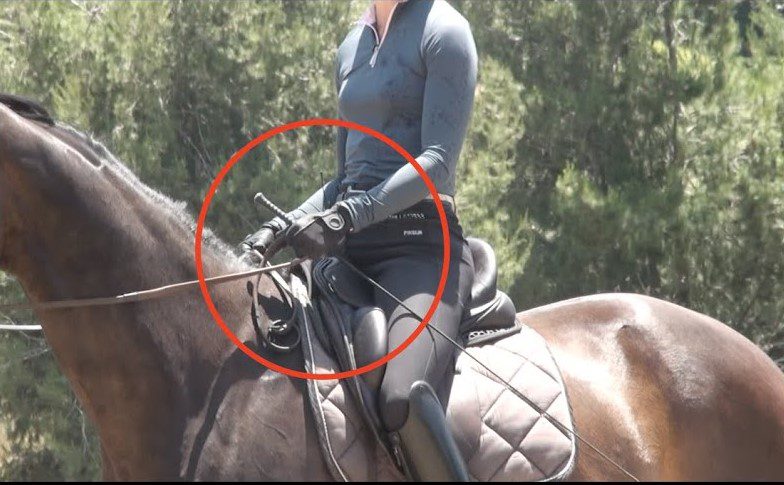
Correct grip works hand-in-hand with correct use. Even a well-held whip can be ineffective if it’s applied at the wrong moment or without clarity. Our guide on how to use a horse whip correctly explains how grip and timing work together to support clear communication.
The golden rule: You hold the whip exactly like a rein. It should sit along the inside of your hand, not clutched in your fist or hanging at a strange angle.
Here’s the correct technique:
The key is that your rein contact stays exactly the same. The whip should sit in your hand without altering how you hold the reins.
Riders often need to change whip hands during schooling or competition, and grip plays a key role in doing this smoothly. If you’re unsure how to manage this without disrupting your position, our article on how to switch a riding whip safely and correctly walks through the process step by step.
Subtle changes in hand position can affect how clearly an aid is delivered. This becomes especially important when refining timing and precision, which is explored further in horse whip aids explained, focusing on technique rather than strength.
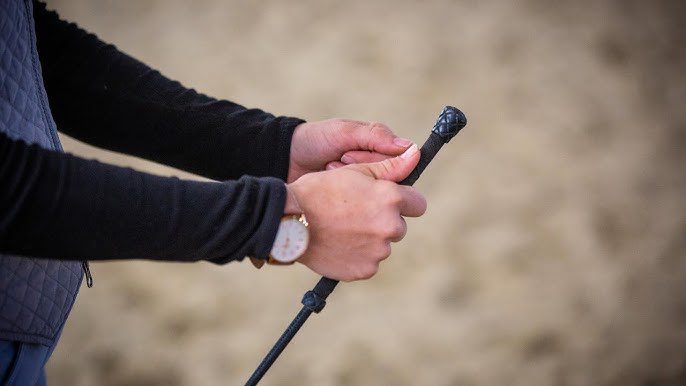
A correctly held whip will sit quietly against your thigh, angled slightly backwards. It should not flap around or bounce.
If the lash touches your boot or is too long and flicks behind you, your whip may be:
Adjusting the angle of your wrist usually fixes the problem immediately. The whip should stay still unless you deliberately move it.
The most common mistake is riders lifting their hand or altering their rein contact to use the whip. This creates mixed signals and often unbalances the horse.
The correct technique:
Your rein length and contact must not change. Only the wrist moves, and only by a few degrees.
These issues often mean the whip is the wrong length, held incorrectly, or isn’t balanced for the rider.
Most of these are solved instantly with a whip better suited to your hand size or riding discipline.
A dressage whip is longer, so correct positioning is even more important.
The whip should:
If you have to reach back with your arm, the whip is too short.
A jumping bat is held differently because the keeper needs to be ready for quick, clear correction.
Correct bat hold:
You should be able to give a quick tap on the shoulder without rotating your whole arm or disrupting your contact.
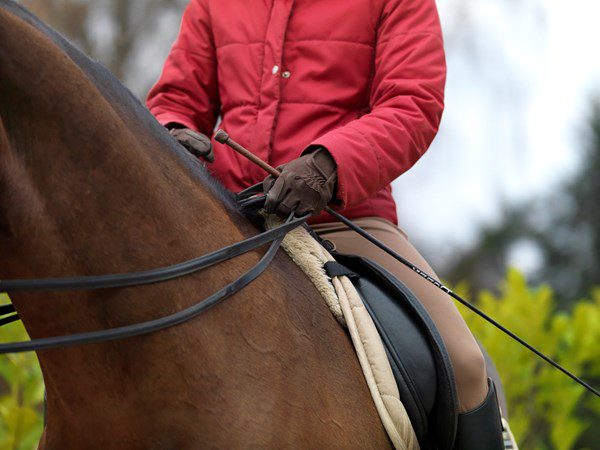
This is a skill all riders should learn. It should be smooth, quiet and done without dropping the reins or losing rhythm.
Correct technique:
If the whip gets caught in reins, it usually means the lash is too long or the shaft is too flexible.
| Rider Type | Recommended Length | Notes |
|---|---|---|
| Beginners | 75–85 cm | Easy to control, stable and balanced. |
| Children / Small Adults | 70–85 cm riding whip; 40–55 cm bat; 90–100 cm dressage whip |
Shorter whips help maintain hand balance. |
| Tall Riders | 90cm+ riding whip; up to 130–150 cm dressage whip |
Longer reach for leg-length and stride length. |
| Weak Grip | Shorter, lighter whips | Reduces hand fatigue; improves precision. |
For less experienced riders, learning how to hold a whip correctly builds confidence and prevents tension through the hand and arm. Our whips for beginners: a no-nonsense guide breaks this down in a simple, reassuring way.
How to hold a horse whip correctly is simple once you know the technique. With a stable grip, neutral hand position, and quiet wrist movement, the whip becomes a precise communication tool rather than a distraction. Whether you’re schooling at home, jumping, hacking or competing, the right hold gives your horse confidence and keeps your aids consistent. Shopping our range of horse whips, can help you compare, lengths, costs, grips and styles, helping you discover what feels most comfortable in your hand.
