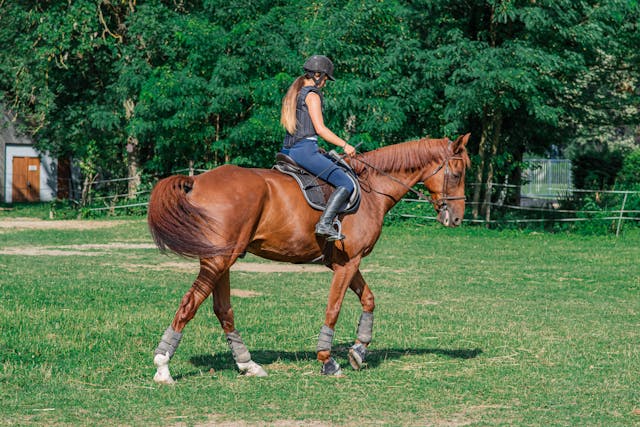
Being able to switch a riding whip smoothly from one hand to the other is a useful skill for any rider. It allows you to keep your aids clear, support your horse evenly on both reins, and adapt quickly when schooling or jumping. Done well, your horse won’t even notice the transition. Done badly, it can interrupt the rhythm, unbalance your hands or give an accidental aid you never meant to ask for.
This guide on how to switch a riding whip, breaks the movement down step by step, explains how to practise it safely, and highlights the most common mistakes riders make.
The way a whip is switched can vary slightly depending on its design and length. Understanding horse whip types and uses helps explain why switching techniques differ between riding whips, crops, and longer schooling whips.
Switching a whip is not something you should do constantly; it has a purpose. You may need to change hands:
The key point is that the whip supports your inside leg, not replaces it, and switching should always be thoughtful rather than automatic.
A secure, relaxed grip makes switching hands far easier and reduces the risk of tension or dropped reins. If you’re unsure about correct hand position, our step-by-step guide on how to hold a horse whip explains the fundamentals.
Before you attempt the movement in the saddle, it helps to practise at a halt or even on the ground with reins over one arm. The goal is to understand the hand movement without tension or juggling.
Good preparation includes:
Switching hands should never interrupt the effectiveness of an aid. Correct timing and intention still apply, even during the transition. These principles are explored further in how to use a horse whip correctly.
This is the quietest and safest method used by instructors, judges and advanced riders.
Move your hands toward the centre of the neck so they are close together but without losing rein contact. This stabilises the reins and prevents accidental pulls.
With the hand currently holding the whip, let it slide down so you can present the handle to the opposite hand. Keep the whip pointing downwards.
Your new hand should take hold of the whip just above or on the handle grip. Do not grab at the shaft, as this causes wobbling and unsteadiness.
Once the new hand has a secure hold, let the original hand release calmly and return to normal rein position.
Open your hands back up to the correct width and resume your normal riding position, ensuring the whip is now quietly behind the new leg.
Many riders struggle with whip switching because of small habits that create tension. Here are the problems seen most often:
Start at the halt until you can perform the movement quietly and without hesitation. Then move on to walk, keeping the rhythm steady and ensuring the contact remains soft. Only practice in trot once the walk is smooth and secure.
The clarity of any whip aid depends on timing and feel, especially when changing hands. Subtle mistakes can confuse the horse if aids are poorly coordinated. This is covered in more depth in horse whip aids explained, which focuses on timing and technique.
Tips for better practice:
For less experienced riders, switching a whip can feel awkward at first. Building confidence through simple, repeatable steps makes a big difference. Our whips for beginners: a no-nonsense guide breaks this down in a clear, reassuring way.
There are moments where switching the whip is unsafe or counterproductive:
If in doubt, keep the whip where it is and focus on the leg aid instead.
Switching a riding whip correctly is a small detail that has a big impact on communication and balance. With a quiet hand position, steady reins and clear timing, the movement becomes smooth, automatic and almost invisible to the horse.
Switching a whip smoothly is ultimately about maintaining balance, rhythm, and clarity of aids. It works best when supported by a wider understanding of whip types, correct use, and discipline rules. Our complete guide to horse riding whips brings all of this together, covering whip styles, correct technique, sizing, and competition considerations in one place.
Once you master it, you’ll find your aids become clearer, your straightness improves and your overall feel becomes far more polished.
If you’re practising these techniques with your own equipment, browsing our range of horse whips can help you find a length and grip that feels secure when changing hands.
