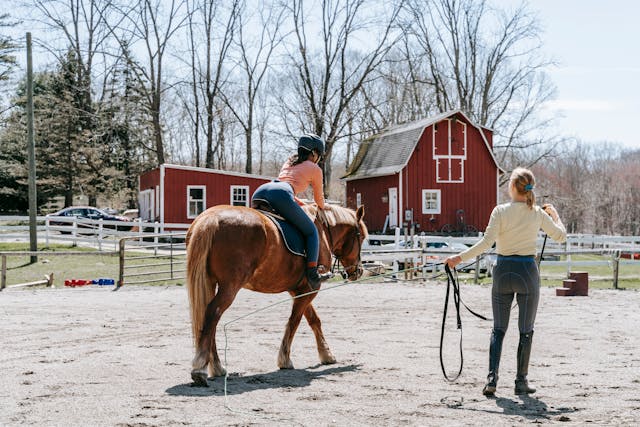
In hand schooling whips are an invaluable way to develop balance, straightness, engagement and understanding from the ground. Whether you’re teaching lateral work, improving obedience, refining transitions or working on classical dressage movements, the whip you choose plays a major role in clarity and communication.
In-hand schooling whips are part of a wider group of training tools designed for different situations. Understanding the horse whip types and uses helps clarify how in-hand whips differ from lunging and ridden options.
Many riders are unsure what a schooling whip actually is, how it differs from a dressage whip, or when to use an in hand whip versus a lunge whip. This guide explains every type of in hand training whip, how to choose the correct length and balance, and how to use it effectively without tension.
Although in-hand schooling whips are used from the ground, the same core principles apply. The complete horse riding whip guide explains whip design, balance, and correct use across disciplines.
In hand schooling whips are a long, lightweight whip designed for close-range communication during groundwork and classical dressage work. When riders ask “what is a schooling whip?”, the answer can vary depending on discipline and training goals. In hand, the term usually refers to a whip longer than a dressage whip but shorter and tidier than a lunge whip.
Schooling whips are used to:
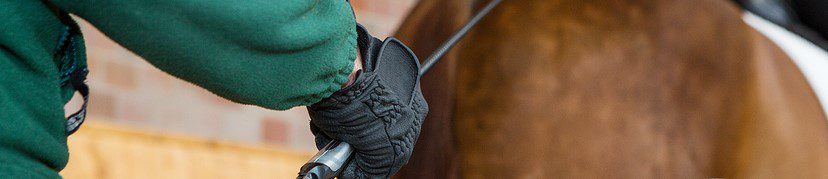
There are several types of whips suitable for in-hand work, each serving a slightly different purpose:
These should not be confused with a lunge whip, which has a long shaft and long lash for distance work on the circle.
In-hand schooling whips are often used alongside other groundwork tools. Groundwork Whips: When to Use Them & How They Help explains where each type fits within ground-based training.
An in hand whip is not for punishment or driving the horse forward. Used correctly, it acts as a quiet, refined extension of the trainer’s arm. Benefits include:
A correct in hand training whip should feel like a natural extension of your arm. Here’s a quick guide:
The lash should be short and neat. Long lashes belong on lunge whips, not in-hand whips.
For larger circles or more distance, a lunge whip may be more appropriate. Lunge Whips: Correct Use, Safety & Techniques covers when a lunge whip is a better choice than an in-hand schooling whip.
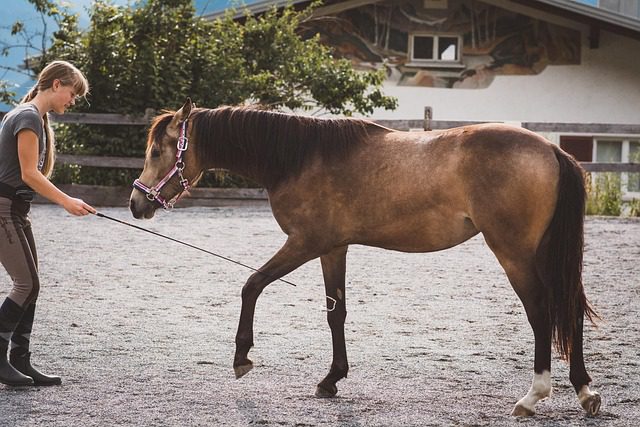
Correct hold is essential for subtle communication:
Many in-hand schooling exercises mirror ridden work. How to Use a Dressage Whip to Improve Engagement explains how similar principles apply when encouraging activity and responsiveness. A well-balanced in hand dressage whip is ideal for guiding body alignment and encouraging engagement in classical schooling. Here’s how it supports specific movements:
A longer touchier-style whip allows these aids to be delivered without stepping into the horse’s path, which keeps communication clear and safe.
You don’t need to be schooling classical dressage to benefit from in-hand work. A schooling whip helps with everyday training:
Tap lightly near the hindquarters to encourage stepping away.
Direct the whip toward the shoulder to clarify inside or outside movement.
Use the whip as a visual cue or give a light tap on the chest.
A small flick behind you reminds the horse to stay attentive and forward.
An in hand training whip is most effective when paired with correct timing and your own body cues:
The whip should never replace correct posture, position and voice cues, it simply enhances them.
Any horse can benefit from a schooling whip used correctly, but it is especially useful for:
In-hand work is often where young horses first encounter a whip. Whips for Young Horses: How to Introduce Them outlines how to introduce an in-hand whip calmly and progressively.
A well-chosen in hand schooling whip, whether it’s a dressage whip used for basics or a longer in hand dressage whip used for classical training, allows for clear, precise and non-confrontational communication. By choosing the right length, maintaining a quiet neutral position and applying aids with timing and subtlety, you can guide your horse toward better balance, engagement and understanding.
Used correctly, the whip becomes an elegant extension of your body language, not a tool of pressure, but one of clarity and confidence.
If you’re choosing equipment specifically for in-hand work, you can browse our ranges of speciality equestrian whips designed for close, precise communication.
