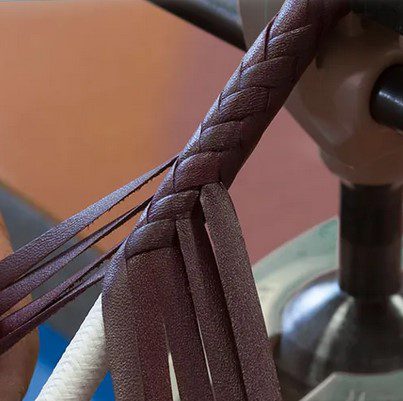
A premium leather riding whip often costs significantly more than synthetic or composite alternatives. That naturally raises the question of whether the difference is genuinely worthwhile, or whether leather is simply a traditional material that’s become associated with higher prices.
The answer isn’t a simple yes or no. Whether a premium leather riding whip is worth paying more for depends on what the leather contributes to the whip’s performance, not just how it looks.
When riders consider a leather whip, they often associate it with craftsmanship, tradition, and a more refined feel. Leather has long been used in whip making, and for many riders it represents quality and heritage rather than modern efficiency.
Those expectations aren’t unreasonable, but they can be misleading if leather is treated as a guarantee of performance rather than one element of design.
A well-made leather riding whip can offer advantages that some riders appreciate immediately.
Leather grips tend to feel warm and natural in the hand, particularly in colder weather. Over time, good-quality leather also develops a familiar feel rather than becoming slippery or brittle. In traditionally constructed whips, leather can contribute to balance and controlled flexibility when applied thoughtfully.
For riders who value tactile feedback and consistency, these qualities can make a leather whip feel more intuitive to use.
Not all leather whips are premium in practice. Leather can be applied superficially, wrapped quickly, or chosen for appearance rather than performance.
It’s entirely possible to buy a leather riding whip that looks impressive but feels poorly balanced, inconsistent, or awkward to handle. In those cases, the leather increases cost without improving usability.
The value of leather depends on how it’s integrated into the overall design, not simply on its presence.
Some premium leather riding whips cost more because they are made using traditional methods and natural materials. Handworked leather, natural shafts, and time-intensive finishing processes inevitably increase production costs.
For riders who value heritage and traditional craftsmanship, this can be an important part of the appeal. However, even traditionally made whips still need to be well balanced and properly designed to be genuinely usable. Craftsmanship enhances performance when it supports function, not when it replaces it.
A premium leather riding whip isn’t automatically the best option for every rider.
Some riders prefer the lighter feel of modern materials, especially for everyday schooling. Others may prioritise durability in wet conditions or want a whip that requires minimal maintenance. In these cases, a well-designed non-leather whip may actually be easier to live with. Paying more only makes sense when the benefits align with how the whip will be used.
Many riders who choose leather do so after experience rather than comparison shopping. They notice that a particular whip feels familiar, comfortable, and predictable, and they value that consistency.
Others try leather and decide it doesn’t offer enough difference to justify the cost. Both outcomes are valid. What matters is understanding what you’re paying for.
A premium leather riding whip can be worth paying more for, but only when the extra cost reflects genuine craftsmanship, thoughtful design, and balance rather than appearance alone.
Leather should enhance how a whip feels and performs, not simply decorate it. When that distinction is clear, the decision becomes far easier to make.
If you’d like to explore related ideas, Are Expensive Riding Whips Actually Easier to Use? looks at price versus usability more broadly, while Premium Leather Riding Whips explores leather options in more detail.
