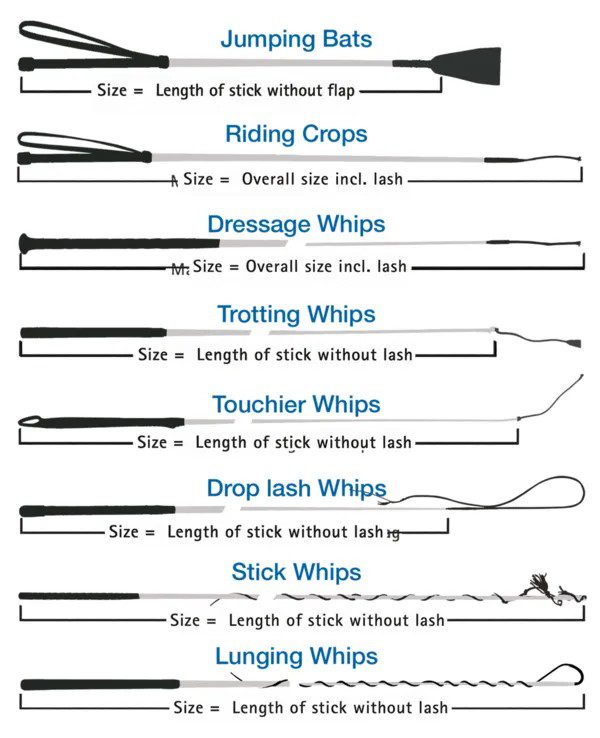
One of the most common questions riders ask is whether a short or long riding whip is better for everyday use. Both have clear advantages, and neither is “right” or “wrong” in isolation.
The key is understanding how whip length affects reach, balance, clarity of aids and rider comfort. This guide breaks down the practical differences between short and long whips, so you can make a confident, informed choice.
Short and long whips are just two options within a much wider range. If you’d like a broader overview, our guide to the horse whip types used explains the different categories and how each one is typically used.
In simple terms:
Length affects not just reach, but also how the whip feels in the hand and how easily it can be used without disrupting your position.
Length matters more than many riders realise, particularly when moving between disciplines. If you’re unsure which size is appropriate, our article on Horse Whip Sizes: What Length Whip Do I Need? goes into practical guidance on choosing the right length for both horse and rider.
Short whips are popular for good reason, particularly for everyday riding.
Many riders find a short riding whip feels more forgiving, especially when balance or hand position is still developing.
The trade-off with a shorter whip is reach.
Some riders may find it harder to reinforce an aid behind the leg without shifting their hand or posture, particularly on wider horses or those less responsive to light aids.
Longer whips offer increased reach and precision when used correctly.
For experienced riders, a long whip can feel like a natural extension of the arm.
Longer whips demand greater coordination.
If balance or hand control is inconsistent, a long whip can feel unwieldy and may accidentally touch the horse, which can lead to confusion rather than clarity.
This is why longer whips are often better introduced once a rider’s position is secure.
Your riding discipline also plays a big role in whether a short or long whip is more suitable. For a clearer breakdown by riding style, Which Whip Should I Use for My Discipline? looks at what works best for dressage, showjumping, eventing, and everyday schooling.
| Feature | Short Whip | Long Whip |
|---|---|---|
| Ease of use | Very easy | Requires coordination |
| Reach | Limited | Extended |
| Stability | Very stable | More movement |
| Best for | Beginners, leisure riding | Experienced riders, precision |
For most riders, a short whip is the easiest and most forgiving option for daily riding. It provides clarity without distraction and suits a wide range of horses and situations.
Long whips can be extremely effective when used correctly, but they tend to suit riders with established balance and coordination.
Whip length is important, but so is build quality. If you’re investing in a whip for regular use, How to Choose a Durable Riding Whip That Lasts covers what to look for in terms of balance, materials, and long-term durability.
Choosing between a short or long riding whip isn’t about rules or trends, it’s about what feels controlled, consistent and fair for both horse and rider.
Understanding these differences makes it easier to select a whip that supports clear communication rather than complicating it, although length alone rarely tells the full story. In the Fleck Whip Buyer’s Guide, we look at how balance and materials often matter more than measurements when it comes to control and comfort.
Whether you choose a short or long whip, correct use is essential. Our guide on How to Use a Horse Whip Correctly explains how a whip should support your aids without becoming distracting or counterproductive.
If you’re still deciding what type of whip suits your riding overall, our complete horse riding whip guide breaks down the different styles, materials, and intended uses in more detail, helping you choose with confidence.
If you’re ready to choose, you can browse our full range of horse whips, including short and long options suited to different disciplines and rider preferences.
