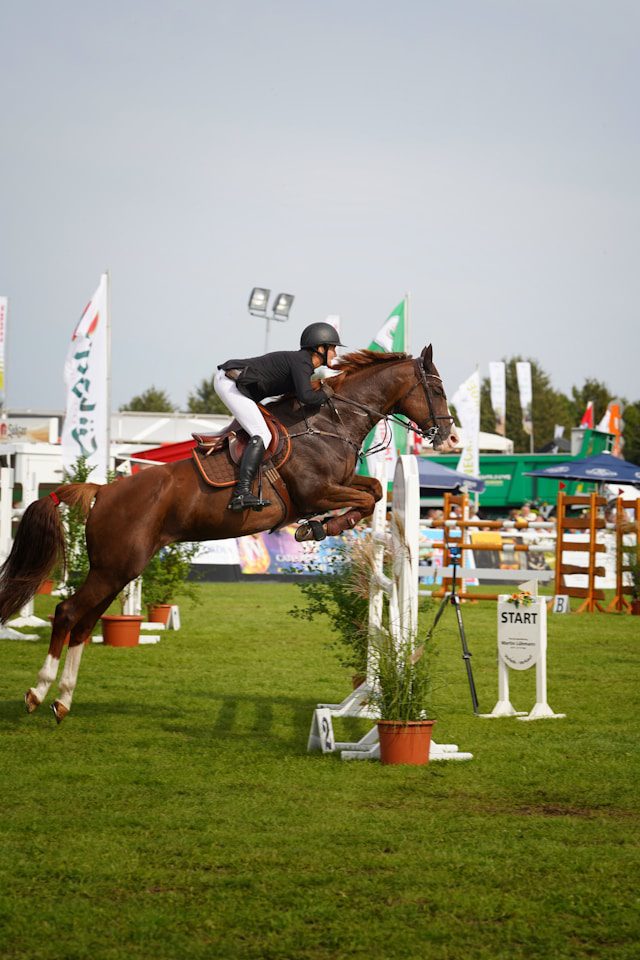
Showjumping whip rules are stricter than many riders realise. Both British Showjumping (BS) and the FEI set clear limits on whip length, weight, design, and use. These rules exist to protect horses, ensure fairness, and prevent excessive pressure during warm-up or while jumping.
This guide breaks down everything step-by-step: legal measurements, allowed materials, penalties for misuse, what stewards look for, and how British Showjumping whip rules differ from the FEI. Whether you’re competing in a local BS class or stepping into international arenas, this is the full explanation.
Jumping bats are just one of several different types of horse whips, each designed for a specific purpose, discipline and style of riding. If you’re unsure where jumping bats sit within the wider range of equipment, our horse riding whip guide explains the different designs, lengths and uses across disciplines. Modern jumping bats are designed to be lightweight, balanced and unobtrusive in the hand.
Jumping requires fast reactions and precise communication. A whip may be used as a quick reminder or encouragement, but only within clear welfare boundaries. The rules ensure:
These rules protect both horse and rider and promote good horsemanship.
BS has the strictest and most detailed whip rules of any UK discipline. These were tightened significantly in recent years following increased welfare focus.
70cm total length (including the handle and keeper)
This measurement is absolute. Anything longer is not permitted in BS competitions.
It’s also important to remember that competition regulations don’t stop at the arena gate, Whip Rules in Warm-Up: What’s Allowed are enforced just as closely by stewards.
BS specifies clear design requirements:
These rules prevent sharp or harsh contact.
Use in Britishshowjumping is allowed but limited.
You may use a whip:
BUT…
You may NOT:
BS uses a tiered penalty system:
Stewards take whip use extremely seriously.
FEI whip rules share some similarities with BS, but they have their own specifics, especially regarding force and frequency.

75cm maximum including the lash/keeper.
FEI rules state:
FEI vets and stewards can also inspect the horse’s skin if misuse is suspected.
Not allowed:
FEI penalties include:
FEI stewards have more authority and stricter inspection rights than BS.
| Rule | British Showjumping (BS) | FEI Showjumping |
|---|---|---|
| Maximum whip length | 70cm | 75cm |
| Keeper/End requirements | Soft keeper, no rigid ends | Soft, smooth, non-injurious |
| Allowed during round? | ✔ Yes (with limits) | ✔ Yes (with strict limits) |
| Max strikes per incident | Two | Two |
| Where whip can be used | Behind the leg only | Behind the leg only |
| Use after refusal | Restricted | Restricted/monitored |
| Penalty for misuse | Warning → yellow card → elimination | Yellow card → elimination → suspension |
Penalties escalate quickly if rules are broken.
This is one of the most common causes of yellow cards.
Both BS and FEI consider this unacceptable.
BS stewards check this constantly — even 71cm is illegal.
Instant disqualification and report to officials.
This is the fastest way to earn an FEI penalty.
These may look innocent but are banned.
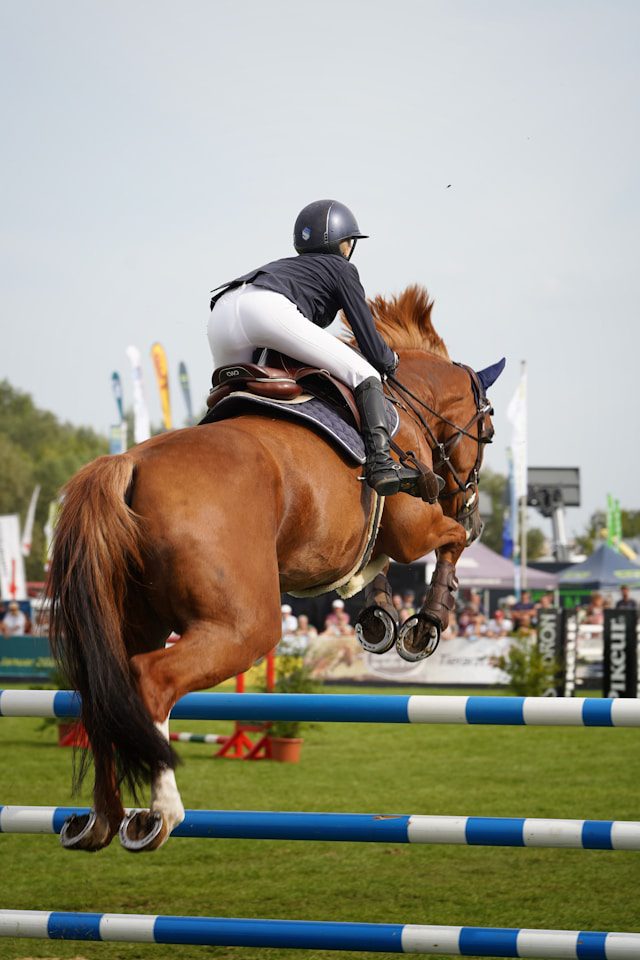
A simple tape measure avoids embarrassment at the gate.
Avoid anything rigid, narrow, or “stingy”.
Good habits help in competition pressure.
BS and FEI stewards are proactive; knowing their thresholds helps.
They’d always rather help than penalise.
Of course knowing the rules is only half the picture, understanding how to use a jumping bat correctly is essential for clear communication without disrupting balance or rhythm.
Showjumping whip rules are straightforward once you understand the key differences between BS and FEI. Both organisations allow the use of whips during a round, but within clear welfare limits: short whips only, soft keepers, no excessive force, and no repeated striking.
Following these rules not only keeps you compliant but also ensures fair riding and a positive experience for your horse. With the correct equipment and an understanding of when and how a whip may be used, you can enter the ring with confidence.
If you’re unsure whether your whip is the correct length for showjumping, Horse Whip Sizes: What Length Whip Do I Need? explains how to choose safely and within the rules.
