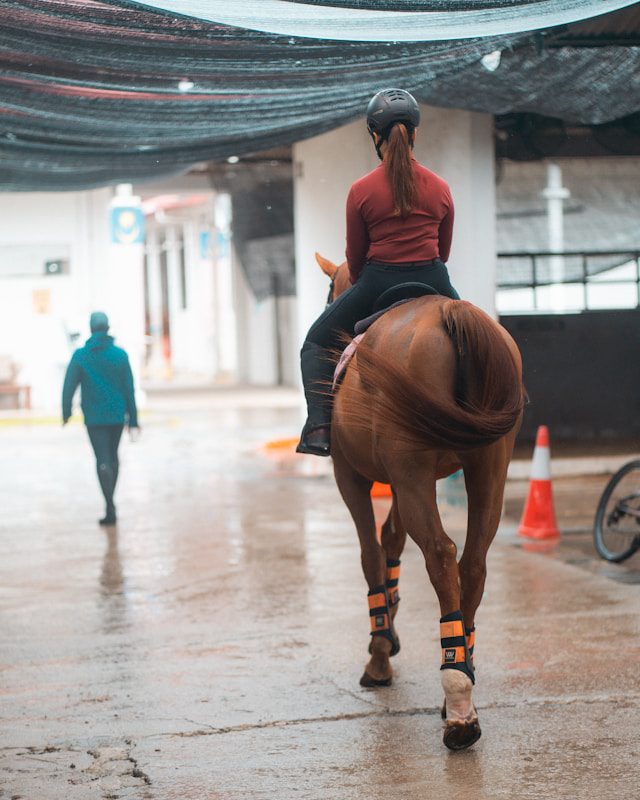
Sometimes warm-up arenas can feel busier and more pressured than the competition ring, and that’s exactly why most whip-related warnings and steward interventions happen here rather than during the test or round. Riders often remember the in-competition rules, but the whip rules in warm up are different for every discipline, and many riders are caught out by simple misunderstandings.
Warm-up areas sit in a grey space between training and competition, so if you want a broader perspective on how rules vary by discipline use, our full horse riding whip rules and guide which explores this topic in more depth.
This guide explains what whips are allowed in warm-up, how the rules differ between BD, BS, BE, FEI and showing societies, and what stewards actually look for. Whether you’re schooling before a dressage test, preparing for a showjumping round or getting ready to head out on the cross-country course, knowing the rules keeps you compliant, confident and safe.
Because warm-up rules refer to several different aid tools, it also helps to understand the different kinds of horse whips that may be carried or used, and how those distinctions affect what’s permitted.
If you’re unsure whether you can carry a whip in warm-up, the short answer is yes, but only if you follow the specific rules for your discipline. Warm-up behaviour is a welfare priority, so this article focuses on how to stay on the right side of those rules, avoid unnecessary warnings, and keep your horse relaxed and focused before competing.
Every governing body treats the warm-up arena as a welfare-first environment. Horses may be excited, tense or distracted; riders may be nervous; and space is often limited. A whip used incorrectly here has a far greater impact than in a controlled test environment.
Warm-up rules exist for three reasons:
1. Welfare protection
Stewards monitor warm-up closely because horses are vulnerable when tired, anxious or surrounded by other horses.
2. Fairness
Some riders may be tempted to school more forcefully before entering a no-whip phase such as dressage. Warm-up rules prevent this.
3. Safety
A whip used in a crowded arena can easily frighten another horse, cause a collision or escalate tension.
This is why all disciplines allow whips in warm-up, but only under strict conditions.
Most riders who fall foul of whip rules in warm up aren’t being deliberately rough, they simply misjudge what’s acceptable in a busy arena or forget that warm-up is monitored just as closely as the competition ring. These are some of the most common mistakes that lead to warnings, yellow cards or even elimination.
1. Using the wrong type or length of whip
Stewards often start with equipment checks in warm-up, so an illegal length or type of whip is one of the easiest mistakes to avoid.
2. Forgetting that “no whip” phases still apply
In disciplines like dressage, the Dressage Whip Regulations are very specific about what is allowed in the arena, and similar principles often influence how stewards interpret whip use in warm-ups.
In jumping disciplines, stewards refer closely to the Showjumping Whip Restrictions when determining whether a whip being used in the warm-up may exceed permitted length or design.
Even though most disciplines allow whips in warm-up, you must still transition smoothly into the correct rules for the phase you’re about to ride.
3. Too many strikes or repeated tapping
Stewards look at the overall picture: frequency, timing and intent. Even light taps can be considered excessive if they are constant.
4. Using the whip in the wrong place
Most organisations explicitly ban use on the head or neck, and any contact in front of the saddle draws very serious scrutiny.
5. Schooling a tired, anxious or over-faced horse
Warm-up is meant to prepare the horse, not exhaust it. Welfare-first rules in BE, FEI and national bodies all place big emphasis on this point.
6. Poor control or careless handling
Even if you never actually strike the horse, careless handling can still be considered poor horsemanship and may attract a warning.
7. Inappropriate lunging at shows
Lunging at a show is always under scrutiny. If the horse is chased, repeatedly struck or obviously stressed, stewards are likely to intervene immediately.
Being aware of these common mistakes makes it much easier to stay on the right side of the rules. In most cases, the solution is simple: choose a legal, discipline-appropriate whip, use it sparingly behind the leg, and put welfare and calm, tactful riding ahead of everything else in the warm-up arena.
Warm-up arenas are monitored closely because horses may be tense, excited or distracted. Stewards are trained to step in early if they see behaviour that risks welfare, safety or fairness. Knowing what they look for helps you stay confident and compliant.
1. Correct whip length and type
Stewards regularly measure whips on request or if something looks borderline.
2. Where the whip is used
3. Frequency and intensity
4. Rider intention and emotional control
5. Welfare and fatigue
Stewards will step in even if no actual strike has occurred — welfare takes priority over everything else.
Riders competing in eventing should be aware that the Eventing Whip Rules 2025 not only govern use in competition phases but also shape expectations for acceptable whip use in warm-ups.
In the show ring and warm-up arenas under UK showing regulations, understanding Showing Whip Rules UK is just as important as following general warm-up regulations, especially with more traditional show canes.

Even when you are following the rules, good etiquette makes the warm-up safer for everyone and helps your horse relax before competing.
1. Carry the whip correctly
2. Use the whip sparingly
3. Stay aware of other horses
4. Adjust your whip choice to the environment
Keeping whip use subtle and controlled reflects good horsemanship and prevents misunderstandings in the eyes of stewards and judges.
| Discipline | Whip in Warm-Up? | Max Length | Key Rules |
|---|---|---|---|
| BD | ✔ Yes | 120cm / 100cm | Hand whip over before entering test |
| BS | ✔ Yes | 70cm | Soft keeper, no rigid ends |
| BE | ✔ Yes | 45–75cm | Strict strike limits; padded whip only |
| FEI | ✔ Yes | Discipline specific | Monitored by stewards at all times |
| Showing / Breed | ✔ Yes | 75–81cm | Show cane or hunting whip only |
Warm-up whip rules vary across disciplines, but the principles remain the same: use a legal whip, use it correctly behind the leg, and always put welfare first. Stewards watch warm-up just as closely as competition arenas, so staying calm, subtle and disciplined with your aids will keep you compliant and help your horse feel confident before performing.
By understanding exactly what whip rules in warm up apply to your discipline, you avoid simple mistakes, reduce stress on competition day and demonstrate correct horsemanship from the moment you enter the warm-up ring.
While this page focuses on permitted usage, you can also browse our range of horse whips designed to comply with competition rules if you’re refining your equipment.
