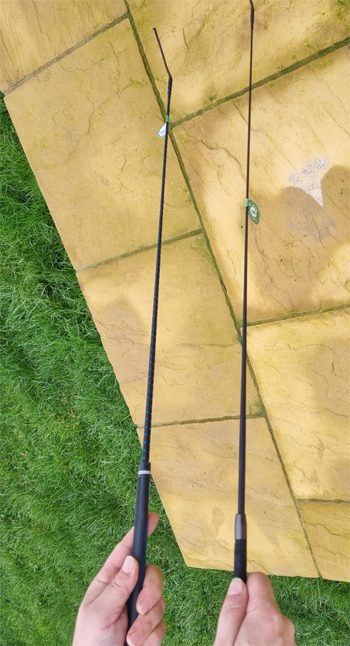
You pick up two 110cm dressage whips. On paper they are the same length, similar weight, same general design, yet one feels precise and light, the other feels slightly slower, heavier and harder to control.
So what’s actually happening? Length alone does not determine feel. Construction, balance, stiffness and weight distribution all play a role.
Even if two whips weigh the same overall, their balance points may differ. If one whip has, more material toward the tip, a denser lash, a heavier binding or grip, its balance point shifts forward.
That forward balance increases leverage and momentum. The whip feels heavier in motion, even if the scale says otherwise. The whip with the balance point closer to the handle will feel quicker and more controlled. Same length, different balance and a completely different feel.
Two whips can look almost identical externally but be built around different cores.
A Fibreglass Core is slightly more flexible, absorbs movement before snapping back, but a slower recovery.
A Carbon Composite core is stiffer, lighter with a faster return to a neutral position. The difference in recovery speed changes how quickly the whip resets of the aid is used.
A whip that recovers faster feels lighter and more precise. A whip that continues flexing after the hand stops feels slower, even if the length is identical.
Not all shafts bend the same way. Some whips, flex mostly through the lower third, feel springy and create a mild “lag” sensation. Others, stay relatively straight, deliver a crisp contained aid and feel more direct.
The more flexible the shaft, the more delayed the recovery and whilst that delay often gets interpreted as weight, in reality it’s not weight it’s flex.
Dressage whips include a lash at the end, but small differences in the lash matter. A thicker lash increases tip mass, a longer lash increases swing arc.
Similarly heavier bindings at the tip add momentum and even a few grams added to the far end of a whip dramatically change how it swings. Therefore two 110cm whips with different lash constructions will never feel identical.
Handle design influences perception more than most riders realise. For example differences in Handle Thickness, Grip Texture, Grip Length, Traditional Materials, such as leather vs Synthetic substances, weight in side the handle, all affect how stable the whip feels in the hand.
A whip that fits your grip naturally feels lighter because you are not compensating. A whip that forces you to grip harder feels heavier over time.
Even within the same model range, small variations can occur. However, higher-quality manufacturing standards usually result in more predictable balance, consistent shaft stiffness and better weight distribution. Brands that specialise in whip production, rather than producing them as a secondary accessory line, typically invest more heavily in material selection, shaft calibration and construction precision. That level of focus leads to greater consistency from one whip to the next, which experienced riders notice immediately in feel and recovery.
Lower-cost production methods can sometimes result in slight variations in balance or stiffness between batches. These differences may be subtle, but experienced riders often notice changes in feel and recovery speed.
Two riders can pick up the same whip and describe it differently because hand size, wrist strength, riding style and discipline all influence perception. A whip that feels perfectly balanced to one rider may feel forward-weighted to another.
Feel is partly physics, partly construction, partly individual biomechanics.
Lets Consider a Practical Example, Imagine
Whip A: length 110cm, Weight 115 grams, Fibreglass core construction, medium flexibility with balance at the mid point shaft.
Whip B: Length 110cm, Weight 118 grams, carbon Composite Core construction, stiffer with the balance point closer to the handle.
Whip B will likely feel lighter and faster in use, despite being marginally heavier. Because balance and recovery speed matter more than total grams.
Why This Matters. When riders say: “This one just feels better.” They are usually reacting to, the balance point, the shaft stiffness, recovery speed, tip momentum and not just length.
Understanding that difference helps you choose more accurately instead of assuming all 110cm whips are interchangeable.
This is also why dedicated whip manufacturers develop multiple ranges within the same length category. It is not just about aesthetics or price tiers, because different riders prefer. different flexibility, weight, grip size, balance and lash length and what feels perfectly balanced to one rider may feel forward-weighted or overly flexible to another.
Manufacturers that specialise in whip production understand that balance and stiffness are personal. Rather than relying on one generic design and hoping it suits everyone, they refine small variables across ranges so riders can choose based on feel, not just length. That variation exists because riders vary.
Length tells you reach. Balance, stiffness and construction determine feel.
Two whips of the same length can perform completely differently because physics, material and weight distribution shape how they move in your hand. When choosing a whip online, don’t focus on length alone. Look at shaft material, overall weight, stiffness profile and the type of lash. These specifications give valuable clues about balance and recovery speed, even before you hold it.
