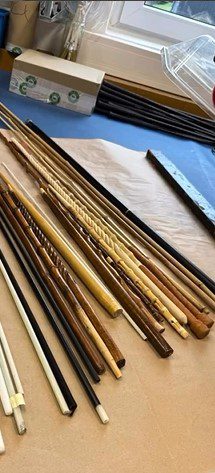
You pick up a whip. It doesn’t look heavy. The listed weight is low. But once you start riding, it feels tiring. Slower. Slightly awkward. So what’s going on? In most cases, it’s not total weight that makes a whip feel heavy. It’s balance, leverage, stiffness, and tip momentum.
Two whips can weigh the same on a scale but feel completely different in the hand. Why?
Because weight distribution matters more than total grams. If more mass sits towards the tip, the whip swings with more momentum, recovery between aids takes longer, the wrist works harder and this creates the sensation of heaviness.
A whip that weighs 110g but carries more weight toward the end can feel heavier than a 125g whip with a better balance point.
Length multiplies perceived weight, this means that the further the mass sits from your hand, the greater the leverage. That’s basic physics. But in practical terms, a 120cm whip will feel heavier than a 100cm whip, even if the material and listed weight are similar.
Longer shafts increase what’s called “moment of inertia”, meaning more effort is required to start and stop movement. If your whip feels heavy, check the length first. It may not be weight. It may be leverage.
Construction also plays a major role. For example a Fibreglass Core is durable, affordable, slightly more flexible, but can feel tip heavy in longer lengths.
Carbon Composite on the other hand is lighter, stiffer, offers faster recovery and often feels more balanced.
A well-made carbon dressage whip typically feels more responsive than a standard fibreglass schooling whip of the same length. That doesn’t mean one is “good” and one is “bad.” It means the material affects balance and recovery speed.
On dressage whips, the lash adds weight to the very end. Even a small amount of extra material at the tip increases swing momentum. Longer or thicker lashes, increase perceived heaviness, have a slower recovery and create a stronger pendulum effect.
Sometimes what makes a whip feel heavy is actually a lash that’s slightly longer or denser than ideal for the rider.
Perceived heaviness isn’t always about the shaft. If the handle is too thick, you grip harder, the forearm tires more quickly and as a result the whip feels heavier over time.
Thicker rubber grips can feel secure, but if they don’t suit your hand size, fatigue builds faster. That fatigue often gets blamed on “weight”, when in reality it is grip tension.
A more flexible whip absorbs energy before releasing it. That delayed recovery can feel like weight. Stiffer shafts, particularly carbon composite designs, snap back into position faster. That quicker recovery creates the impression of lightness and control. A flexible whip isn’t necessarily inferior. It just feels different.
This is often overlooked. If you, grip tightly, lock the wrist, carry tension through the forearm, ride with elevated shoulders, any whip will feel heavier than it actually is. Sometimes the issue isn’t the whip. It’s how it’s being held.
If your whip feels heavy, ask, is it longer than necessary, does the balance point sit forward, is the lash longer than I need, is the shaft overly flexible, or am I gripping too tightly?
Most of the time, one of these is the answer.
A whip rarely feels heavy because it weighs too much. It feels heavy because of leverage, balance, flex, and how the rider interacts with it.
Choosing the shortest length that provides effective reach, with a well-balanced shaft and appropriate stiffness, often transforms the feel instantly. Weight on paper doesn’t tell the full story. Balance does.
