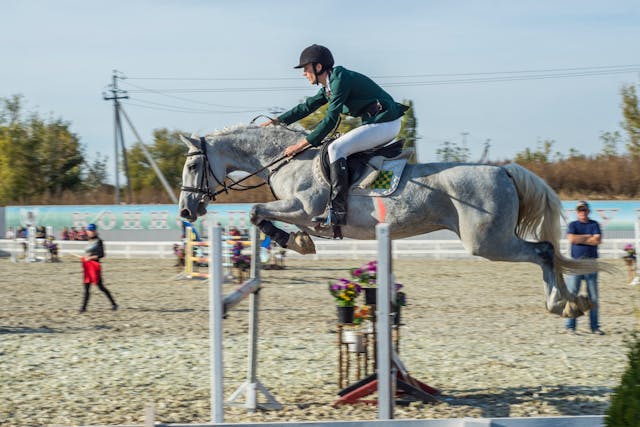
A jumping bat is one of the most misunderstood training aids in showjumping. When used correctly, it provides light, clear reinforcement to your leg aids. When used incorrectly, it can create tension, confusion and even welfare issues. Learning how to use a jumping bat correctly is not about force, it is about timing, accuracy and fairness.
This guide explains exactly how to hold a jumping bat, when to use it, where it should be applied, and the most common mistakes to avoid.
Jumping bats sit within a wider range of riding and training whips, each designed for a specific purpose. Understanding the common types of horse whips available helps clarify when a bat is the most appropriate choice and when a longer whip may be better suited.
A jumping bat, also known as a jumping whip or jump whip, is a short whip typically between 45–75cm in length. A jumping bat is made up of a handle, flexible shaft and a leather keeper. It is designed to be used discreetly behind the rider’s leg during jumping to reinforce forward movement or sharpen a slow response.
Unlike long schooling or dressage whips, a jumping bat is about precision, not reach. It delivers quick, light feedback without interfering with rein contact or rider balance over fences.
Although jumping bats are shorter than most riding whips, length still matters for comfort and effectiveness. Riders unsure how bat length compares to other whips can refer to horse whip sizes: what length whip do I need? for a clear comparison.
Understanding how to hold a jumping bat is the foundation of correct use. A poor grip makes timing inconsistent and contact unclear.
The bat should be held with the handle resting securely in the palm, with the shaft running along the inside of the hand. The wrist should remain relaxed, allowing subtle movement without lifting your arm or altering your rein aids.
The bat must always be carried so it can be applied behind the leg only. It should never swing forward, upward, or across the horse’s shoulder or neck.
A secure, relaxed grip is particularly important with a jumping bat, as it is often carried alongside short reins and a forward seat. Our step-by-step guide on how to hold a horse whip explains how correct hand position supports balance and control.
Knowing when to use a jumping bat is just as important as knowing how. The bat should only ever be used as a reinforcement to a clear leg aid — never as a substitute for leg pressure.
Correct situations include:
The bat should never be used in frustration, punishment or repeated striking. One light tap at precisely the right moment is worth more than multiple late corrections.
Jumping bat timing is the single biggest factor that determines whether the aid is effective or confusing.
The correct sequence is always:
If the tap comes too late, the horse cannot associate it with the request for forward movement. Poor timing is one of the most common reasons horses become dull, defensive or tense to the bat.
Using a jumping whip correctly over fences requires restraint and accuracy. The bat may only be used behind the leg and never over the shoulder, neck or head. It should never be used once the horse has already jumped the fence.
A light tap at take-off may be used in competition, but only with a soft-ended bat and always within strike limits set by governing bodies.
The bat should not interrupt the rider’s balance, interfere with the reins, or cause exaggerated upper-body movement.
Most resistance problems with jump whips come from inconsistency rather than force.
Jumping bats are easy to misuse through poor timing or unnecessary repetition. If a bat isn’t producing the desired response, it may be due to a common error. Our guide to common riding whip mistakes looks at frequent issues and how to correct them.
In all major disciplines, jumping bats are tightly regulated. Bats must fall within permitted length limits, use soft keepers or padded ends, and be applied only behind the leg.
Excessive use, striking the head or neck, or using the bat after a refusal or elimination can result in serious penalties or elimination.
The purpose of the bat is always communication, never punishment.
Because jumping bats are commonly used in competition, it’s essential to be aware of current regulations. Restrictions around length, use, and when a bat may be carried can change, so referring to the showjumping whip rules for 2025 helps ensure compliance under both British Showjumping and FEI rules.
Not every horse requires a jumping bat. Many forward, sensitive horses go better without one. Others benefit from occasional reinforcement to maintain a prompt and confident reaction to the leg.
The correct goal is always to use the bat less over time, not more.
Learning how to use a jumping bat correctly transforms it from a misunderstood tool into one of the clearest communication aids in jumping. Correct hand position, precise timing, soft contact and strict restraint are what make the difference between clarity and conflict.
When used properly, the jumping bat strengthens the leg aid, sharpens reactions and supports balanced, confident jumping without tension or confusion.
Using a jumping bat correctly relies on more than just where and when it’s applied. Understanding how different whip types are designed, how rules affect their use, and how technique varies between disciplines helps keep aids clear and fair. Our complete horse whip riding guide brings this together, covering whip styles, correct use, sizing, and competition rules in one place.
If you’re looking to compare different jumping bats, browsing the category can help you find options that suit your discipline, hand size, and preferred balance.
