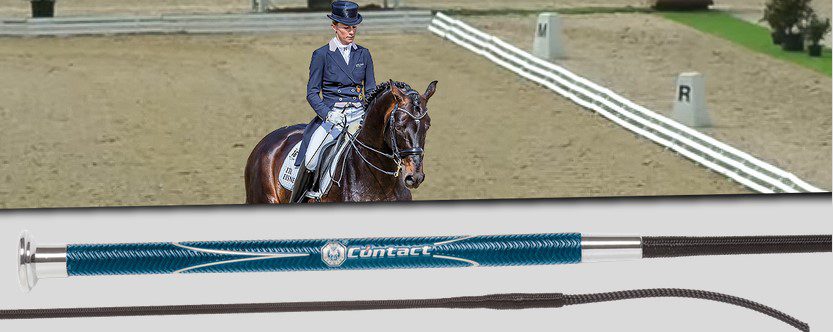
Many riders wonder why dressage whips are significantly longer than standard riding whips or crops. The difference is deliberate and rooted in the way dressage aids are applied.
The difference in whip length makes more sense when you understand how different whips are designed for specific purposes. Our overview of horse riding whips explains how construction, balance, and intended use vary across disciplines.
This article explains why dressage whips are longer, how that length is used correctly, and when a longer whip is beneficial rather than excessive.
Dressage whips are just one option within a wider range of equipment. Looking at the common types of horse whips helps show how length and design change depending on discipline.
A dressage whip is designed to reinforce precise leg aids, not to increase force. The longer length allows the rider to apply an aid without changing posture, shifting the hand, or disrupting balance.
In dressage, subtlety and consistency matter far more than strength.
The key reason dressage whips are longer is reach.
A longer whip allows the rider to touch the horse just behind the leg or on the quarters while maintaining:
With a shorter riding whip, riders often have to move the hand or shoulder to reach the correct area, which can confuse the horse.
Contrary to popular belief, longer whips are not harsher. In fact, they often result in softer, clearer communication.
The added length allows the aid to be applied lightly and accurately, reducing the temptation to overuse the whip or apply repeated taps.
In training, longer dressage whips can help develop:
The extra length of a dressage whip allows for lighter, more precise aids when used correctly. How to Use a Dressage Whip to Improve Engagement explains how it should support leg aids rather than replace them.
In competition, whip length is regulated to ensure welfare and fairness, which is why riders must measure carefully and follow discipline-specific rules.
In competitive dressage, whip length isn’t arbitrary. Dressage Whip Length Rules outlines the maximum lengths permitted by British Dressage and the FEI.
A longer whip is not always the right choice. Beginners, young horses or sensitive horses may benefit from a shorter, more stable whip until balance and timing are established.
A longer whip also changes how weight and balance are distributed. Horse Whip Balance, Flex & Weight Explained breaks down how these factors affect feel and control.
Length also affects reach and ease of use outside of competition. Horse Whip Sizes: What Length Whip Do I Need? explains how to choose an appropriate length for different riding situations. As with all equipment, correct use matters more than length.
Dressage whips are longer for a reason: to allow precise, minimal aids without compromising rider position. When used correctly, the extra length improves clarity, not force.
Understanding this helps riders choose the right whip and use it with confidence and restraint. If you’re choosing equipment specifically for dressage, you can browse our range of dressage whips, designed for correct length, balance, and sensitivity.
