
Driving whips are very different from riding whips. Designed for use from a carriage or vehicle, they allow the driver to communicate clearly with one or more horses at a distance, without relying on leg aids. Understanding the main types of horse whips helps explain how driving whips differ from those used for riding or general groundwork.
This guide explains the main types of driving whips, including drop lash, Hungarian and trotting whips, how they work, and why their design is so specific.
Although driving whips are used from a vehicle rather than the saddle, many design principles overlap. Our guide to horse riding whips explains balance, construction, and correct use across disciplines.
Although driving whips vary in style and length, they all share a similar basic structure. Understanding the different parts of a driving whip helps explain how they are used and why they feel different from riding whips.
The shaft is the main body of the whip. It is typically made from fibreglass or carbon composite, allowing it to remain lightweight while still offering enough strength and flexibility for controlled use.
The lash is the thin end section of the whip that comes into contact with the horse. It allows the driver to apply subtle, precise aids without needing to use force.
Some driving whips use a drop lash design, where the lash hangs more freely from the end of the shaft. This creates a softer, more natural contact and is commonly used in carriage driving.
The handle is designed to provide a secure and comfortable grip, allowing the driver to maintain control of the whip during longer driving sessions.
Unlike riding whips, driving whips are not used from the saddle. The driver sits behind the horse or horses, often several metres away, which means the whip must provide:
For this reason, driving whips are longer, lighter and more flexible than most riding whips. Driving whips rely heavily on length, flexibility, and lash design. Horse Whip Anatomy Explained breaks down how the handle, shaft, and lash work together to provide control from a distance.
Because driving whips are longer and often used continuously, material choice matters. Horse Whip Materials Explained looks at how different cores and coverings affect flexibility and durability.
A drop lash whip is one of the most commonly used driving whips. It features a long, flexible shaft with a lash that “drops” naturally when not in use.
The drop lash allows the driver to apply subtle signals with minimal movement, making it ideal for schooling, pleasure driving and competition driving.
These whips are valued for their balance and responsiveness, helping the driver maintain steady contact without startling the horse.
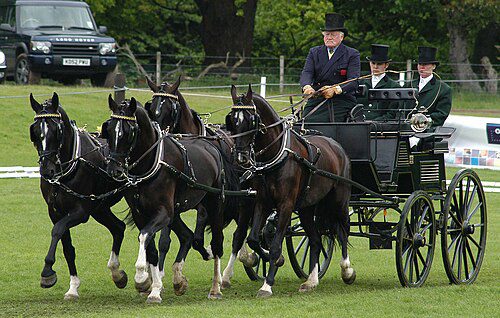
Driving traditions vary widely between countries, which is reflected in whip design. Why Different Countries Use Different Whip Styles explores how regional practices shaped different driving whip style.
Hungarian driving whips are steeped in tradition and are often associated with classical driving and ceremonial use.
They typically feature a longer shaft and a very long lash, allowing the driver to communicate with multiple horses in a team. The lash is often used more for sound and presence than physical contact.
These whips require skill and experience to use correctly and are most often seen in traditional or exhibition driving.
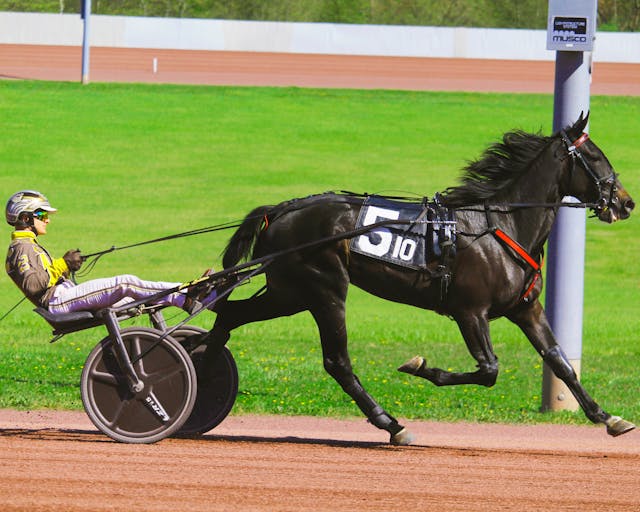
Trotting whips are designed specifically for harness racing and fast-paced driving disciplines.
They are lighter and more flexible, allowing quick, precise cues without excessive force. Trotting whips are tightly regulated in competition, with strict rules around length, weight and use.
The emphasis is on timing and clarity rather than strength.
Unlike riding whips, which are used from the saddle, driving whips are used from a seated position behind the horse. This changes how the whip is handled and the type of communication it provides.
The whip is typically used to:
In carriage driving, the whip is often described as the driver’s “magic wand”, not because it is used frequently, but because it allows the driver to communicate clearly without needing to rely on physical strength or constant contact.
Rather than being used forcefully, a driving whip is designed to reach the horse’s shoulder or ribs with light, controlled touches, supporting the driver’s aids while maintaining balance and safety.
Because of the length of a driving whip, control and accuracy are far more important than strength. When used correctly, the whip becomes an extension of the driver’s aid rather than something used frequently or forcefully.
Driving disciplines are governed by strict welfare rules. Excessive or inappropriate use of the whip can lead to penalties, disqualification or suspension.
Modern driving emphasises communication, balance and partnership, with the whip used sparingly and thoughtfully.
There are several factors to consider when selecting a driving whip, particularly as lengths and styles can vary significantly.
Length – The whip must be long enough to comfortably reach the horse from the driver’s position without excessive movement.
Balance – A well-balanced whip should feel light and controlled in the hand, even at longer lengths.
Lash style – Some drivers prefer a traditional lash, while others favour a modern silicon version or nylon version.
Materials – Modern materials such as fibreglass and carbon composite help keep driving whips lightweight while maintaining strength and flexibility.
If you are unsure which type of driving whip is most suitable, our guide to the best driving whips for carriage and pleasure driving looks at some of the most popular options in more detail.
Driving whips are highly specialised tools shaped by history, discipline and practical need. Whether using a drop lash, Hungarian or trotting whip, the goal remains the same: clear, respectful communication from a distance.
Understanding how these whips work helps drivers choose the right equipment and use it correctly, safely and ethically.
If you’re choosing equipment specifically for driving, you can browse our range of carriage driving whips, designed for clarity, reach, and balance from the carriage.
