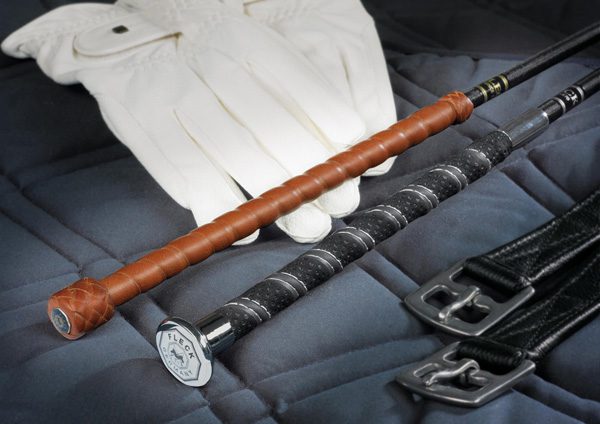
Many riders wonder how many whips they really need. It’s a fair question, tack rooms can quickly fill with equipment, and it’s not always clear what’s essential and what’s optional.
Riders often accumulate whips for different purposes over time. Understanding the types of riding horse whips available helps explain why one rider may only need a single whip, while another may use different styles for different disciplines or situations.
This guide offers a realistic, no-nonsense look at whip ownership and helps set sensible expectations.
Most riders can do the majority of their riding with just one well-chosen whip.
A single, versatile riding whip that suits your horse and discipline will cover everyday schooling, hacking and general riding.
Over time, many riders accumulate additional whips for practical reasons rather than necessity.
These additions tend to happen gradually rather than all at once.
The number of whips you need often depends on the type of riding you do. A rider who schools, competes, and rides across multiple disciplines may need different options. Our guide on which whip should I use for my discipline? helps clarify this.
Looking after the whips you already own can extend their lifespan and reduce the need for replacements. Our article on how to store a riding whip correctly covers simple steps to prevent damage and warping.
Some riders prefer to keep a separate whip for competition use.
This can make sense if:
That said, many riders happily use the same whip for both.
If you lunge, work in-hand or do groundwork, you may need an additional whip designed specifically for that purpose.
These whips serve a different function and are not interchangeable with riding whips.
More whips do not necessarily lead to better riding.
Choosing a small number of well-suited whips, rather than many rarely-used ones, promotes consistency and clarity for both horse and rider.
Length plays a big role in how a whip feels and functions. Owning multiple whips of similar length often isn’t necessary. If you’re unsure what lengths make sense, horse whip sizes: what length whip do I need? explains typical ranges and use cases.
How many whips a rider really needs depends on discipline, horse and personal preference, but for most people, fewer is better, although one whip rarely suits every situation. Different types of riding place very different demands on a whip. Our Fleck Whip Buyer’s Guide shows how specialised designs exist for good reason, rather than expecting one whip to do everything.
A thoughtfully chosen whip (or two) will support clear communication far more effectively than a large collection.
Sometimes rather than adding more whips, it’s often better to replace one that’s worn or no longer effective. Signs of wear, damage, or imbalance are explained in when to replace a riding whip, helping you decide when it’s time for a new one.
Deciding how many whips you actually need is easier when you understand how different styles are intended to be used, and when they’re appropriate. Looking at the bigger picture can help avoid unnecessary purchases and keep things simple. Our guide to horse riding whips brings everything together, covering whip types, correct use, sizing, and discipline rules in one place.
If you decide you do need another option, browsing our range of horse whips can help you compare styles and lengths without over complicating the choice.
