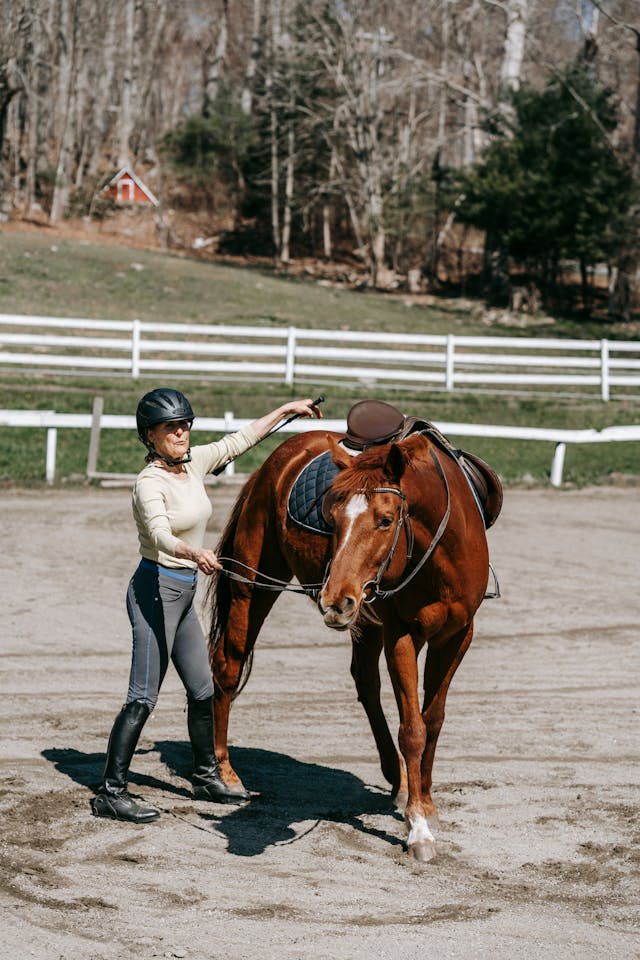
Introducing a whip to a young or sensitive horse should never be about correction or force. When done correctly, a whip becomes a quiet, consistent communication aid that supports your leg and voice, not something the horse fears.
Introducing a whip successfully starts with understanding how different whips are designed and intended to be used. Our complete guide to horse riding whips provides helpful background on styles, construction, and correct use before focusing on young horses specifically.
This guide explains how to introduce a whip to a young horse calmly and progressively, helping young or sensitive horses understand it as part of normal handling and training. Some whips are far more suitable for early training than others. Understanding the whip types used in difference disciplines helps avoid introducing something that feels too long, heavy, or intimidating for a young horse.
Whilst this article focuses on the process itself, whips for Young Horses: How to Introduce Them also looks at which types of whips are most appropriate during early training.
Young horses are still learning how to process pressure, sound and movement. Sensitive horses may already be reactive due to temperament or past experiences. Introducing a whip too quickly or incorrectly can create tension, avoidance behaviours or loss of trust.
A correct introduction builds confidence, clarity and relaxation, and prevents future problems when a whip is needed later in training.
The first rule of introducing a whip is simple: do not use it as an aid at the beginning.
If a horse shows uncertainty or tension, it’s often best to step back and focus on understanding first. How to Build Horse Confidence Without a Whip explores ways to build trust before adding equipment.
Initially, the whip should be completely neutral. Allow the horse to see it, smell it and become comfortable with its presence. Hold it quietly at your side during grooming or handling so it becomes part of the environment rather than a signal.
For young horses especially, it is best to introduce a whip on the ground before riding, as much of a young horse’s early learning happens from the ground. Groundwork Whips When to Use Them & How They Help explains how groundwork tools can support clear communication without pressure..
Using a short schooling whip or in-hand training whip, gently touch non-sensitive areas such as the shoulder or neck while the horse is standing still. The aim is familiarity, not reaction.
If the horse reacts, pause and wait for relaxation before removing the whip. This teaches the horse that calm behaviour makes the pressure go away.
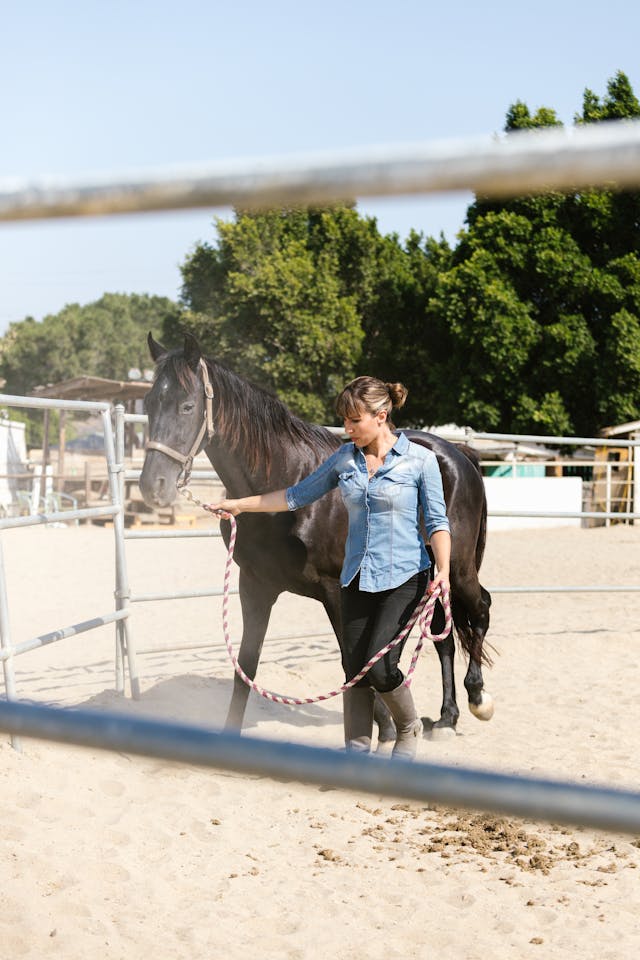
Whips move and sometimes make noise, which can be surprising to an inexperienced horse.
Once the horse accepts light touch, slowly introduce controlled movement. Let the whip brush lightly against the body or move gently through the air without making contact.
Avoid cracking sounds or sudden flicks at this stage. For sensitive horses, even the sound of a whip can be overstimulating if introduced too quickly.
When introducing a whip under saddle, it should act only as a quiet backup to the leg, never the primary aid.
Carry the whip passively at first. Allow the horse to feel it resting quietly against your leg without using it. This helps prevent startle reactions when the whip eventually moves.
When you do use it, apply a light, well-timed touch behind the leg, immediately followed by praise or release.
Young and sensitive horses learn best in short, calm sessions. One or two successful responses are far more valuable than repeated attempts that risk tension.
End each session on a relaxed note, even if progress feels small. Confidence builds incrementally.
For early introduction, choose a lightweight, well-balanced whip with a soft, unobtrusive end. Short in hand schooling whips or riding whips with minimal lash movement are often easier for young horses to accept.
The whip should feel controlled in the rider’s hand and quiet against the horse’s side.
A horse that is comfortable with a whip will remain relaxed when it moves, accept light touch without tension, and respond calmly when it is used as an aid.
At this stage, the whip becomes a clear communication tool rather than something the horse notices emotionally.
Introducing a whip to a young or sensitive horse is about patience, timing and empathy. When handled thoughtfully, the whip becomes a subtle extension of the rider’s aids — not a source of fear.
Taking the time to introduce it correctly builds trust, improves communication and sets the foundation for confident training in the future.
If you’re choosing equipment specifically for early training, you can browse our range of speciality equestrian whips, selected for sensitivity and control.
