Whips for young horses: How to introduce them
Posted by:
Jonathan Upton on 05/12/2025
Introduction
Introducing a whip to a young horse can feel like a big step. Used correctly, a whip for young horses are not a tool for punishment, but a quiet extension of your arm that helps you communicate more clearly. Used badly, it can create tension, rushing, fear and long-term resistance.
When choosing a whip for a young horse, it helps to understand how different whips are designed and intended to be used. Our complete guide to horse riding whips explains the main styles, construction, and correct use, which helps put early training decisions into context.
This guide explains how to choose the right whips for young horses, how to introduce them calmly from the ground, and how to use them under saddle without upsetting a green or sensitive horse. The focus is always on gentle, fair training and clear communication.
Not all whips are suitable for young or inexperienced horses. Understanding the types of riding whips helps narrow things down to options that are lighter, quieter, and less intimidating.
1. Why Young Horses Need a Different Approach
Young horses are still learning what is safe, what is scary and what different aids mean. They tend to:
- react more strongly to sudden movements and noise
- be unsure how to respond to new pressure
- copy habits (good or bad) from their early experiences
This is why a training whip for young horses must be introduced slowly and thoughtfully. The goal is for the whip to become part of the background, simply another tool the handler uses, rather than something the horse worries about.
The way a whip is introduced matters far more than the whip itself. How to Introduce a Whip to a Young or Sensitive Horse walks through a calm, step-by-step approach that avoids creating fear or resistance.
2. Choosing the Right Whips for Young Horses
In the early stages, it’s often beneficial to build understanding before introducing any equipment. How to Build Horse Confidence Without a Whip explores alternative ways to encourage responsiveness and trust.
When picking a whip for a young or green horse, think about stability, length and feel, not force. In most cases, you want something that is easy to control and doesn’t flap or crack unpredictably.
- Riding crop or short schooling whip – Good for very early under-saddle work. A shorter, more stable whip is less likely to wobble or accidentally touch the horse when you don’t intend it to.
- Medium-length dressage whip – Suitable once the horse understands basic aids. It allows you to give light, precise touches behind the leg without moving your hand.
- In-hand or groundwork whip – For early groundwork and leading exercises, an in hand training whip with a tidy lash can help you stay at a safe distance while still giving clear signals.
- Lunge whip – Useful for lunging, but not ideal for close work with a very green horse. The long lash can create too much movement and noise for a youngster at first.
In general, the best whip for young horses is one that:
- feels stable in your hand
- is long enough to be effective, but not so long that it is hard to control
- has a soft, quiet lash (if any)
- does not make a loud “crack” unless you deliberately ask for it
For many young horses, a short in-hand whip is the most appropriate starting point. In-Hand Schooling Whips: How to Choose and Use Them explains why these are often preferred for early training.
3. Groundwork First: Introducing the Whip from the Ground
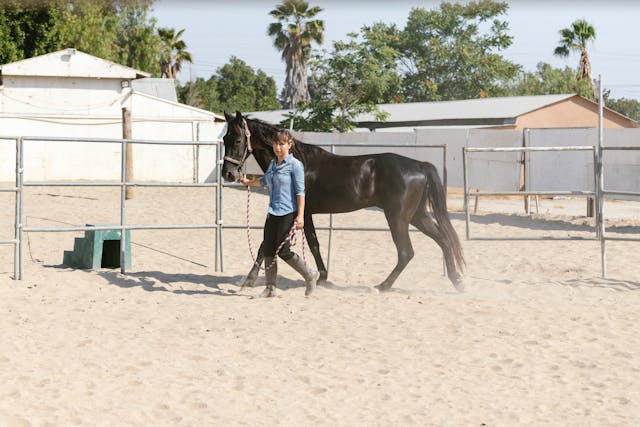
Before you ever carry a whip on a young horse under saddle, it should be familiar from the ground. This is the safest way to introduce a training whip for young horses without surprises.
Step 1: Let the horse see and smell the whip
- Stand at the horse’s shoulder and hold the whip quietly at your side.
- Allow the horse to sniff it if they are curious, but don’t push it into their face.
- Keep your body relaxed and your breathing steady.
Step 2: Start with neutral movement
- Walk with the horse in a normal leading position.
- Let the in hand whip rest against your leg or gently trail behind you.
- If the horse reacts, stop, relax and wait for them to settle before moving again.
Step 3: Light touch on safe areas
- When the horse is calm, lightly stroke the wither, shoulder and neck with the whip.
- Keep the movement smooth, not poking or jabbing.
- Reward the horse with a soft voice or scratch when they accept the contact.
Step 4: Introduce gentle “asking” signals
- Use the whip to lightly tap the shoulder or hindquarters to ask for a single step over or forwards.
- Always pair the tap with a clear voice cue.
- Reward the smallest try and keep sessions short.
4. How to Keep a Young Horse Confident Around a Whip
The key to using a whip for young horses is confidence, not fear. A few guiding principles help keep their experience positive:
- Stay predictable, Move the whip smoothly; avoid sudden flicks near the face or flank.
- Use the whip as a last step in a sequence, For example: body language → voice aid → whip touch if needed.
- Keep sessions short, Lots of small, calm exposures work better than one long, intense session.
- Reward often, A young horse should feel successful and reassured, not harassed.
5. Introducing a Whip Under Saddle
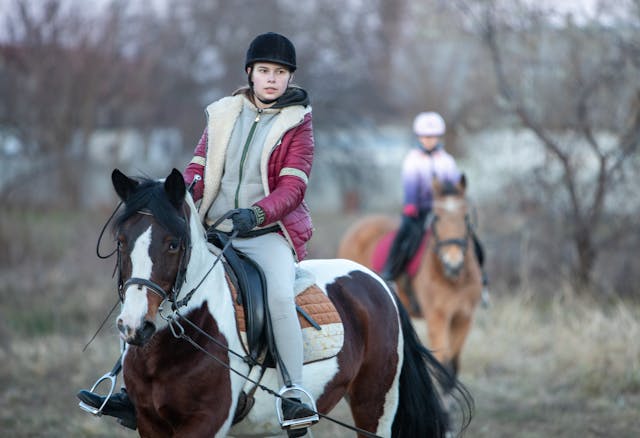
Once your horse is relaxed with an in hand training whip on the ground, you can start introducing a whip under saddle.
Step 1: Rider carries the whip but doesn’t use it
- Mount as usual, holding a short crop or dressage whip quietly in your hand.
- Ride in walk on a loose rein or a soft contact.
- The whip should stay still, pointing downwards, with no tapping yet.
Step 2: Add a tiny touch behind the leg
- Ask the horse to go forward with your leg and voice first.
- If there is no response, give one light tap behind your leg.
- As soon as the horse moves forward, praise and ride quietly on.
Step 3: Ride simple transitions with minimal whip use
- Practise walk–trot and trot–walk transitions.
- Use the whip only when the horse genuinely ignores the leg aid.
- The aim is for the horse to respond to the lightest aid, not to become dependent on the whip.
6. Common Mistakes When Using a Whip for Young Horses
Many problems with young horses stem from well-intentioned mistakes. Common Riding Whip Mistakes highlights common errors to avoid, particularly during early training.
Even with good intentions, it is easy to create confusion if the whip is used inconsistently. Try to avoid:
- Using too long or too flexible a whip too early, it wobbles and brushes the horse accidentally.
- Constant tapping, dulls the horse and creates tension instead of clarity.
- Mixing “go” and “no” messages, for example, holding a blocking hand while tapping to go forward.
- Using the whip out of frustration, the horse will associate it with stress, not guidance.
- Over-facing the horse, asking for too much too soon while also introducing the whip.

7. Choosing the Right Type of Whip for Each Stage
You may change the whip you use as the horse gains confidence and balance:
- Early groundwork: a calm, stable in hand whip or short in-hand schooling whip with a tidy lash.
- Early ridden work: a short crop or mid-length dressage whip that doesn’t flap.
- More advanced schooling: a slightly longer dressage whip for lateral work and refining aids.
- Lunging: a well-balanced lunge whip, but only once the horse accepts the sight and sound of it.
There is no single “best whip for young horses”, but there is a best type for each stage of training and each individual temperament.
8. Signs the Whip Is Being Used Correctly
A young horse that has been introduced to the whip fairly and calmly will usually show:
- ears and eyes that stay soft and attentive
- forward responses to light aids
- no flinching when the whip moves in their peripheral vision
- no rushing or trying to escape the contact
- a willingness to keep working around the whip on the ground and under saddle
If you see head tossing, rushing, planting, kicking out or strong tension just from the presence of the whip, it is worth going back a step and rebuilding confidence from the ground.
Conclusion
A whip for young horses should always be a communication tool, never a shortcut or a punishment. By choosing a whip that is stable, quiet and easy to control, introducing it gradually through groundwork, and using it sparingly under saddle, you can help your young horse understand your aids without fear.
Handled this way, the whip becomes a simple extension of your arm and your intent, one more aid that helps your horse build confidence, balance and responsiveness throughout their early education.
If you’re choosing equipment specifically for a young horse, you can browse our range of horse whips, selected with early training and sensitivity in mind.
Back to Blog