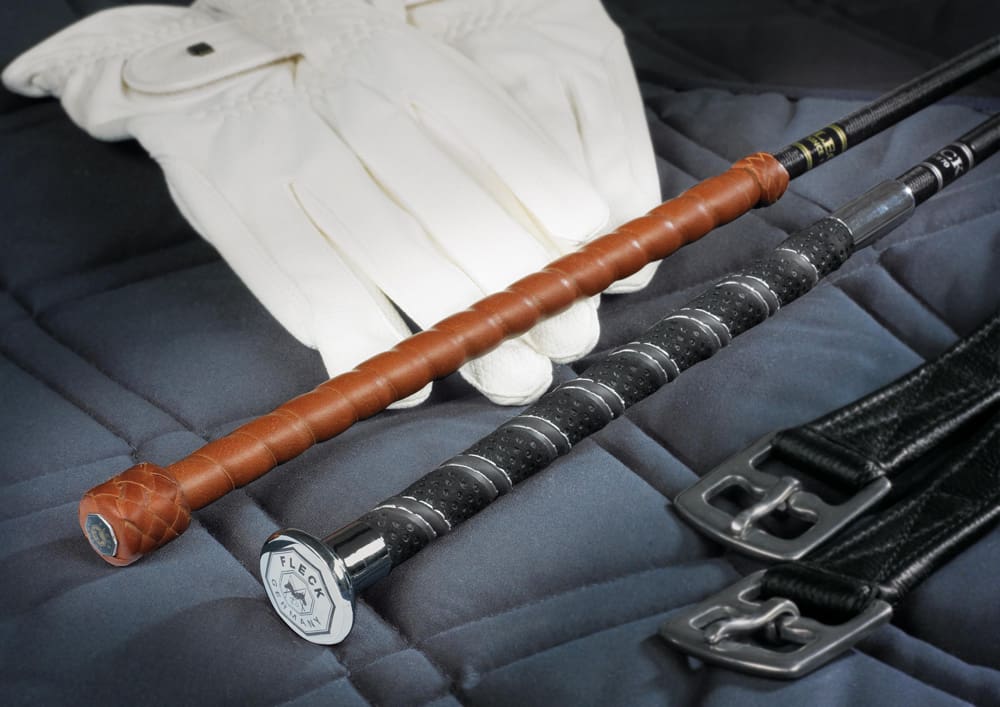
Dressage, a sport known for its elegance and precision, requires a variety of tools to perfect the rider’s and horse’s performance. One such essential tool is the dressage whip. Understanding the correct dressage whip length is not only crucial for compliance with competition rules, but using the correct length of whip will make training more effective.
These dressage whip length rules sit within the wider framework of competition guidance, which is covered in more detail in our complete guide to horse riding whips, including types, uses, and regulations across disciplines.
In this guide, we’ll delve into everything you need to know about dressage whip length, including the current 2025 regulations, choosing the right size, and addressing common questions.
If you’re unsure how dressage whips compare with other types, our complete guide explains the difference between all whip types and how they’re used across disciplines
A dressage whip is a long, flexible riding aid carried by the rider and used to communicate subtle cues to the horse. It is designed to enhance the rider’s leg aids without causing harm. The whip typically features a lightweight shaft, a comfortable ergonomically shaped handle, and a lash at the end for precision.
A dressage whip plays a critical role in both training and competitions. Its primary function is to enhance communication between the rider and the horse, serving as an extension of the rider’s aids to encourage precision and responsiveness in the horse’s movements.
When used in Training, the dressage whip can be used to reinforce leg aids, helping to clarify commands and ensure the horse understands what is being asked. The whip is also a brilliant aid to teaching complex manoeuvres such as lateral movements, transitions, and extensions by providing subtle cues. Regular use of the whip in training helps the horse become more responsive to light aids, promoting better overall performance.
When it comes to competition time, that training with the dressage whip helps riders to maintain precision without shifting their position or losing balance. The whip that helped deliver refined cues in training can make a significant difference in the horse’s performance, aiding in the execution of complex dressage tests.
Adhering to dressage whip rules is vital for competitive riders. As of 2025, under the FEI regulations, the dressage legal whip length in competitions is restricted to 120 cm (47 inches) (FEI Rules). This ensures the whip is long enough to aid the rider effectively but not so long that it interferes with the horse’s movement or the rider’s control.
A new rule for 2025 is that for riders on ponies, dressage whips may be no longer than 100cm, including Handle shaft and lash. Remember while rules set the limits, feel still matters in practice. The Fleck Whip Buyer’s Guide explains how dressage whips of the same length can feel very different depending on balance and construction.
The standard legal length for dressage whips varies slightly depending on the governing body. Generally, a whip up to 120 cm is acceptable for most competitions. Using a whip longer than the permitted length can result in penalties or disqualification, so it’s crucial to check specific competition rules before entering.
In the UK, British Dressage (BD) does not stipulate the length of whip, only that you can carry a whip at all levels at normal qualifying shows, however for any championship such as Areas, Nationals, or any International classes you can only carry it in the warm up, you must drop it before going in for your test.
The rules state that one whip is permitted in normal competitions (unless special dispensation has been given) and may be of any length. At most championship competitions, whips are not permitted, but refer to our page on British Dressage rules for specific events and more information.
It’s also important to remember that whip regulations apply beyond the competition arena, with specific whip rules in warm-up governing how and when a whip may be carried or used before a test.
Yes, you are allowed to use a whip in dressage, but only in lower level competitions and there are strict guidelines on its use. The whip should only be used to reinforce leg aids and should never be used excessively or in frustration. Overuse or misuse of the whip can lead to penalties or elimination and is frowned upon by the dressage community.
Selecting the correct dressage whip length depends on various factors, including the rider’s height and the horse’s responsiveness. Horse whip sizes between 100 cm and 120 cm is generally ideal for most riders. Here are some tips for choosing the right dressage whip length:
1. Reach: The length will depend on the size of the horse and rider. A whip that is the perfect length for a horse maybe too long for a pony. When sitting in the saddle your whip should be held in your hands along with the reins and be able to reach the exact spot you want to touch on the horse, without the hand leaving its position.
2. Flexibility: A flexible whip allows for more subtle cues and better communication with the horse. Flexibility will also depend on the level of riding experience. Beginner riders tend move around and may require a firmer whip, to stop it touching the horse all the time.
3. Balance: The whip should be perfectly balanced in the hand and comfortable to hold. Most whips have been carefully designed with an ergonomically shaped handle that is comfortable in the hand and balanced nicely when held in the riding position.
4. Weight: With the use of modern materials such as carbon fibre, most whips are very light and holding them for any length of time should not be an issue.
Dressage whips come in various sizes and types, some with ergonomic handles and other with specially balanced handles to help you hold the whip correctly to accommodate different training needs. Common sizes range from 100 cm to 140 cm, with shorter whips being suitable for more precise control and longer whips for greater reach.

– The ideal length of a dressage whip is typically between 100 cm and 140 cm, depending on your height and the level of precision you require.
– Yes, while you can use longer whips (up to 140 cm) during training, when allowed, competition whips must adhere to the 120 cm maximum length rule.
– Personalisation such as the colour of the shaft or handle, is allowed, but ensure any modifications comply with competition regulations, especially regarding weight and balance.
Understanding and selecting the right dressage whip length is crucial for effective training and competition success. When used correctly, a dressage whip should help refine your aids rather than replace them, and understanding how to use a dressage whip to improve engagement, can make a noticeable difference to your horse’s responsiveness and balance.Following the rules and choosing a whip that suits your needs will enhance your performance and ensure a harmonious partnership with your horse.
If you’re reviewing your equipment alongside your training, you may wish to dressage whips that suit your discipline and comply with current regulations.
